#Speculative Decoding
164 related articles

·4 min
Two Paths to Better AI Reasoning: Test-Time Scaling and Formal Verification
This article synthesizes two MSR India Summit talks, exploring two key paths to better AI reasoning: test-time scaling with variable granularity search, and a formal verification framework for trustworthy agent execution.
Read more →

·3 min
Distributed AI Systems in Practice: A Complete Guide to Training, Inference, and Production Deployment
A deep dive into Distributed AI Systems: a new book distilling 10 years of AI engineering experience covering distributed training, inference optimization, and production model serving.
Read more →

·2 min
Grok 4.5 Hands-On Review: Speed, Accuracy, and Value in a Three-Way Evaluation
A power-user developer tests Grok 4.5: blazing-fast responses, high accuracy, and great value. A deep dive into Grok 4.5's real-world AI coding performance in Cursor.
Read more →

·4 min
AI Weekly Recap: Four Major Vendors Cut Prices Together, Copilot's Paid Conversion Rate Just 4.5%
In one week, OpenAI, xAI, Google, and Microsoft all cut AI prices, driving near-frontier inference costs sharply lower. Meanwhile, Microsoft Copilot's paid conversion across 450M seats is under 4.5%, exposing the monetization challenge of general AI assistants.
Read more →

·4 min
GPT-5.6 Released: Coding Benchmarks Surpass Rivals, Inference Speed 10x Faster
Just 12 days after a rival launch, OpenAI released GPT-5.6, scoring 91.9% on Terminal-Bench 2.1 to surpass competitors. Ultra mode supports multi-agent collaboration, inference hits 750 tokens/sec.
Read more →

·4 min
Unsloth Releases Qwen3.6 NVFP4 Quantization: 2.5x Faster with Zero Accuracy Loss
Unsloth releases NVFP4 quantization for Qwen3.6 using W4A4 true 4-bit Tensor Core computation, delivering up to 2.5x inference speedup over NVIDIA's official implementation with accuracy matching or exceeding BF16 on benchmarks like MMLU-Pro.
Read more →

·4 min
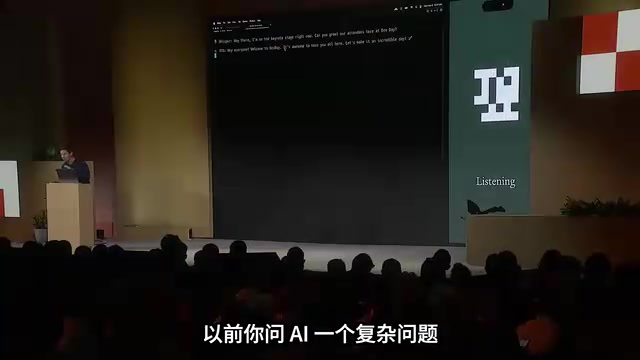
OpenAI GPT-Live Voice Model: How Full-Duplex Interaction Reshapes Human-AI Conversation
OpenAI unveils the GPT-Live voice model family, with full-duplex interaction enabling AI to listen and speak simultaneously and delegate complex reasoning to GPT-5.5. GPQA benchmark jumps from 45% to 80%.
Read more →
·5 min
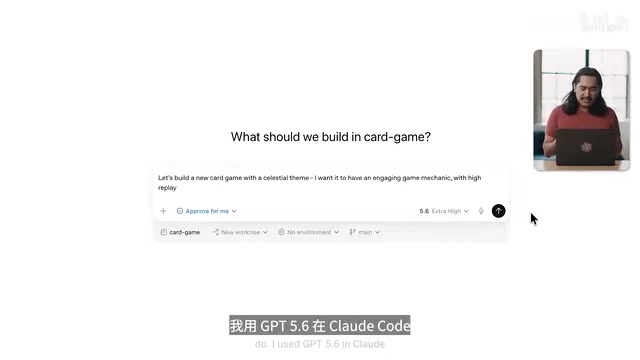
GPT-5.6 Released: Hands-On Analysis of Programmatic Tool Calling and Autonomous Agents
GPT-5.6 is officially released with core upgrades including programmatic tool calling, autonomous subagent delegation, and higher token information density. A hands-on card game build reveals its Agentic power.
Read more →
Local Coding Agents in Practice: A Com…
·6 min
Local Coding Agents in Practice: A Complete Guide to Replacing Your Claude Subscription with Open-Source Models
An in-depth look at local coding agents—core concepts, advantages, and real challenges. Compare against Claude Code and learn to build a zero-subscription, private AI coding workflow with open-weight models.
Read more →
·5 min
GPT-5.6 Triple Launch: Understanding the Positioning and Key Differences of Sol, Terra, and Luna
OpenAI released three GPT-5.6 models—Sol, Terra, and Luna—covering everything from flagship reasoning to lightweight speed. A deep dive into their positioning, performance differences, pricing, and industry signals.
Read more →

·7 min
Grok 4.5 Launch: Coding AI Market Reshuffle, Anthropic Claims Half the Territory
Grok 4.5 launches at just $0.49 per task, 90% cheaper than rivals. Anthropic's Claude Code claims 50% of the AI coding market. SambaNova raises $1B. Read the latest AI market shifts.
Read more →

·4 min
GPT-5.6 Sol vs Grok 4.5: Same $20 Subscription — Which One Is Actually Worth It?
GPT-5.6 Sol or Grok 4.5 — both at $20/month, but which delivers more value? We break down use cases, intelligence benchmarks, and ecosystem tradeoffs to help you decide.
Read more →

·6 min
GPT Live Full-Duplex, Grok 4.5 Coding, Seedream 5.0 Images: AI Accelerates Across Three Tracks Simultaneously
OpenAI's GPT Live full-duplex voice model, Grok 4.5 coding model with Cursor, and ByteDance's Seedream 5.0 Pro image generation launched together. A deep dive into three AI releases.
Read more →

·2 min
Deep Dive into Tencent Hunyuan Hy3: How a 295B MoE Model Cracks the Agent Deployment Challenge
Tencent Hunyuan Hy3 launches with a 295B MoE architecture activating just 21B params and 256K context. Hallucination cut from 12.5% to 5.4%, MRCR nearly doubled, with MTP and EAGLE decoding and Day-0 SGLang support.
Read more →

·6 min
Cursor Meets Grok 4.5: A Hands-On Test of an AI Coding Assistant That's 5x Faster with Cleaner Output
A developer deeply tests Grok 4.5 High Fast in Cursor, finding it rivals Claude Opus in quality but runs 5x faster with cleaner, filler-free output. Full hands-on review and analysis.
Read more →

·7 min
GPT-5.6 Becomes Microsoft Copilot 365's Preferred Model: An In-Depth Look at the OpenAI-Microsoft Partnership
OpenAI confirms GPT-5.6 as the preferred model for Microsoft Copilot 365, responding to "breakup rumors." A deep dive into the strategy, multi-model trends, and AI productivity commercialization.
Read more →

·5 min
GPT-5.6 Trio Released: A Deep Dive into Sol/Terra/Luna and the Breakthrough in Design Judgment
OpenAI officially releases the GPT-5.6 series with three models: flagship Sol, balanced Terra, and economy Luna. A deep dive into its core breakthroughs—a step change in design judgment and enhanced computer-use capabilities.
Read more →
·6 min
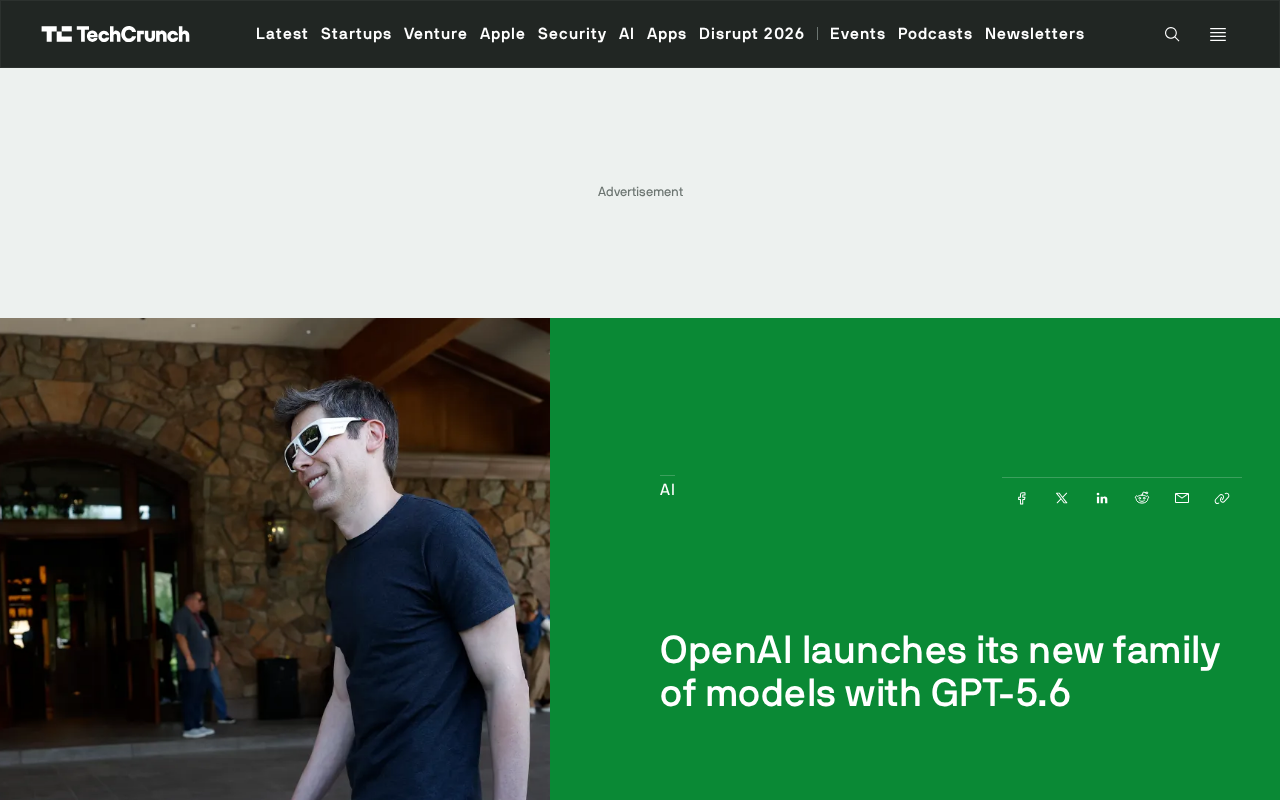
OpenAI Releases GPT-5.6: Cybersecurity Capabilities Take Center Stage
OpenAI launches the GPT-5.6 model family with cybersecurity as its biggest highlight. A deep analysis of GPT-5.6's differentiation, double-edged-sword effect, and enterprise strategy.
Read more →

·2 min
Tencent Hunyuan V3 Open-Sourced: Full Breakdown of the 295B MoE Architecture — 256K Context Is Its Biggest Weakness
Tencent open-sources Hunyuan V3: 295B MoE model with 21B active params, claims to beat DeepSeek-V4-Pro. Supports FP8, vLLM/SGLang — but 256K context and no multimodal are key drawbacks.
Read more →

·6 min
AI's Second Half: The Decisive Battle Shifts from Models to Infrastructure
Model capabilities are converging, making inference cost and scalability the new focus of AI competition. A deep analysis of AI infrastructure's core layers.
Read more →