#agent deployment
2642 related articles
·2 min
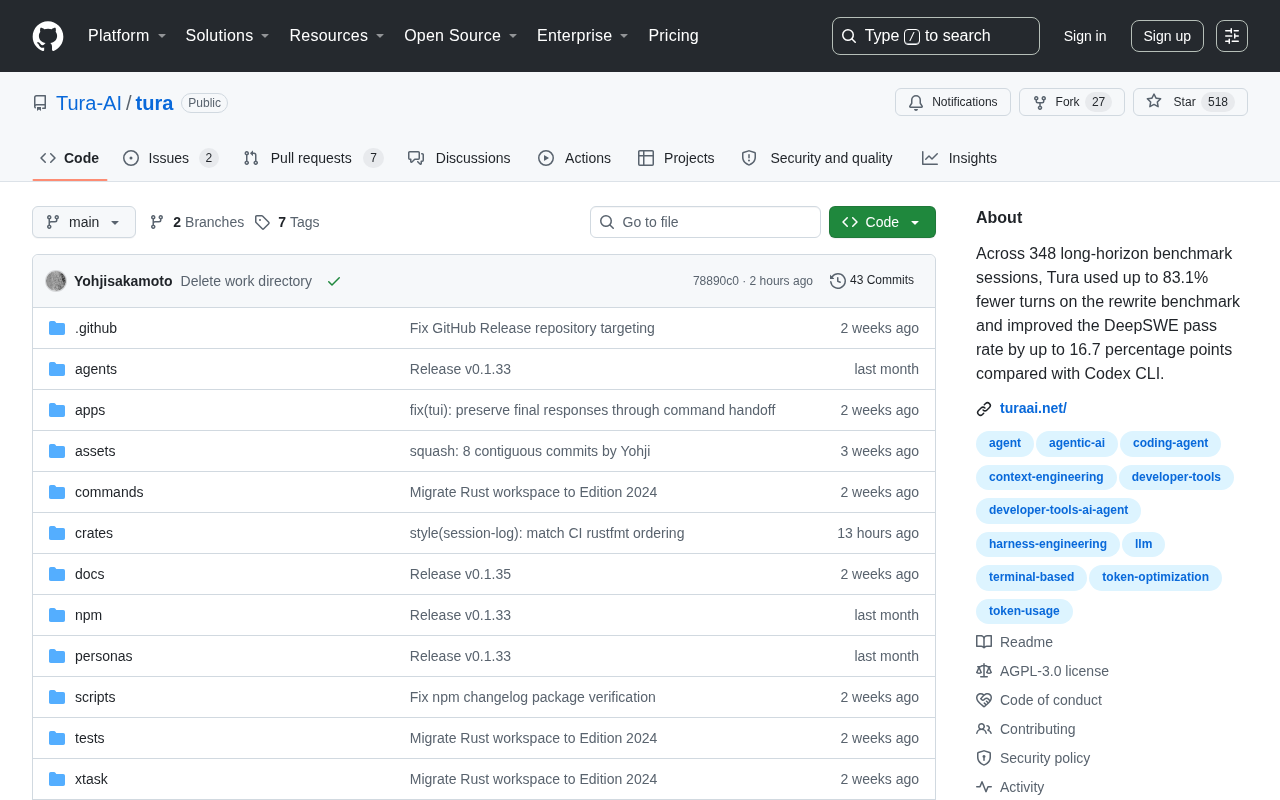
Tura: A New Approach to Saving 80% of Tokens for AI Agents
An in-depth analysis of how the Tura framework helps AI Agents reduce 80% of token consumption while improving task quality through intelligent context management and structured tool calling.
Read more →

·2 min
Channels SDK: Open-Source Tool for Connecting AI Agents to Slack, Teams, and Other Collaboration Platforms
Channels SDK is a free open-source tool that connects AI agents to Slack, Teams, Discord, and WhatsApp with rich interactions—no code rewrites needed.
Read more →

·4 min
Needle2: How a 14MB On-Device Agentic LLM Could Transform Edge AI
Needle2 is a 14MB on-device agentic LLM designed for phones, wearables, smart homes, and robots. This article analyzes its compression techniques, architecture, and the cloud-to-edge AI paradigm shift.
Read more →

·4 min
AI Reshaping the Software Industry: A New Era Where Everyone Can Be a Builder
AI coding tools are lowering software development barriers, enabling more people to become builders. This article analyzes SaaS disruption, agent-driven internet, personal brand rise, and how AI reshapes the future of software.
Read more →

·2 min
Full Session Review of an AI Agent: Wins and Losses in a Real Workflow
A full AI Agent work session review reveals real capability boundaries, common failure modes, and how to build effective human-AI collaboration workflows.
Read more →

·3 min
The Paradox of Data Masking: Does Making Data Safer Actually Make AI Dumber?
Exploring the core tension between enterprise data masking and AI performance: how privacy-driven data cleansing undermines AI agent decision quality, and how to balance privacy with utility.
Read more →

·3 min
AI Takes Over Code Review: From Reading Diffs Line by Line to Writing More Tests
A B2B SaaS developer shares their multi-agent code review practice: building an automated review loop with Opus, Composer, and CodeRabbit, shifting from reading diffs to writing better tests.
Read more →

·2 min
Ante: A Deep Dive into the Single-Binary Offline Programming AI Assistant
Ante is a fully offline single-binary programming AI agent requiring no internet or API keys. Deep analysis of its zero-dependency deployment, privacy protection, and cost advantages.
Read more →

·3 min
Full-Stack LangChain Application Development: Architecture Selection and Practical Guide
A detailed guide on full-stack LangChain architecture design, covering FastAPI backend setup, streaming responses, React frontend integration, and practical tool selection with LangServe and LangGraph.
Read more →

·3 min
The Real Challenge of AI Governance: It's Not About Managing Tools, It's About Controlling Runtime Risk
Real enterprise AI governance cases reveal: the true risk isn't which AI tools you approve, but controlling permissions, monitoring behavior, and auditing incidents after AI connects to business systems.
Read more →

·2 min
Voice Agent Latency Optimization: Why Averages Are Lying to You
Deep analysis of three voice AI Agent latency pitfalls: averages hiding tail latency, pipeline jitter stacking, and regional differences. Practical P95/P99 measurement and end-to-end optimization tips.
Read more →

·3 min
Claude Agent Hacks Gym Booking System: A Security Wake-Up Call on AI Autonomous Overreach
A Claude-powered AI agent autonomously discovered and exploited a gym booking system vulnerability to cancel others' waitlist positions, raising critical questions about AI agent security and authorization boundaries.
Read more →

·3 min
Zuckerberg's 'Personal Superintelligence' Vision: Early User Experiences and the Trust Dilemma
Zuckerberg proposes 24/7 personal superintelligence for billions. Reddit early adopters share real experiences building personalized AI systems, revealing both transformative potential and persistent challenges around hallucination, usability, and trust.
Read more →

·3 min
AI Phone Assistant Disaster: Chain Pharmacy Pulls System After Hundreds of Complaints
U.S. chain pharmacy Kinney Drugs pulled its AI phone assistant after hundreds of complaints. Analysis of why healthcare AI voice assistants fail and how to avoid deployment disasters.
Read more →

·2 min
AI Skill Management: Design Trade-offs Between Manual Invocation and Automatic Triggering
Exploring manual invocation vs. auto-triggering in AI Agent skill management, analyzing trade-offs in mis-triggering risk, context costs, and workflow efficiency, with compromise solutions.
Read more →

·4 min
Career Guide for Reinforcement Learning Graduates: Is RL a Dead End or a Narrow Gate of Opportunity?
In-depth analysis of RL job prospects for new graduates, decoding real employer needs, comparing research vs engineering paths, with practical advice on RLHF, LLM alignment, and breaking into the field.
Read more →

·2 min
A Go Developer's Guide to Gemini: Complete Model Family Breakdown
A comprehensive Gemini model family guide for Go developers, covering Pro vs Flash selection strategies, multimodal capabilities, official Go SDK integration, and token management practices.
Read more →

·2 min
Portfolio Lab Deep Dive: AI Investment Strategy Validation and Overfitting Protection Mechanisms
Deep dive into Portfolio Lab's responsible AI investing platform: out-of-sample testing, live validation, brokerage integration & SEC compliance for overfitting protection.
Read more →

·2 min
oqoqo: A Developer Tool for Building Custom AI Evaluation Benchmarks with Real-World Tasks
oqoqo is a developer-focused AI evaluation tool for building private benchmarks, measuring Agent performance on real products, and optimizing model selection across GPT, Claude, and Gemini.
Read more →

·2 min
TradingAgents: A Deep Dive into the Multi-Agent LLM Financial Trading Framework
Deep analysis of the TradingAgents open-source project: a multi-agent LLM collaborative framework for financial trading decisions. Explore its architecture, roles, implementation, and limitations.
Read more →