#agentic application architecture
560 related articles

·3 min
Local MCP over stdio: An Architecture Seam Design Guide for Agentic Applications
A deep dive into using local MCP over stdio as an architectural seam for agentic applications, covering model-tool decoupling, testability, process management, and comparison with cloud MCP.
Read more →

·4 min
Getting Started with Claude Code: A Complete Guide from Installation to the Fifth Stage of AI Programming
A deep dive into Claude Code's positioning, installation, and usage tips, covering the five stages of AI programming evolution and how developers can build competitive advantages in the AI era.
Read more →

·4 min
From RAG to Agent: A Comprehensive Guide to Enterprise-Grade AI Agent Implementation
A deep dive into the four-stage evolution from prompt engineering and RAG to AI Agents, covering core Agent capabilities, four commercial tracks, and enterprise implementation best practices.
Read more →

·4 min
Deep Dive into DeepSeek Harness: The 'Everything is a Plugin' AI Agent Framework
DeepSeek Harness is an open-source AI agent framework with an "everything is a plugin" modular architecture. Learn about its core design, four operating modes, V4 Pro model, and real-world use cases.
Read more →

·5 min
This Week in AI: Anthropic's Revenue Skyrockets as Tech Giants Intensify Their Battle
Weekly AI roundup: Anthropic ARR hits $6.5B, Grok Build opens AI coding, Stripe acquires OpenRouter, Cursor challenges GitHub, NVIDIA and OpenAI build a 4.25GW AI factory.
Read more →

·3 min
GraphRAG in Practice: Rebuilding Document Q&A Systems with Knowledge Graphs
Explore how GraphRAG combines knowledge graphs with RAG using Leiden community detection, hybrid search, and incremental ingestion to solve cross-document reasoning challenges in enterprise Q&A systems.
Read more →

·1 min
Tencent's Hy4 Open-Source Model: 770B Parameters Built for Long-Horizon Agentic Tasks
Tencent launches Hy4 Preview, an open-source MoE LLM with 770B total parameters, 49B active parameters, and 1M token context window for long-horizon agentic tasks.
Read more →

·3 min
Cursor CEO Reveals: OpenAI Models Account for Only 5% of Traffic, Claude Becomes the Go-To for Programming
Cursor's CEO reveals OpenAI models carry only ~5% of user traffic, with 95%+ going to Anthropic Claude and competitors. A deep dive into AI coding tool model preferences and industry implications.
Read more →

·1 min
Spline V2 Deep Dive: An AI Agent-Driven 3D Design Platform, Rebuilt from the Ground Up
Spline V2 launches with a full rebuild featuring AI Agent Mode, MCP protocol, WebGPU engine, and PBR/HDR pipelines. A deep dive into the browser-based 3D platform built for the agentic era.
Read more →

·4 min
OpenAI Astra Is Coming: A Complete Breakdown of Multi-Agent Collaboration and the Latest AI Industry Developments
Deep dive into OpenAI's next-gen model Astra with multi-agent collaboration, the Mew4 codename mystery, Cursor Origin, Qwen 3.8 local model, and GPT-5.6 price cuts.
Read more →

·5 min
AI Agent Skill Stack Fully Decoded: Building Professional Agents with 16 Pluggable Skills
Deep dive into 16 practical AI Agent Skills covering code review, evals, frontend design, communication, memory, and automation — revealing the modular methodology behind Agent engineering.
Read more →

·3 min
Hacker News Client Integrates Claude Code and Codex: How AI-Native Readers Are Changing Developer Workflows
A Hacker News client integrating Claude Code and Codex lets developers invoke AI to explain code and generate examples while reading, enabling zero-friction AI-native workflows.
Read more →

·3 min
WorldClaw: A Technical Deep Dive into Agent-Driven Large-Scale 3D Open World Generation
Deep dive into how WorldClaw uses multi-agent AI collaboration to generate large-scale 3D open worlds, with analysis of technical challenges and applications in gaming and digital twins.
Read more →

·3 min
Qwen3 27B vs DeepSeek V4 Flash Local Benchmark: A Head-to-Head Coding Comparison
Local head-to-head test of Qwen3 27B vs DeepSeek V4 Flash on Mac Studio across three front-end coding tasks: weather dashboard, tower defense game, and Excel-like spreadsheet.
Read more →

·3 min
The Four Forms of OpenAI Codex Explained: Comparison with Claude Code and Best Usage Strategies
Deep analysis of OpenAI Codex's four forms (CLI, web, IDE plugin, APP), comparison with Claude Code on price, stability, and frontend/backend strengths, plus the optimal APP + VS Code workflow.
Read more →

·3 min
Building an AI Agent into Your Custom CRM: How to Pick the Most Practical First Feature
When building an AI-native CRM, what should the first AI Agent feature be? This guide recommends Lead Triage & Enrichment as the best starting point, with practical architecture advice.
Read more →

·4 min
Why Scaling LLMs Can't Achieve True Agentic Autonomy
Explore why scaling LLMs alone can't produce true agentic autonomy, and how three-tier embodied AI, efference copies, and offline sleep cycles offer a path beyond Scaling Laws toward AGI.
Read more →

·3 min
Andrew Ng's RAG Practical Course: A Complete Guide from Basic Retrieval Augmented Generation to Agentic RAG
Deep analysis of Andrew Ng's latest DeepLearning.AI RAG course covering retrieval augmented generation fundamentals, vector databases, document chunking, Agentic RAG architecture, and production system evaluation.
Read more →
·3 min
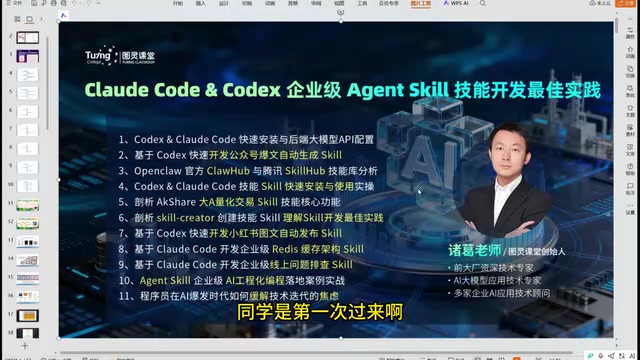
Claude Code Skills in Practice: A Progressive Guide to AI Programming from Writing Code to Writing Skills
A practical guide to Claude Code Skills development covering the three-level progression path, Codex vs Claude Code selection strategy, and enterprise secondary development techniques.
Read more →
·3 min
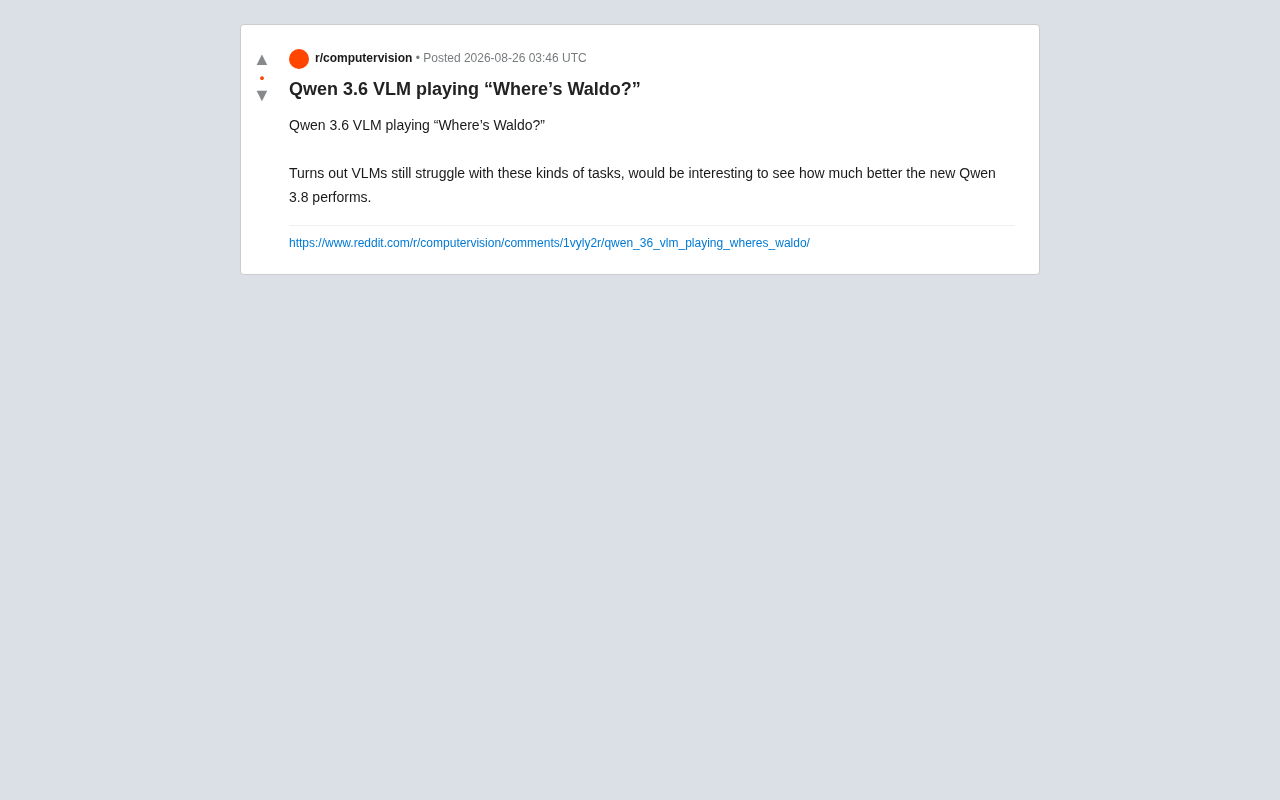
Qwen VLM Takes on Where's Waldo: Exposing the Achilles' Heel of Fine-Grained Visual Localization
Qwen 3.6 VLM takes on Where's Waldo, revealing vision-language models' weaknesses in fine-grained target localization in dense scenes. Analysis of resolution limits, visual grounding gaps, and future directions.
Read more →