#arXiv search engine
103 related articles
·6 min
AI Agent Development Learning Path: Four Stages from Zero to Hands-On Projects
A systematic breakdown of the AI agent development learning path, covering four stages: fundamentals, RAG knowledge bases, tool use, multi-agent collaboration, and hands-on projects.
Read more →

·4 min
Learn ML Free at Public Libraries: A Complete Guide to O'Reilly Tech Book Resources
Getting O'Reilly machine learning books free at public libraries? It's no myth. This article reveals hidden tech learning resources at libraries, including online platform subscriptions and digital database access, helping self-learners build AI knowledge at zero cost.
Read more →

·4 min
Testing a Research Automation Agent: Zero-Shot Reproduction of a NeurIPS Paper End-to-End
Testing research automation agent Klaus Goh: full reproduction of IBM's TTM time series paper at NeurIPS—from search to zero-shot inference, 2700+ predictions in 10 seconds, MSE 0.363 beating TimesFM.
Read more →

·2 min
Directly Optimizing Face Similarity: A Practical Guide to Accelerating Character LoRA Training
Ditch inefficient noise prediction and train character LoRAs by directly optimizing face similarity. Using the DRaFT differentiable reward method, training completes in 10-12 minutes on an RTX 4090, far outperforming traditional SFT. Includes open-source code.
Read more →

·4 min
Beware of AI Fake Marketing: Is the 'GPT-5.6 Release' a Scam?
A viral Bilibili video claiming the 'GPT-5.6 SOAR/TERRA/LURAL release' is full of fake model names, forged benchmarks, and risky third-party sites. We debunk it and show how to spot AI hype traps.
Read more →

·4 min
AI Agents Powering the Full Research Pipeline: A Practical Guide to Automation from Topic Selection to Publication
Learn how to use AI Agents to link the entire research pipeline—from literature management, data analysis, and paper writing to scientific illustration and dissemination—building a reusable research automation workflow with NotebookLM, N8N, and Ollama.
Read more →

·2 min
AI/ML Engineer Job Search Roadmap: A Systematic Preparation Guide for ECE Students
A practical job-search guide for ECE students pursuing AI/ML roles, covering direction selection, Python skills, project planning, paper strategy, and overseas opportunities.
Read more →

·5 min
28 Enterprise-Grade AI Agent Projects: A Complete Guide That Even Beginners Can Deploy
A collection of 28 fully reproducible enterprise-grade AI Agent projects covering code debugging, financial analysis, customer service, and multi-agent collaboration—deployable even for beginners.
Read more →

·4 min
Claude Science Launch: Anthropic's AI Assistant Built for End-to-End Scientific Research
Anthropic launches Claude Science (beta), a research-focused AI app with artifact traceability, on-demand environments, and 60+ scientific database integrations.
Read more →

·7 min
HuggingFace Open-Sources ml-intern: An AI Engineer That Reads Papers and Trains Models Autonomously
Hugging Face's open-source ml-intern autonomously reads papers, writes training scripts, and finetunes LLMs, deeply integrating the HF ecosystem and smolagents. Explore its features and impact on ML careers.
Read more →
·6 min
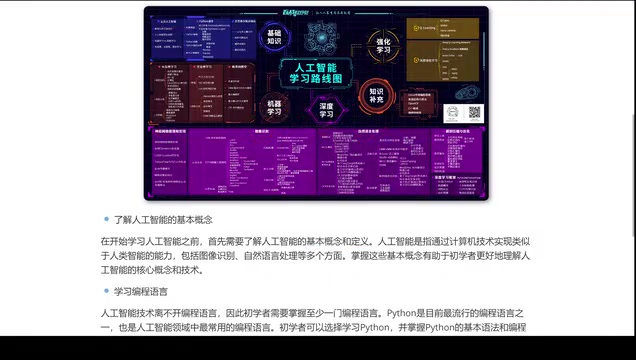
AI for Beginners: A Five-Step Practical Path That Skips the Math and Python Syntax Traps
Struggling with math and Python when learning AI from scratch? This article lays out a five-step entry path: grasp the concepts, learn Python lightly, master ML and deep learning principles, get hands-on with PyTorch, then deepen understanding through real projects.
Read more →

·7 min
AI Agent Memory Layer Comparison: Mem0, Zep, Letta, and Cloudflare — Four Major Solutions Evaluated
In-depth comparison of four AI agent memory layer solutions: Mem0's extract-retrieve approach, Zep's temporal knowledge graphs, Letta's self-editing memory, and Cloudflare Durable Objects as infrastructure primitives.
Read more →
Firecrawl Goes Free Again and Launches…
·2 min
Firecrawl Goes Free Again and Launches SOTA Research Index — A Turning Point for AI Research Agents
Firecrawl goes free again and launches a SOTA Research Index, giving AI research agents real-time access to scientific knowledge. Here's what it means for RAG, scientific reasoning, and AI-assisted discovery.
Read more →
 Tech Frontiers
·2 min
A Rare Quiet Day in AI: Recursive Self-Improvement Stirs Beneath the Surface
A rare quiet day in AI sees multiple sources go silent simultaneously. Behind the calm, Recursive Self-Improvement (RSI) research continues. What this means for the industry.
Read more →
 Tech Frontiers
·2 min
In the Weights: Check Your Influence Score in the AI World
In the Weights is an AI influence search engine that quantifies your presence in the AI world with a score. Explore how it evaluates practitioners and what it means for digital identity.
Read more →

·3 min
AI Large Language Model Zero-to-Hero Systematic Tutorial: A Complete Guide from Basics to Practice
A comprehensive 748-episode AI LLM tutorial covering Transformer architecture, Prompt Engineering, RAG, Agent, fine-tuning, and enterprise projects like AI customer service and knowledge bases.
Read more →

·4 min
AI Large Language Model Career Transition Roadmap: A Three-Phase Learning Guide from Zero to Enterprise-Ready
A systematic three-phase AI LLM career transition roadmap: from Transformer fundamentals to RAG, Agent & LangChain development, to LoRA fine-tuning. Build enterprise-ready skills in two months.
Read more →
Google Co-Scientist Explained: A Gemin…
·2 min
Google Co-Scientist Explained: A Gemini-Powered Multi-Agent AI Research System
Deep dive into Google's Co-Scientist: a Gemini-powered multi-agent AI system that autonomously generates hypotheses, conducts agent debates, and iteratively evolves research directions.
Read more →

·3 min
Making LLMs Faster and Lighter: A Practical Approach to Reshaping Sparsity for GPUs
Deep dive into Sakana AI and NVIDIA's latest research using TwELL sparse packing format and custom CUDA kernels to convert LLM sparsity into real GPU speedups, achieving 20%+ faster inference/training and significantly lower memory usage.
Read more →

·4 min
Is the 748-Episode AI Large Language Model Tutorial on Bilibili Worth Watching? A Full Breakdown of Content Structure and Study Tips
In-depth analysis of Bilibili's 748-episode AI LLM tutorial covering RAG, Agent, and fine-tuning. Includes content structure breakdown and practical study tips for beginners.
Read more →