#async communication Python
87 related articles

·7 min
21-Day Python Automation Testing Crash Course: A Complete Breakdown of the Three-Stage Learning Path
Learn automation testing from scratch! This article breaks down a three-stage path: Selenium/Appium tools, Requests+PyTest API testing, performance testing and CI/CD, with real projects—build a complete skill set in 21 days.
Read more →

·4 min
AI Weekly: GPT-5.6 Launches in Three Tiers, Open-Source Inference Frameworks and Robot Safety Break Through Across the Board
This week in AI: OpenAI launches GPT-5.6 in three tiers (Sol/Terra/Luna) hitting 91.9% on coding benchmarks; DeepSeek and PKU open-source DSpark for 85% faster inference; Prime Intellect trains trillion-param models on just 28 H200s; Anthropic Claude enters Slack.
Read more →

·6 min
Playwright E2E Builder: Engineering AI-Driven Web Automation Testing
Playwright E2E Builder is an AI Skill installed in Cursor that transforms UI automation from throwaway scripts into sustainable engineering assets through a four-step workflow, with built-in locator health checks.
Read more →

·6 min
Getting Started with Dify: A Complete Guide to Deployment, Configuration, and Workflow Practice
A systematic guide to Dify's three deployment methods (Docker/source/online), five application types, and hands-on workflow nodes—covering LLM integration, MySQL config, and app publishing.
Read more →

·7 min
Zero-Basis Learning Path for AI Agents: A Three-Stage Journey from Beginner to Deployment
A systematic zero-basis learning path for AI Agent development, covering Python and LLM fundamentals, five core capabilities like task planning and RAG, and LangChain hands-on practice.
Read more →

·7 min
A Java Developer's Guide to AI: Framework Selection and Practical Tutorial for LangChain4J
As LLM costs keep falling, how can Java developers seize the AI opportunity? This article explores LangChain4J's core capabilities, supported models and vector databases, and compares LangChain4J vs. Spring AI to help you build local knowledge bases and intelligent customer service systems.
Read more →

·7 min
Building AI Agent Frameworks with TypeScript: The Core Development Paradigm for Full-Stack Developers
An in-depth look at why TypeScript is the top choice for AI Agent development: covering Zod structured output validation, LangGraph's graph state machine design, and a full learning path for front-end devs transitioning to full-stack AI.
Read more →

·8 min
Python Web Scraping for Beginners: How It Works, Core Workflow, and Legal Red Lines Explained
A plain-language guide to how Python web scrapers work: from HTTP requests and responses, HTML tag parsing, to the complete three-step data scraping workflow, with a focus on the three legal red lines and compliance advice.
Read more →
·2 min
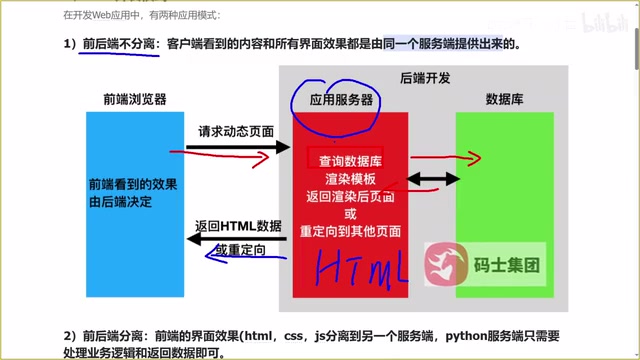
FastAPI Fundamentals: Frontend-Backend Separation and RESTful API Design Explained
A comprehensive introduction to FastAPI's core concepts: frontend-backend separation, RESTful API design, JSON data exchange, HTTP methods, and idempotency explained clearly.
Read more →
·7 min
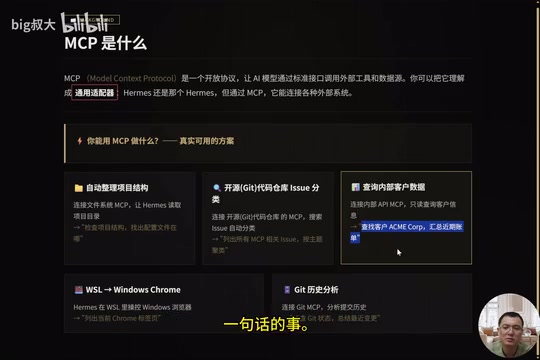
Connecting Hermes Agent to MCP: One Protocol to Unify All External Systems
Learn how to extend Hermes Agent's external system capabilities via MCP (Model Context Protocol): setup, whitelist permissions, WSL-to-Chrome bridging, and multi-server orchestration for AI Agent developers.
Read more →

·6 min
From Vibe Coding to AI Engineering: A Complete Practical Guide to Codex and Claude Code
An in-depth analysis of the practical use of Codex and Claude Code, comparing Vibe Coding and AI engineering, covering Super Power plugins, Spec-Driven Development, and Chinese LLM integration strategies.
Read more →

·6 min
Playwright's Three Test Agents: A Deep Dive into Planner, Generator, and Healer
Playwright's three new Test Agents—Planner, Generator, and Healer—cover the full pipeline from test design to script generation and auto-repair, integrated with VS Code, Claude Code, and more.
Read more →

·6 min
Gas Town: A Multi-Agent Workspace Manager Built in Go
Gas Town is an open-source multi-agent workspace manager built in Go with 16,000+ GitHub Stars. This article analyzes its architecture, Go language advantages, and typical multi-agent collaboration scenarios.
Read more →

·6 min
Codex Beginner's Guide: Four Product Forms Explained, Plus Comparison with Claude Code and Cursor
In-depth analysis of OpenAI Codex's four usage forms, comparing Codex, Claude Code, and Cursor across price, stability, and frontend/backend fit to help developers choose the right AI programming tool.
Read more →

·3 min
Harness Engineering in Practice: A Guide to Enterprise-Grade Multi-Agent System Architecture
A deep dive into Harness Engineering architecture: building an AI procurement assistant on ERP systems, covering multi-agent orchestration, MCP protocol, ASGI deployment, and sandbox isolation.
Read more →

·4 min
MCP Practical Tutorial: From Server Development to Multi-Client Integration
A complete MCP practical guide using the official Python SDK — covering environment setup, FastMCP server development, Inspector debugging, and multi-client integration with Cursor and Cline.
Read more →

·2 min
FastAPI Fundamentals: Web Development Patterns, API Interfaces, and RESTful Standards Explained
Learn FastAPI fundamentals: frontend-backend separation, what API interfaces really are, and how RESTful standards work. Essential groundwork for Python backend development.
Read more →

·7 min
Getting Started with LangGraph Multi-Agent Development: Architecture Analysis and Three Practical Case Studies
Learn LangGraph multi-agent development covering Supervisor and Collaboration architectures, with three hands-on projects: code assistant, prompt assistant, and WebRTC digital human.
Read more →

·7 min
App Builder: Generate Runnable Applications from a Single Sentence — A New Paradigm in AI Programming Tools
App Builder generates single-file runnable apps from natural language, with real-time sandbox preview and conversational revision. Deep analysis of its workflow, architecture, limitations, and costs.
Read more →

·7 min
Complete Guide to OpenCode: Installation, Configuration, and Custom Commands in Practice
A systematic guide to OpenCode, the open-source terminal AI coding tool: installation methods (including WSL), model configuration, rules files, Agent types, custom commands, and MCP tool extensions.
Read more →