#automated partition management
71 related articles

·3 min
Benchmarking LLMs on Smartphones: A Deep Dive into the MELTing Point Benchmark
The MELTing Point paper is the first to evaluate mobile LLM performance in real user scenarios, covering iPhone, Samsung, Pixel and more, testing TinyLlama, Mistral-7B and others—revealing GPU inference gains, 47°C heat warnings, and prefill-decode disaggregation.
Read more →

·3 min
Farewell to a Decade-Old VPS: Technical and Emotional Insights from Retiring an Old Server
A tweet saying "rest well, old friend" resonated across the tech community. This article explores VPS lifecycle management, best practices for retiring old servers, and the unique emotional bond between engineers and infrastructure.
Read more →

·3 min
Spending $200K to Test GPT-5.6: Have AI Coding Assistants Reached a Tipping Point?
Developer Theo spent ~$200K over 6 weeks testing GPT-5.6 across 67 projects — from 20-hour autonomous coding runs to fixing boot partitions and Rust rewrites.
Read more →

·7 min
Turning Any AI Agent into an Orchestration Hub: A Deep Dive into Multi-Agent Collaboration Architecture
An in-depth analysis of the "any Agent as an orchestrator" design philosophy, exploring the technical implementation of multi-Agent collaboration, context management, and workflow automation.
Read more →

·7 min
21-Day Python Automation Testing Crash Course: A Complete Breakdown of the Three-Stage Learning Path
Learn automation testing from scratch! This article breaks down a three-stage path: Selenium/Appium tools, Requests+PyTest API testing, performance testing and CI/CD, with real projects—build a complete skill set in 21 days.
Read more →

·7 min
From Vibe Coding to Engineered AI Programming: A Practical Guide to Enterprise Development
AI coding tools are changing development, but Vibe Coding hides risks in code quality and maintenance. This article explores Engineered AI Programming, compares Codex and Claude Code, and reveals real enterprise development paths.
Read more →

·7 min
Getting Started with Dify: A Complete Guide from Local Deployment to Building Enterprise-Grade AI Applications
A detailed guide to Dify, the open-source LLM app development platform, covering its core features and full local deployment via VMware + Ubuntu + aaPanel + Docker. Supports 100+ models like DeepSeek and ChatGPT to build enterprise AI apps fast.
Read more →
·6 min
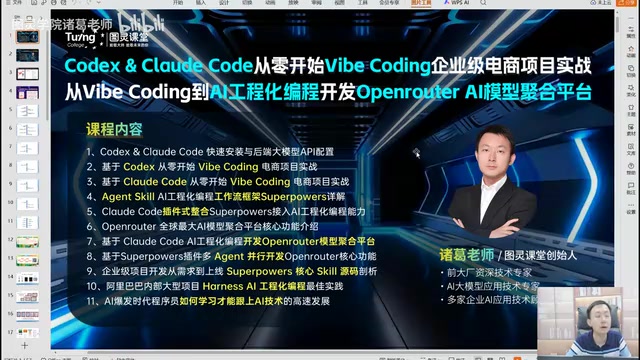
Understanding the Limits of Vibe Coding: A Practical Guide to AI Engineering-Grade Programming
An in-depth look at the difference between Vibe Coding and AI engineering-grade programming. Can AI replace programmers? From Claude Code and Codex to Cursor, revealing the real limits, enterprise pain points, and engineering solutions of AI coding tools.
Read more →

·5 min
Turn PRD into XMind Test Cases with One Click Using Cursor — 10x Efficiency Boost
A must-read for test engineers: use Cursor's custom Skills to auto-generate test cases covering positive, negative, and boundary values from PRDs, output as Markdown linked to XMind, adapting to functional, interface, and performance testing.
Read more →

·6 min
Microsoft Layoffs Hit id Software: Doom Studio Loses Over Half Its Staff
Microsoft's massive Xbox layoffs deal a heavy blow to Doom developer id Software, cutting over 90 positions with QA hit hardest. An in-depth analysis of the layoff backdrop, causes of the industry winter, and its impact.
Read more →

·6 min
Verification Loops Quadruple DeepSeek's Intelligence at One-Seventh the Cost of Claude Opus
By introducing an engineered verification loop reasoning framework, DeepSeek's effective pass rate on complex tasks can improve ~4x, matching Claude Opus at one-seventh the cost. A deep dive into verification loops, test-time compute scaling, and their practical implications.
Read more →

·4 min
pytest Testing Patterns in Practice: Building a Systematic Automated Testing Framework
A deep dive into pytest patterns: layered fixture management, parameterized coverage, mock isolation, coverage gates, and CI integration — upgrade your team from scattered scripts to a maintainable automated testing framework.
Read more →

·6 min
Semi-AI Mode: A Practical Guide to Implementing API Automation Testing
Can't make pure AI work? This guide explores the Semi-AI approach to API automation testing, covering key challenges, enterprise framework design, and how AI and frameworks work together for maximum impact.
Read more →

·7 min
Exfiltrating Data from Air-Gapped Systems via Apple's Find My Network: Attack Mechanics and Defense Insights
Security research reveals how attackers can abuse Apple's Find My network as a covert exfiltration channel, disguising sensitive data from air-gapped systems as location beacons. A deep dive into the attack chain, stealth advantages, and defense insights.
Read more →

·6 min
AI Workspace Session and Cache Leaks: A Complete Analysis of Multi-Tenant Isolation Security Risks
AI workspaces face cross-tenant session and cache leak risks that can expose sensitive enterprise data. This article analyzes multi-tenant isolation pitfalls, common architectural flaws, and actionable defenses.
Read more →

·6 min
LangChain 1.0 Comprehensive Guide: Three Core Frameworks and Hands-On AI Application Development
Deep dive into LangChain 1.0's architecture: LangChain framework, LangGraph multi-Agent orchestration, and LangSmith observability platform, with hands-on RAG and intelligent customer service projects.
Read more →

·7 min
Engineering Vibe Coding in Practice: Taming AI Programming with Superpowers and gstack
A deep dive into engineering Vibe Coding: using Superpowers for project-level decomposition and gstack for module layering and constraints to tame AI coding assistants like Codex and Claude Code.
Read more →

·6 min
5 Critical Engineering Pitfalls in Enterprise RAG Knowledge Base Deployment: The Real Barriers from Demo to Production
Why do enterprise RAG knowledge bases dazzle in demos but fail in production? This article dissects five critical engineering pitfalls with real-world case studies from million-doc platforms and ops agents.
Read more →

·6 min
Playwright's Three Test Agents: A Deep Dive into Planner, Generator, and Healer
Playwright's three new Test Agents—Planner, Generator, and Healer—cover the full pipeline from test design to script generation and auto-repair, integrated with VS Code, Claude Code, and more.
Read more →

·6 min
Gas Town: A Multi-Agent Workspace Manager Built in Go
Gas Town is an open-source multi-agent workspace manager built in Go with 16,000+ GitHub Stars. This article analyzes its architecture, Go language advantages, and typical multi-agent collaboration scenarios.
Read more →