#autonomous vulnerability discovery
66 related articles
 Tech Frontiers
·1 min
Open-Source Replication of Anthropic Mythos: Autonomous Vulnerability Discovery Framework Analysis
Analysis of mythos-research, an open-source replication of Anthropic's Mythos Preview autonomous vulnerability discovery framework using Claude Opus 4.7.
Read more →
Third-Party Cybersecurity Evaluations …
·2 min
Third-Party Cybersecurity Evaluations of OpenAI Models: A Deep Dive into Methodology and Industry Impact
An in-depth analysis of third-party cybersecurity evaluation methodologies for OpenAI models, covering red teaming, vulnerability discovery assessment, risk classification, and impact on AI governance.
Read more →

·3 min
Nightcrawler: Deep Dive into an AI Penetration Testing Agent Running Locally on Smartphones
Deep analysis of Nightcrawler, an AI penetration testing agent running entirely on smartphones. Exploring how on-device AI empowers cybersecurity testing, its architecture, use cases, and risks.
Read more →

·3 min
VulX Watch: A Standalone Security Audit Tool Built Specifically for AI-Generated Code
VulX Watch is a security audit tool for AI-generated code that connects read-only to GitHub repos, independently reviews vulnerabilities, and provides line-level evidence for every finding.
Read more →

·3 min
AI Cybersecurity Assessment: Capability Boundaries Revealed by Three Real-World Attack Incidents
Analysis of three real cyberattack incidents reveals AI's actual capability boundaries in offensive operations, exposing gaps between lab benchmarks and real-world threats for better security assessment.
Read more →

·3 min
AI Cybersecurity Assessment: Capability Boundaries Revealed by Three Real-World Attack Incidents
Investigating three real cyberattack incidents to analyze AI's true role in offensive operations, examining the gap between lab assessments and real threats for better AI security evaluation.
Read more →

·3 min
Cynative Open-Source AI Cloud Security Tool: Audit Cloud Infrastructure with Natural Language
Cynative is an open-source AI cloud security auditing tool that lets you query AWS, GCP, Azure, and Kubernetes infrastructure using natural language. Its read-only architecture ensures zero risk to production environments.
Read more →

·3 min
Cynative Open-Source AI Cloud Security Tool: Audit Cloud Infrastructure with Natural Language
Cynative is an open-source AI cloud security tool that lets you audit AWS, GCP, Azure, and Kubernetes infrastructure using natural language. Its read-only architecture ensures production environments stay safe.
Read more →

·2 min
Google Releases Three New Gemini Models: Faster, Cheaper, and More Specialized
Google launches Gemini 3.6 Flash, 3.5 Flash-Lite, and 3.5 Flash Cyber—three new models targeting quality-cost balance, extreme affordability, and cybersecurity specialization for AI Agent use cases.
Read more →

·4 min
Full Anatomy of AI Agent Intrusion Attack Chains: From Prompt Injection to Data Exfiltration
Deep analysis of Hugging Face's frontier lab AI agent intrusion report, covering indirect prompt injection, lateral movement, data exfiltration, and defense-in-depth strategies for AI agent security.
Read more →

·5 min
July 24 AI Daily Brief: Flux 3 Multimodal Release, Kimi K3 Lags in Testing, Qwen Tops TTS Rankings
July 24 AI news: Black Forest Labs launches Flux 3 multimodal model, Kimi K3 lags in US-UK gov tests, Alibaba Qwen tops TTS rankings, Etched raises $300M, AMD unveils MI430X.
Read more →

·4 min
Kimi K3 Deep Dive: 2.8 Trillion Parameter Open-Source Model Closes the Gap with Closed-Source Frontier for the First Time
Moonshot AI releases Kimi K3 open-weight model with 2.8T parameters and 1M token context. Our deep dive covers coding, 3D dev, agent capabilities, and safety concerns.
Read more →

·3 min
GPT-5.6 and ChatGPT Work Launch: AI Evolves from Conversational Assistant to Task Executor
OpenAI launches the GPT-5.6 family (Sol/Terra/Luna), ChatGPT Work, a new desktop app, and Hosted Sites — marking AI's evolution from Q&A assistant to autonomous task executor.
Read more →

·5 min
GPT-5.6 Launches: Comprehensive Upgrades to ChatGPT Work, Sites, and Desktop Client
OpenAI releases the GPT-5.6 model family, launching enterprise-focused ChatGPT Work, one-click ChatGPT Sites, and a major desktop client upgrade, with coding now ahead of rivals. Meta, Google, and Kimi follow intensively.
Read more →

·4 min
Surge in Claude Mythos Preview Vulnerabilities: How Can We Ensure LLM Security?
After the release of Claude Mythos Preview, critical security vulnerabilities surged, raising widespread concern. This article analyzes the tension between rapid iteration and security, explores LLM attack surface challenges, and offers practical defense strategies.
Read more →
·5 min
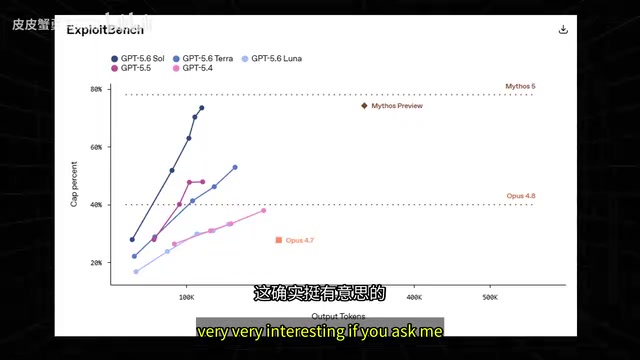
GPT-5.6 Released: Outperforms Rivals but Halted by Government—Cybersecurity Capabilities Trigger Regulatory Red Line
OpenAI releases GPT-5.6 (Sol/Terra/Luna), beating Anthropic on Terminal Bench at ~40% lower cost. But its cybersecurity capabilities hit danger thresholds, limiting access to trusted partners at government request.
Read more →

·4 min
How Background AI Agents Can Automatically Maintain All Your Repositories on a Schedule
OpenInspect's Multi-Repo Automations lets AI coding agents maintain up to 10 repositories on a schedule simultaneously — isolated sessions, independent PRs, and fault-tolerant execution for security sweeps, dependency upgrades, and framework migrations.
Read more →

·6 min
GPT-5.6 Hands-On Deep Dive: ChatGPT and Codex Merge, Full Analysis of the Sol Model
GPT-5.6 is officially released, merging ChatGPT and Codex into one app and launching the three-tier Sol, Terra, and Luna models. A detailed breakdown of 16 hands-on tests plus Worker mode and Codex dev upgrades.
Read more →

·7 min
From Vibe Coding to Engineered AI Programming: A Practical Guide to Enterprise Development
AI coding tools are changing development, but Vibe Coding hides risks in code quality and maintenance. This article explores Engineered AI Programming, compares Codex and Claude Code, and reveals real enterprise development paths.
Read more →

·2 min
Visa Harness: An Open-Source Security Testbed for Auditable AI Vulnerability Scanning
Visa's open-source Agentic security testbed Harness orchestrates threat modeling, vulnerability research, adversarial reproduction, and structured reporting into an auditable pipeline — not just a scan button.
Read more →