#background task resume
143 related articles

·3 min
Cursor Launches iOS App: Direct AI Coding from Your Phone, Anywhere
Cursor launches its iOS app with always-on cloud AI agents and remote local Agent control, letting developers direct AI coding from anywhere — no desktop required.
Read more →

·7 min
50 AI Research Job Applications to FAANG, 0 Replies? Unpacking the Truth Behind the Job Search Struggle
An AI research engineer with 3 years of experience sent 50 applications to FAANG with zero replies. This article breaks down the hidden barriers of top-tech AI roles, the truth about LinkedIn ghost jobs, and the MLE vs. Research Engineer divide.
Read more →

·5 min
28 Enterprise-Grade AI Agent Projects: A Complete Guide That Even Beginners Can Deploy
A collection of 28 fully reproducible enterprise-grade AI Agent projects covering code debugging, financial analysis, customer service, and multi-agent collaboration—deployable even for beginners.
Read more →

·7 min
Complete Guide to Training Small Models on Kaggle's Free Compute: GPU Quotas and Practical Tips
In-depth guide to Kaggle's free-tier compute: P100/T4 GPU with 30 hours/week quota, 12-hour sessions, suitable models like CNN and BERT fine-tuning, plus tips like mixed precision and checkpointing to start deep learning at zero cost.
Read more →

·7 min
21-Day Python Automation Testing Crash Course: A Complete Breakdown of the Three-Stage Learning Path
Learn automation testing from scratch! This article breaks down a three-stage path: Selenium/Appium tools, Requests+PyTest API testing, performance testing and CI/CD, with real projects—build a complete skill set in 21 days.
Read more →

·7 min
A Java Developer's Guide to AI: Framework Selection and Practical Tutorial for LangChain4J
As LLM costs keep falling, how can Java developers seize the AI opportunity? This article explores LangChain4J's core capabilities, supported models and vector databases, and compares LangChain4J vs. Spring AI to help you build local knowledge bases and intelligent customer service systems.
Read more →
·7 min
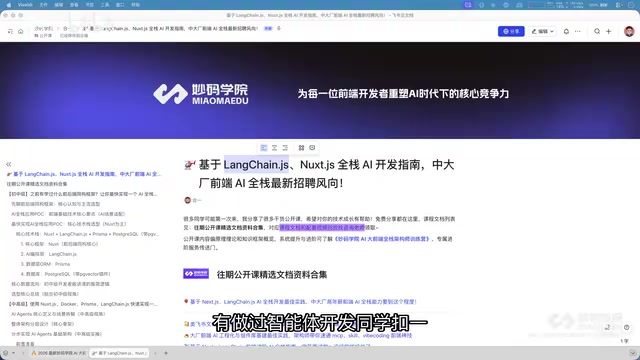
LangChain.js + Nuxt.js: An AI Full-Stack Advancement Path for Frontend Engineers
Frontend hiring now treats AI capabilities as a core assessment, covering RAG knowledge bases, AI Agent development, and LangChain.js engineering. Learn how LangChain.js + Nuxt.js helps frontend developers build memory- and retrieval-capable AI full-stack apps.
Read more →

·7 min
Electron + LangGraph in Practice: Building an AI Agent Visual Orchestration App from Scratch
A hands-on guide to building an enterprise-grade AI Agent workflow orchestration app with Electron Forge and LangGraph, covering local LLM deployment (Qwen3-0.6B), node-based visual canvas design, and full Function Calling integration.
Read more →

·7 min
Building AI Agent Frameworks with TypeScript: The Core Development Paradigm for Full-Stack Developers
An in-depth look at why TypeScript is the top choice for AI Agent development: covering Zod structured output validation, LangGraph's graph state machine design, and a full learning path for front-end devs transitioning to full-stack AI.
Read more →

·7 min
A Complete Guide to LangGraph's Core Concepts: The Framework of Choice for Enterprise Agent Development
An in-depth analysis of LangGraph's core concepts: short-term and long-term storage mechanisms, its differences from LangChain, the MIT open-source license, and private deployment solutions for enterprise Agent development.
Read more →
·3 min
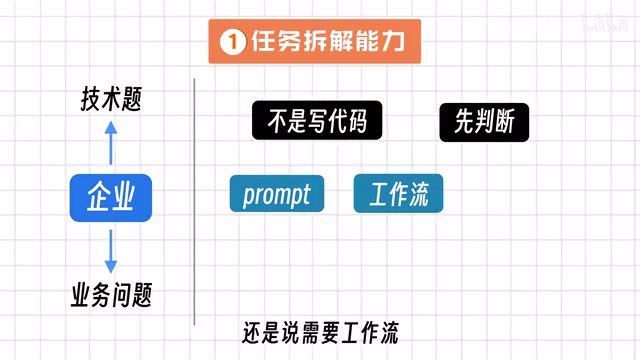
4 Core Competencies Every High-Value LLM Application Engineer Must Have
Why can't companies find qualified AI engineers? Discover the 4 core competencies every high-value LLM application engineer needs: task decomposition, tool calling, observability, and production readiness.
Read more →

·6 min
Claude Code Chinese Guide: A Complete Path from Zero to an Efficient Workflow
A systematic Claude Code learning guide built for Chinese developers, covering ten core modules including Slash Commands, Memory, MCP, and Hooks, with a three-tier path to build an AI coding workflow in 11–13 hours.
Read more →
Launch a Cloud Dev Environment in One …
·4 min
Launch a Cloud Dev Environment in One Prompt: A Deep Dive into the Codex DigitalOcean Plugin
OpenAI Codex's DigitalOcean plugin lets developers launch persistent cloud dev environments with a single natural language prompt. A deep dive into capabilities, use cases, and risks.
Read more →

·3 min
OpenAI's Official Plugin: Let Codex Review Your Code Inside Claude Code
OpenAI's official open-source plugin brings Codex into Claude Code for cross-model code review. Five core features including adversarial review and sub-agent delegation — with real risk warnings included.
Read more →

·4 min
MCP Practical Tutorial: From Server Development to Multi-Client Integration
A complete MCP practical guide using the official Python SDK — covering environment setup, FastMCP server development, Inspector debugging, and multi-client integration with Cursor and Cline.
Read more →

·4 min
AI Workbench: One-Click Content Creation from Topic Research to Final Output
AI Workbenches automate the full content creation pipeline — from topic research to visual output. Multi-model routing, transparent execution, and reusable workflow templates redefine how creators work.
Read more →

·2 min
Harness Engineering Architecture Explained: An Essential Skill for AI Agent Developer Roles
Harness Engineering is becoming a must-have skill for AI agent developer roles. Learn the architecture, how top agent products use it, and how to practice with LangChain DeepAgents.
Read more →

·4 min
How Daytona Is Redefining AI Agent Compute Sandbox Infrastructure
Deep analysis of how Daytona pivoted from browser IDE to AI Agent sandbox infrastructure, achieving 60ms startup times, 850K daily sandboxes on bare metal, and why Computer Use opens a trillion-dollar market.
Read more →

·4 min
AI Agent Memory System Architecture Breakdown: A Practical Selection Guide from 16 Open-Source Projects
Deep analysis of memory system architectures across 16 open-source AI Agent projects including Hermes, Goose, NanoClaw, and Deerflow, covering FTS5 vs vector search, multi-tenant isolation, and LLM auto-extraction.
Read more →

·2 min
Codex's Insane Logging Is Destroying Your SSD: 37TB Written in 21 Days
OpenAI Codex has a severe logging bug that wrote 37TB to a user's SSD in 21 days, potentially killing drives within a year. Learn the cause, risk, and fix.
Read more →