#code handoff
158 related articles

·3 min
AI-Accelerated Reverse Engineering: Cracking SM2/SM4 Encrypted Freelance Jobs in 30 Minutes
Real freelance case study: how to use DeepSeek and LLMs to reverse-engineer SM2/SM4 encrypted API parameters in 30 minutes, covering anti-debug bypass, call stack backtrace, and AI-assisted deobfuscation.
Read more →

·3 min
What Is CI/CD? A Complete Guide to Automated Release Pipelines at Tech Companies
CI/CD is the automated release pipeline powering modern software. Learn how continuous integration and deployment work, their core value, and where they can fail.
Read more →
·4 min
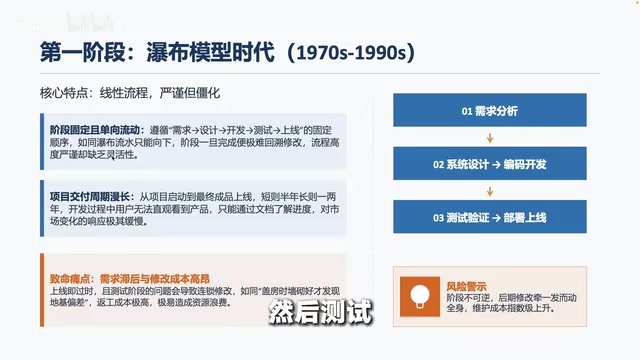
Understanding CI/CD from Scratch: Core Principles and Practical Introduction to Automated Deployment
A clear, practical guide to CI/CD: from Waterfall to DevOps, manual vs. automated deployment, and a full Jenkins + RuoYi hands-on learning path for beginners.
Read more →

·2 min
AI Autonomous Execution in Practice: How Codex Handles End-to-End Workflows from Analysis to Image Generation
A hands-on test of AI tool-calling: from e-commerce product page analysis and batch image generation to automated cross-border localization — how Codex-style models handle full workflows.
Read more →

·3 min
Codex vs Fable: Which AI Agent Is Better at Finding Real Pain Points?
Codex vs Fable in an open-ended problem space: Codex delivers flawless execution but plays it safe; Fable shows sharp strategic vision but lands too narrow. Here's how to combine both.
Read more →

·4 min
LangChain + LangGraph Full-Stack in Practice: A Production-Ready Guide to Six Core Modules and Agent Deployment
A systematic breakdown of LangChain's six core modules (Models/Prompts/Chains/Memory/RAG/Agent) and LangGraph's state graph, persistence, and HITL — with production deployment tips.
Read more →

·2 min
When Does Multi-Agent Architecture Slow Down Your Workflow? A Single vs. Multi-Agent Comparison
Multi-agent architecture isn't always better. This article analyzes how splitting tasks across agents introduces latency, token costs, and error propagation — with a practical framework for deciding when to use single vs. multi-agent design.
Read more →

·2 min
One Vague Prompt, Full Anime Animation: A GPT + Blender + Seedance Workflow Breakdown
One vague prompt triggers GPT to write a storyboard, drive Blender MCP to build a 3D layout, and hand it to Seedance 2.0 for anime stylization. Here's how the pipeline works.
Read more →
There's No Best Agent Framework — Only…
·2 min
There's No Best Agent Framework — Only the Right One for Your Needs: A Deep Comparison of Leading Options
LangGraph, PydanticAI, OpenAI Agents SDK, CrewAI — a senior developer's practical guide to choosing the right AI Agent framework for your project.
Read more →
·3 min
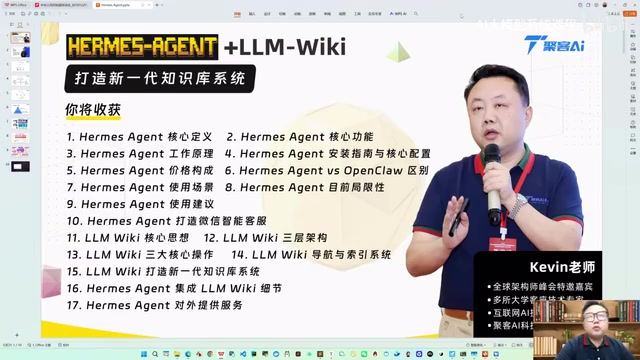
Enterprise AI Agents in Practice: A Developer's Guide to Hermes Agent
A deep dive into Hermes Agent vs OpenCloud with real enterprise case studies across telecom, finance, and e-commerce — revealing why mastery, not tool choice, drives AI agent success.
Read more →

·4 min
Codex Plans, DeepSeek Executes: A Practical Guide to Multi-Model Collaboration for Saving Tokens
AI programming burning through Tokens too fast? This guide covers the open-source Hand of Labor project's multi-model approach: Codex plans, DeepSeek executes—cutting AI coding costs while boosting output quality.
Read more →

·4 min
The Complete AI Agent Development Learning Path: From Zero to Enterprise-Grade Practice
A systematic AI Agent development learning path covering fundamentals, prompt engineering, tool calling, multi-agent collaboration, and hands-on practice with LangChain, CrewAI, and Dify.
Read more →

·3 min
Multi-Agent Collaboration with Claude Code and Codex: A Guide to Architecture Design and State Management
A deep dive into Claude Code and Codex multi-Agent collaboration: architecture design, state-driven coordination, private/public zone division, and building efficient AI programming teams.
Read more →

·5 min
Browser Use: A Deep Dive into the Event-Driven Browser AI Agent Framework
Browser Use is an open-source AI Agent framework that lets LLMs autonomously drive browser operations via natural language. This article breaks down its four-layer architecture, core Agent loop, CDP perception layer, dynamic Tools dispatch, and its Skills, Sandbox, and MCP extension capabilities.
Read more →

·4 min
The Death of Codex: How OpenAI Buried Developers' Favorite Coding Brand With Its Own Hands
OpenAI merged Codex into ChatGPT, killing a developer-beloved AI coding brand. A deep dive into the gains and losses of this brand consolidation.
Read more →

·2 min
The Complete Guide to Custom Software Development: AI Large Model Applications & Full-Stack Development, All in One Place
15-year full-stack engineering team offering custom development for mini programs, apps, enterprise systems, RAG knowledge bases, and AI agents — no middlemen, no subcontracting, full one-on-one ownership.
Read more →

·3 min
3 Skill Configurations That Turn Claude Code into a Testing Powerhouse — Say Goodbye to Repetitive Work
Still using Claude Code as a chatbot? Learn 3 Skill configurations for QA engineers: Bug report generation, code risk review, and test data construction.
Read more →

·4 min
AI Agent Development Deep Dive: Opportunities, Real Entry Barriers, and Learning Paths
A deep dive into AI Agent development: real architecture, entry barriers, and learning paths. From ReAct to multi-agent systems and LangChain — cut through the hype.
Read more →

·3 min
Marshall Acton IV & Stanmore IV Review: Enhanced Bass, Repairability-First Design Explained
Marshall Acton IV & Stanmore IV launch with upgraded tweeters, bass ports, and modular replaceable components. A serious step forward in both sound and repairability.
Read more →

·5 min
5 Things You Must Do Before Deploying AI Agents to Production (With a Banking POC Case Study)
Over 60% of AI Agent projects die between demo and production. This article breaks down Databricks lead Sandy's five-pillar methodology and a bank POC case study to help you avoid the most common deployment pitfalls.
Read more →