#code handoff
152 related articles

·3 min
Build RAG and AI Agent Projects at Zero Cost: A Practical Guide to Open-Source Tools
Build high-quality AI projects on a budget. Learn how to use Ollama, Groq, Chroma, and other free open-source tools to build RAG systems and multi-Agent workflows from scratch.
Read more →
·3 min
Build RAG and AI Agent Projects at Zero Cost: A Practical Guide to Open-Source Tools
Build high-quality AI projects on a budget. Learn how to use Ollama, Groq, Chroma, and other free open-source tools to build RAG systems and multi-Agent workflows from scratch.
Read more →

·4 min
Robot Valet Parking at Gatwick Airport: How the AGV Automated Parking System Works
London Gatwick launches UK's first robot valet parking using AGV technology, boosting parking capacity by 30-60%. Learn how the system works, its challenges, and the business case for automated parking.
Read more →

·4 min
Java Developer to AI Architect: A Three-Layer Capability Upgrade Roadmap
How can Java engineers transition to AI Architect? This article breaks down three core capability layers — AI app development, production RAG, and AI Agent orchestration — using Spring AI Alibaba and LangChain4j to turn your Java foundation into a competitive edge.
Read more →
·7 min
Qwen3 235B A22B in Practice: A 2.4-Trillion-Parameter Open Model Surpasses Claude Opus
Hands-on with Alibaba Tongyi Qianwen's strongest Qwen3: a 2.4-trillion-parameter open weight model scoring 81.25% on KingBench, ranking second and beating Claude Opus 4.8 with perfect scores in game dev, math, and agent tasks.
Read more →

·2 min
Voice AI Agent Architecture: Pipecat Flows vs Vapi Squad — A Deep Comparison
A deep comparison of Pipecat Flows and Vapi Squad for voice AI agent architecture — covering latency, accuracy, multi-agent handoffs, and when to use each.
Read more →

·7 min
AI Daily: T-Head Open-Sources SAIL Software Stack at WAIC, Flurry of Large Model Releases
T-Head open-sources AI software stack T-Head SAIL at WAIC to lower the barrier for domestic chip development; Kimi K3 tops the WebDev leaderboard; Qwen 3.8 Max Preview cuts prices aggressively; Moonshot prepares a Hong Kong IPO; and Oracle switches its data center to a fuel cell microgrid.
Read more →

·4 min
5 Tips to Cut Claude Opus 5 Costs by Up to 80%
Opus 5 moving to API billing? 5 proven tips to cut token costs by up to 80%: lower Effort Level, architect-executor split, Ponytail compression, Deep Research, and Advisor Mode — while outperforming Opus 4.8.
Read more →

·4 min
Zero-Code AI Voice Agents with Claude Code: 5 Real-World Business Scenarios Unpacked
Build a production AI voice agent with Claude Code + Telnyx single-stack — no code needed, live phone number in 5 minutes. Covers 5 business scenarios including appointment booking, lead qualification, and support triage.
Read more →

·2 min
Call Codex Directly Inside Claude Code: A Dual-AI Cross-Validation Workflow
Codex Plugin for Claude Code lets developers invoke Codex reviews directly inside Claude Code. Supports code review, proposal review, background task delegation, and context handoff for a dual-AI workflow.
Read more →

·3 min
The Truth Behind Three RAG Pipeline Crashes: Why Inter-Stage Data Contracts Matter
A RAG pipeline crashed three times due to inter-stage data format mismatches. Learn how JSON Schema and Pydantic explicit contracts turn fragile AI pipelines into maintainable systems.
Read more →

·3 min
Codex in Action: A Complete Guide to Building a WeChat Mini Program with AI — No Coding Experience Required
A complete walkthrough of building and launching a WeChat Mini Program using OpenAI Codex and ChatGPT — from AI prototyping to ICP filing. MVP delivered in 5 days, no coding required.
Read more →

·3 min
AI Agent Production Guide: Four Orchestration Patterns That Actually Work
Most AI agents never make it past the demo stage. This guide covers four production-grade agent patterns—workflow orchestration, policy-constrained execution, anomaly handling, and load routing—to help teams build reliable agent systems.
Read more →

·3 min
How to Monetize AI Automation Skills: A Practical Path from Tools to Business Results
Learned Claude, n8n, or Coze but unsure how to monetize? This article breaks down the core logic of AI automation monetization: prove business value with data, build case studies, and develop a credible personal brand.
Read more →

·3 min
AI-Accelerated Reverse Engineering: Cracking SM2/SM4 Encrypted Freelance Jobs in 30 Minutes
Real freelance case study: how to use DeepSeek and LLMs to reverse-engineer SM2/SM4 encrypted API parameters in 30 minutes, covering anti-debug bypass, call stack backtrace, and AI-assisted deobfuscation.
Read more →

·3 min
What Is CI/CD? A Complete Guide to Automated Release Pipelines at Tech Companies
CI/CD is the automated release pipeline powering modern software. Learn how continuous integration and deployment work, their core value, and where they can fail.
Read more →
·4 min
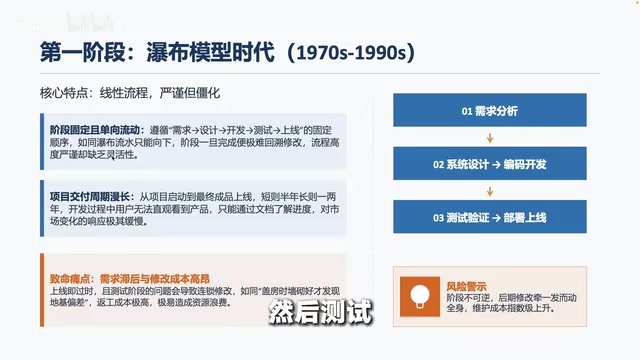
Understanding CI/CD from Scratch: Core Principles and Practical Introduction to Automated Deployment
A clear, practical guide to CI/CD: from Waterfall to DevOps, manual vs. automated deployment, and a full Jenkins + RuoYi hands-on learning path for beginners.
Read more →

·2 min
AI Autonomous Execution in Practice: How Codex Handles End-to-End Workflows from Analysis to Image Generation
A hands-on test of AI tool-calling: from e-commerce product page analysis and batch image generation to automated cross-border localization — how Codex-style models handle full workflows.
Read more →

·3 min
Codex vs Fable: Which AI Agent Is Better at Finding Real Pain Points?
Codex vs Fable in an open-ended problem space: Codex delivers flawless execution but plays it safe; Fable shows sharp strategic vision but lands too narrow. Here's how to combine both.
Read more →

·4 min
LangChain + LangGraph Full-Stack in Practice: A Production-Ready Guide to Six Core Modules and Agent Deployment
A systematic breakdown of LangChain's six core modules (Models/Prompts/Chains/Memory/RAG/Agent) and LangGraph's state graph, persistence, and HITL — with production deployment tips.
Read more →