#contract testing
307 related articles
Can Vorflux Disrupt the AI Coding Agen…
·2 min
Can Vorflux Disrupt the AI Coding Agent Landscape? A Rational Take on Investor Endorsements
An investor's tweet benchmarked AI coding assistant Vorflux against Devin, claiming it "wins hands down" and predicting a $100B valuation. Here's a rational breakdown.
Read more →
·3 min
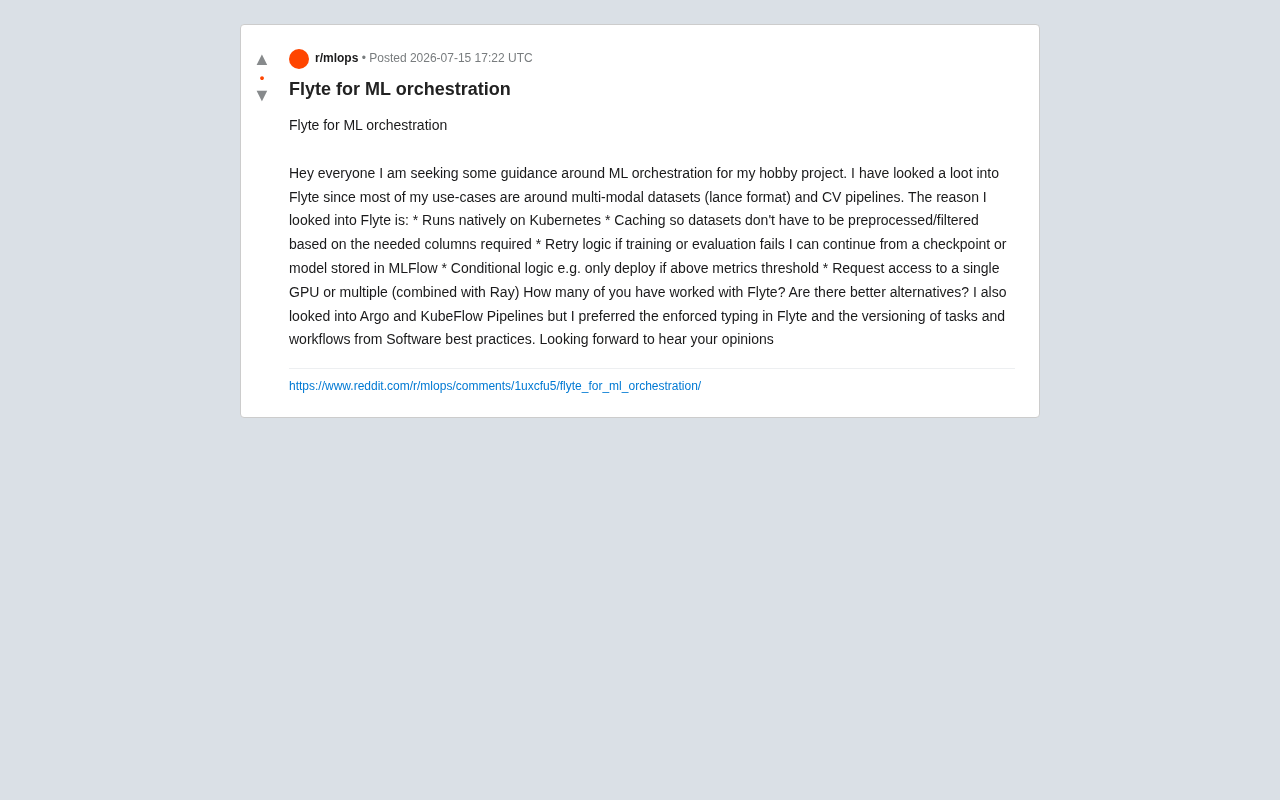
Flyte Deep Dive: A Practical Guide to Choosing Your ML Workflow Orchestration Tool
Deep dive into Flyte's core capabilities: cloud-native GPU scheduling, intelligent caching, checkpoint recovery, and conditional deployment — plus a full comparison with Argo and KubeFlow Pipelines.
Read more →
·4 min
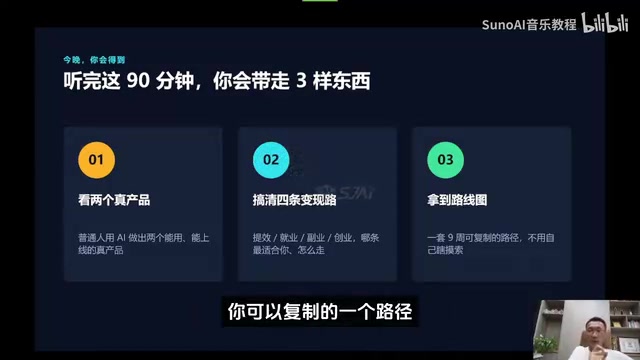
Codex Tutorial: Build Monetizable Products with AI Coding — No Experience Required
Step-by-step Codex tutorial: build a product finder tool and a flashcard mini program from scratch. Learn prompt techniques, requirements breakdown, and 4 monetization paths.
Read more →

·2 min
Handing Your Life to an AI Agent? The Real Dangers of Over-Authorization
A viral Reddit dark-humor post exposes the real risks of over-authorizing AI agents. When hallucination-prone AI is granted irreversible permissions, the consequences can be catastrophic. We break down key safeguards like least privilege and Human-in-the-loop.
Read more →

·3 min
ByteDance Interviewer Deep Dive: How Vibe Coding Is Reshaping Frontend Engineers' Core Competitiveness
A ByteDance interviewer breaks down the 3-layer Vibe Coding interview framework: AI tool awareness, complex product engineering, and a 1-hour full-stack challenge. Architectural thinking wins.
Read more →

·3 min
OpenAI Seeks Government Stake: A Last-Ditch Rescue Before the AI Bubble Bursts?
OpenAI proposes a 5% stake to the Trump administration worth ~$43B. From $13B revenue and $21B losses to Chinese models doubling market share, Scott Galloway exposes AI's demand crisis and crony capitalism.
Read more →

·3 min
Claude Code Enterprise Guide: Environment Setup, Git Workflows, and Switching to Chinese AI Models
Enterprise guide to Claude Code: CLI setup, switching to DeepSeek and other Chinese AI models, Git workflow automation, and bug fix loops to boost team productivity.
Read more →

·2 min
GPT-5.6 Soul In-Depth Review: Can Multi-Agent Programming Mode Reshape the AI Development Tools Landscape?
GPT-5.6 Soul review: Super Mode hits 91.9% on TerminalBench. We break down multi-agent scheduling, benchmark controversies, and real-world dev tool comparisons.
Read more →

·3 min
AI-Powered Python Reverse Engineering: A Full Retrospective on Using LLMs to Accelerate the Workflow
A real-world retrospective on AI-assisted Python reverse engineering: from JS obfuscation tracing and SM2/SM4 key extraction to generating decryption code with DeepSeek. An honest assessment of LLM value and legal risks.
Read more →

·3 min
40-Hour Stress Test: An In-Depth Evaluation of GPT-5.6's Coding Capabilities
A developer spent 40 hours exhausting Codex Pro's weekly quota to benchmark GPT-5.6 on real enterprise projects. Key findings: proactive root cause tracing, stronger global codebase understanding, and stable long-task execution.
Read more →

·3 min
The Complete Guide to Looping Engineering: Building Efficient Agent Loops from Scratch
A deep dive into Looping Engineering — covering the five core loop elements (Trigger, Goal, Judgment, Feedback, Memory), when to use loops, and a step-by-step guide to building a topic-selection loop with Claude Code.
Read more →

·2 min
When Does Multi-Agent Architecture Slow Down Your Workflow? A Single vs. Multi-Agent Comparison
Multi-agent architecture isn't always better. This article analyzes how splitting tasks across agents introduces latency, token costs, and error propagation — with a practical framework for deciding when to use single vs. multi-agent design.
Read more →

·3 min
Deep Dive into ChatGPT Ultra's Parallel Sub-Agent Architecture: Parameters, Configuration, and Best Practices
A deep dive into ChatGPT Ultra mode's parallel sub-agent architecture, covering concurrency limits, delegation depth, token optimization, and configuration best practices for GPT-5.6.
Read more →

·3 min
The ChatGPT Redesign Backlash: How AI Companies Treat Their Loyal Users
A Reddit debate reveals the core tension in AI markets: emotional loyalty vs. rational choice. Examining OpenAI vs. Anthropic strategies and the ChatGPT redesign backlash.
Read more →

·2 min
Selling Reinforcement Learning Environments: Real Business Opportunity or Phantom Demand?
Can selling RL environments be a viable startup? We break down TAM, technical barriers, Scale AI competition, and real niche opportunities in this emerging space.
Read more →

·4 min
Agent Loop in Practice: A Guide to Building Self-Improving Automation with Guardrails
A deep dive into building verifiable, self-evolving Agent automation loops with Claude Code and Codex — covering Loop Contracts, four trigger types, three-phase execution architecture, and Evolve Loops.
Read more →

·3 min
Chain of Thought (CoT) Explained: Teaching AI to Reason Step by Step
A deep dive into Chain of Thought (CoT) prompting: from prompt construction to reasoning chain generation, revealing the three mechanisms behind AI's improved reasoning. Covers math, medical, and financial use cases.
Read more →

·3 min
Vibe Coding in Practice: A Comprehensive Review and Selection Guide for 6 AI Coding Tools
In-depth comparison of 6 Vibe Coding tools — Claude Code, Trae, Zhipu, Cursor, and more — covering setup cost, Chinese support, pricing, and code quality.
Read more →
LLM Evaluation Tools Compared: An In-D…
·3 min
LLM Evaluation Tools Compared: An In-Depth Look at LangSmith, Langfuse, and Three More
Deep comparison of LangSmith, Langfuse, Phoenix, Braintrust, and Galileo across self-hosting, open-source licensing, and real-time guardrails to find the best LLM eval tool for production.
Read more →

·3 min
How to Test High-Risk Actions in AI Agents Before Going Live: A Complete Strategy Beyond Mocking
Mock testing can't cover the real side effects of high-risk, irreversible AI Agent actions. Learn sandbox environments, shadow mode, dry run, HITL, and more.
Read more →