#deterministic chunk ID
109 related articles

·7 min
The Complete Guide to LLM Application Engineer Interviews: Six High-Frequency Agent Topics
A focused guide to core LLM application engineer interview topics, covering agent architecture, Multi-Agent, Langfuse evaluation, security, and RAG optimization.
Read more →

·7 min
The Complete Guide to LLM Application Engineer Interviews: Six High-Frequency Topics in the Agent Domain
A focused guide to the core interview topics for LLM application engineers, covering agent architecture, Multi-Agent, Langfuse evaluation & tracing, security, and RAG optimization.
Read more →

·6 min
The AI Builder's Handbook: A Complete Guide to LLM Principles, RAG Architecture, and Agent Design
From the autocomplete nature of LLMs, tokens, and context windows to RAG vector databases, the MCP protocol, and AI agent loop design — this article uses vivid analogies to unpack the reality of AI engineering.
Read more →

·7 min
From Chat to Agent Platform: A Practical Guide to Engineering AI Applications
A deep dive into engineering AI applications: from a simple chat page to a multi-layer Agent platform, covering RAG knowledge bases, Workflow scheduling, multi-model management, and run tracing.
Read more →
·2 min
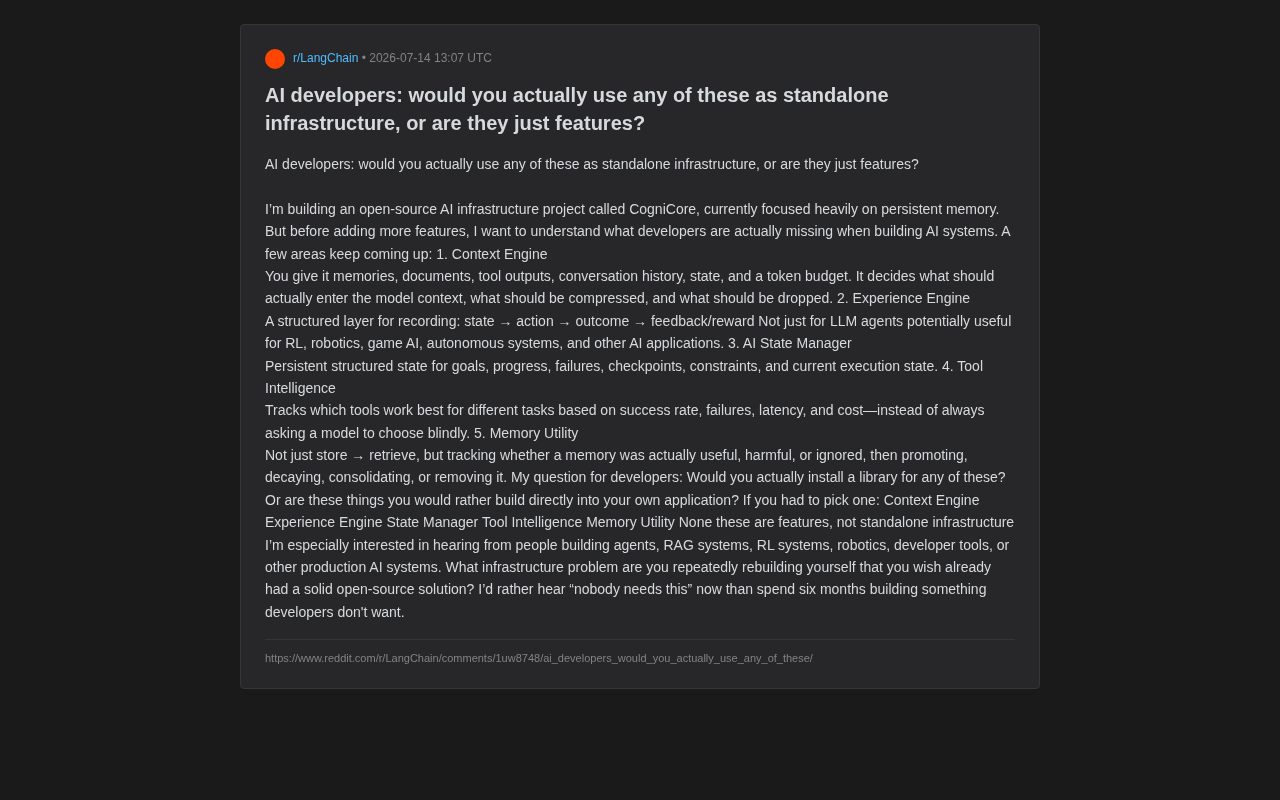
AI Infrastructure or App Feature? The Architecture Debate Sparked by CogniCore
CogniCore asks: should persistent memory, context engines, and state management be standalone AI infrastructure or in-app features? A deep dive into 5 key directions and the missing middleware of the agent era.
Read more →
·3 min
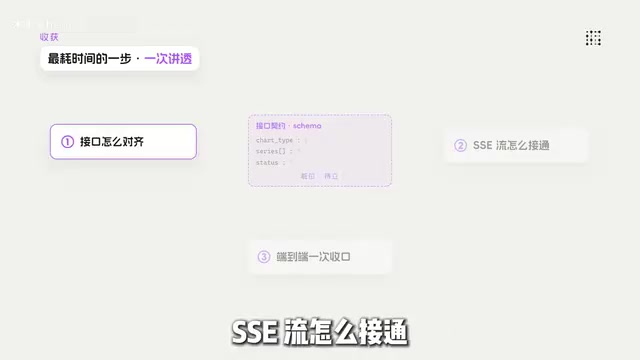
Building an Intelligent Data Analysis Agent: A Complete Guide to Interface Alignment and SSE Streaming Response Integration
A practical guide to interface alignment, SSE streaming integration, and end-to-end testing for enterprise AI Agent projects — eliminate wasted debugging and ship faster.
Read more →

·3 min
Coze for Beginners: A Complete Guide to Getting Started with the AI App Development Platform
Coze by ByteDance is an all-in-one AI app development platform for non-coders. Build AI agents with drag-and-drop — no programming needed. Complete beginner's guide.
Read more →

·2 min
Which Coursera Advanced AI Courses Are Worth as Much as an Internship? Top Picks
Can online courses replace internships? We break down the real value of MLOps, Generative AI, and Deep Learning courses on Coursera, plus 3 strategies to get internship-level results.
Read more →

·2 min
Getting Started with n8n: A Complete Guide to Low-Code Workflows and AI Applications
n8n is a powerful low-code workflow automation platform supporting AI Agents, Chain nodes, and RAG systems. Learn the three core AI modules and get started fast.
Read more →
Goku: A Browser-Based LLM Inference En…
·2 min
Goku: A Browser-Based LLM Inference Engine and Model Manager Built on WebAssembly
Goku is a browser-based LLM inference engine built on WebAssembly and wllama, enabling local AI inference, model management, and offline use — no cloud API needed.
Read more →
·2 min
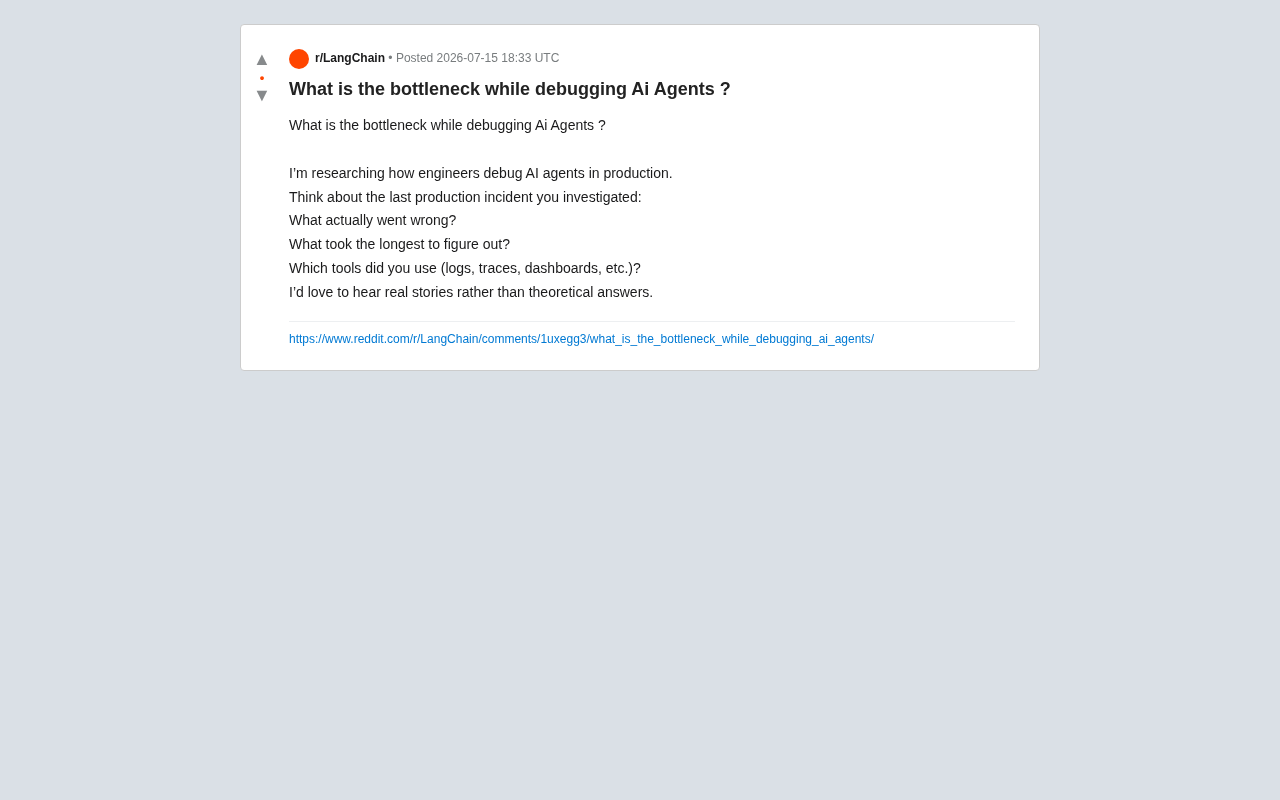
AI Agent Debugging Bottlenecks: A Practical Guide to Production Observability
Explore core AI Agent debugging challenges in production: non-determinism, multi-step error propagation, and observability gaps — with practical guidance on LangSmith and tracing tools.
Read more →

·3 min
AI Agent 4-Week Learning Roadmap: A Complete Guide from Zero to Independent Development
A structured 4-week AI Agent learning roadmap: Week 1 covers LLMs & Prompt engineering, Week 2 ReAct paradigms, Week 3 RAG memory systems, Week 4 multi-agent architectures.
Read more →
A 15TB Minecraft World: Deep Dive into…
·2 min
A 15TB Minecraft World: Deep Dive into Procedural Generation and Storage Limits
How was a 15TB Minecraft save created? A deep dive into procedural terrain generation, Anvil chunk storage, automated exploration, and what this extreme experiment reveals about game engines.
Read more →

·3 min
Chrome Built-in AI in Action: Six APIs for Building a Smart Blog Editor
Deep dive into Chrome Built-in AI's six core APIs — Summarizer, Prompt API, Translator and more — applied to a real blog editor. Local, private, no server needed.
Read more →

·2 min
Dify 1.8.0 Hands-On Tutorial: Deploy and Build Your AI Application Platform from Scratch
A hands-on guide to deploying Dify 1.8.0, covering setup steps, Workflow vs. Chatflow differences, RAG knowledge base, and MCP support for AI app development.
Read more →

·3 min
SJTU Professors Open-Source Agent Tutorial: A Four-Stage Path from Zero to AI Engineer
SJTU professors open-source a 4-stage Agent tutorial on GitHub, covering LLM basics, ReAct, multi-agent systems, and real-world projects — a practical path to AI engineering.
Read more →

·3 min
Programmer to AI Engineer: You're Already 80% There — Here Are the 6 Skills You're Missing
Programmers transitioning to AI engineering aren't starting from scratch. Learn the 6 core skills — LLM APIs, RAG, prompt engineering, LLMOps — needed to make the leap.
Read more →

·2 min
RAG Source Attribution Broken? 5 Battle-Tested Chunk-Level Provenance Lessons
5 battle-tested chunk-level provenance lessons for production RAG systems — covering deterministic IDs, hallucination detection, vector store decoupling, and faithfulness checks.
Read more →

·3 min
The Deterministic Factual Substrate for Multi-Agent AI: A Deep Dive into Knowledge Kernel's Reproducible Grounding Design
A deep dive into how Knowledge Kernel builds a deterministic factual substrate for multi-agent AI through layered decoupling of reality, evidence, facts, and reasoning — with dataset_hash fingerprinting, atomic reloads, and observable telemetry.
Read more →

·3 min
AI Agent Beginner's Guide: LLMs vs. Agents, and a Full Breakdown of Development Tools
What is an AI Agent? This guide explains the key differences between LLMs and Agents, breaks down the Agent formula (LLM + Workflow + Knowledge Base), and compares tools like Dify, Coze, LangChain, and LlamaIndex.
Read more →