#enterprise agent
1883 related articles

·4 min
FlowTask 2.0: Building a Unified Enterprise Memory Layer for AI Agents
FlowTask 2.0 proposes a "Company Brain" that unifies data from Email, Slack, WhatsApp and more to provide real-time enterprise context for AI Agents, reducing repetitive context-feeding costs.
Read more →

·3 min
How AI Agents Are Reshaping Enterprise Work: From Task Automation to Organizational Restructuring
Explore how AI agents are redefining enterprise work—from applied AI partnerships and multi-agent collaboration to structural workflow redesign and organizational transformation.
Read more →

·2 min
Getting Started with Claude Code: Why Terminal Agents Are the Top Choice for Enterprise AI Testing
What is the fundamental difference between terminal agents and device agents? This article breaks down Claude Code's core positioning, the key logic for enterprise AI testing selection, and the advantages of the Claude Code + DeepSeek combination.
Read more →

·3 min
Enterprise Long-Running Agent Engineering: A Complete Guide from Demo to Production
A deep dive into enterprise Agent engineering: long-running execution, HITL safety approvals, and event sourcing — with two real-world commercial projects for content ops and SRE.
Read more →

·7 min
Enterprise AI Agent Security Isolation and Memory Design: NanoClaw Founder Breaks Down Real-World Lessons
NanoClaw founder David Boyd breaks down the core engineering of enterprise autonomous Agents: a triple security isolation model, LLM Wiki memory design, and the real-world path from personal Agents to team-scale deployment.
Read more →

·4 min
Microsoft Dataverse Plugin for Coding Agents: Natural Language-Driven Enterprise Low-Code Development
Microsoft Power Platform's Dataverse plugin for coding agents supports GitHub Copilot, Claude Code, and more — enabling natural language data modeling, queries, security config, and docs generation.
Read more →

·3 min
LangChain + MCP + Agent: A Complete Guide to Enterprise-Grade AI Agent Development
A deep dive into LangChain, LangGraph, MCP, and enterprise AI Agent development: covering Streamable HTTP updates, DeepSeek R1 Function Calling limits, and Qwen3 agent capabilities.
Read more →

·3 min
Enterprise AI Deployment: The Core Decision Between Ontology and Agent Architecture
A systematic guide to enterprise Ontology: its core value, tools like OntoFlow and FIBO, when to build one, and how to deploy business-domain-level AI Agents.
Read more →

·3 min
AirOps in Practice: Building Enterprise-Grade AI Agents with the Claude Agent SDK
How AirOps replaced traditional workflow builders with the Claude Agent SDK to build an AI agent platform for content marketers — covering three architectural iterations, harness engineering, and sub-agent context management.
Read more →

·3 min
Enterprise AI Agent Learning Roadmap: A Complete Guide from Beginner to Production
A structured AI Agent learning roadmap covering 4 stages: foundations, core frameworks, scenario practice, and advanced product thinking. Master LangChain, tool calling, memory, and more.
Read more →

·3 min
Complete AI Agent Development Learning Path: From Core Principles to Enterprise Deployment
A structured AI Agent learning path covering core principles, prompt engineering, tool use, multi-agent systems, and frameworks like LangChain, CrewAI, and Dify for enterprise deployment.
Read more →

·3 min
Harness Architecture in Practice: A Deep Dive into Enterprise-Level Agent Projects
A deep dive into Harness architecture in enterprise Agent projects, covering MCP protocol, sandbox isolation, multi-model scheduling, and ASGI deployment — key topics for LLM job interviews.
Read more →
·3 min
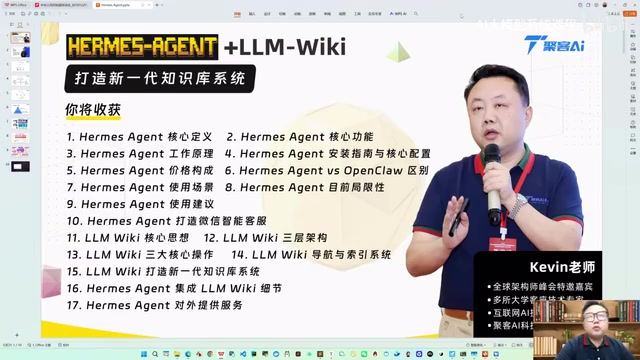
Enterprise AI Agents in Practice: A Developer's Guide to Hermes Agent
A deep dive into Hermes Agent vs OpenCloud with real enterprise case studies across telecom, finance, and e-commerce — revealing why mastery, not tool choice, drives AI agent success.
Read more →

·4 min
The Complete AI Agent Development Learning Path: From Zero to Enterprise-Grade Practice
A systematic AI Agent development learning path covering fundamentals, prompt engineering, tool calling, multi-agent collaboration, and hands-on practice with LangChain, CrewAI, and Dify.
Read more →

·3 min
AI Agent Builder: A Complete Hands-On Guide from Zero to Enterprise-Grade Delivery
AI Agents are becoming the core form for deploying large models. This article explores the AI Agent Builder profession, revealing the SME deployment gap and a complete path from fundamentals to delivery.
Read more →

·3 min
APA: A New Enterprise-Grade Automation Approach Merging Agents with RPA
APA (Agentic Process Automation) merges LLM agents into RPA, supporting natural language, operation manuals, and video recording to generate scripts—paired with financial-grade security and three-layer protection for enterprise automation.
Read more →

·6 min
Getting Started with AI Agents: Principles, Frameworks, and a Guide to Building Enterprise-Grade Agents
In-depth analysis of AI Agent core principles: why LLMs need Agent technology, the evolution from Prompt to RAG to Agent, Agent Tuning methods, and enterprise cost evaluation to help you build enterprise-grade agent applications.
Read more →

·5 min
28 Enterprise-Grade AI Agent Projects: A Complete Guide That Even Beginners Can Deploy
A collection of 28 fully reproducible enterprise-grade AI Agent projects covering code debugging, financial analysis, customer service, and multi-agent collaboration—deployable even for beginners.
Read more →

·2 min
Meta Launches Muse Spark 1.1: Targeting Enterprise AI Coding and Agentic Automation
Meta launches Muse Spark 1.1, an AI coding assistant targeting enterprise agentic workloads, automated bug fixing, and large-scale code migration to compete with GitHub Copilot, Cursor, and Claude Code.
Read more →

·3 min
From Raw LLMs to Agents: A Complete Guide to Enterprise-Grade AI Development
Prompt engineering and RAG are just the basics. Real enterprise AI runs on Agents. Explore the 4 stages of LLM deployment, Agent core capabilities, and industry trends.
Read more →