#home server exposure
44 related articles

·6 min
Separate Domains vs. Subdomains for Self-Hosted Services? A Deep Dive into Security Isolation Strategies
Deep dive into domain security architecture for self-hosted services: Should services with different exposure levels use separate domains or subdomains? Analysis of subdomain enumeration risks, defense in depth, and practical isolation strategies.
Read more →

·4 min
Mysterious URL Requests in NGINX Logs? Unmasking Automated Scanning Attacks and How to Defend Against Them
Seeing strange 404 requests and bizarre URLs in your NGINX access logs? Learn what automated scanning attacks are, where they come from, and how to defend with Fail2ban, CrowdSec, and other practical solutions.
Read more →

·6 min
Securely Exposing Self-Hosted Services via VPS: Architecture & Practical Guide
Learn how to securely expose self-hosted services via VPS using WireGuard tunnels, Pangolin, and reverse proxies — enabling client-free access to Plex, Immich, and more while hiding your home IP.
Read more →

·5 min
Home Network Device Isolation: A Complete Guide to Safely Exposing Self-Hosted Services to the Internet
Learn how to safely expose self-hosted services to the internet using DMZ, VLAN isolation, and VM approaches while protecting your home network from attacks.
Read more →

·2 min
Cercle: An Intimate Social App That Fights Loneliness with Emotional Signals
Cercle is a social app designed for intimate relationships, using mood check-ins and home-screen widgets to help close friends sense each other's emotional state in real time.
Read more →

·4 min
HealthyNotch: A Minimalist Health Reminder Tool Hidden in Your Mac's Notch
HealthyNotch cleverly uses the MacBook notch area for minimalist health reminders—hydration, breaks, and movement alerts. One-time purchase, no subscription, designed for digital workers.
Read more →

·5 min
HealthyNotch: A Minimalist Health Reminder Tool Hidden in Your Mac's Notch
HealthyNotch cleverly uses MacBook's notch area for minimalist health reminders—water, breaks, and movement prompts. One-time payment, no subscription, built for digital workers.
Read more →
·2 min
Vimgolf.ai: Learn the Vim Editor Through a Level-Based Game
Vimgolf.ai is a gamified Vim learning tool that helps users progressively master Vim commands through level-based challenges. We explore its core philosophy, gamification advantages, and compare it with tools like VIM Adventures.
Read more →

·2 min
Stacklight: A Deep Dive into the Zero-Backend Native iOS Homelab Monitoring App
Stacklight is a zero-backend, telemetry-free native iOS app with 23 service integrations, offering privacy-first mobile monitoring and control for homelabs via TOFU certificate pinning and iCloud sync.
Read more →
·4 min
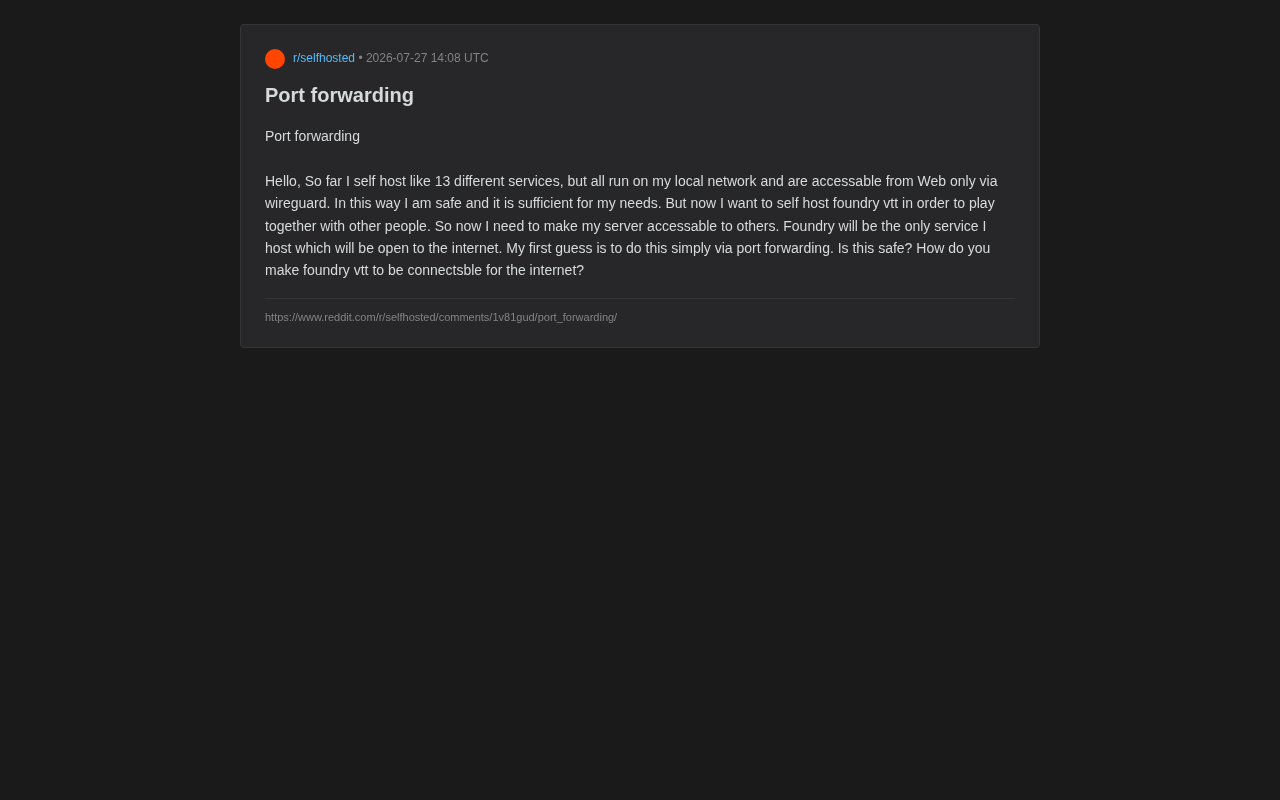
Foundry VTT Public Access Guide: The Right Way to Securely Expose Self-Hosted Services
Learn how to securely expose Foundry VTT to the public internet. Compare port forwarding, Cloudflare Tunnel, and reverse proxy solutions with practical advice on network isolation and layered defense.
Read more →

·3 min
Docker Containers vs Virtual Machines for Home Servers: How to Choose the Best Architecture
Docker containers vs VMs for home servers: compare resource usage, management, security isolation, and TrueNAS considerations to find the optimal Home Lab architecture.
Read more →
·3 min
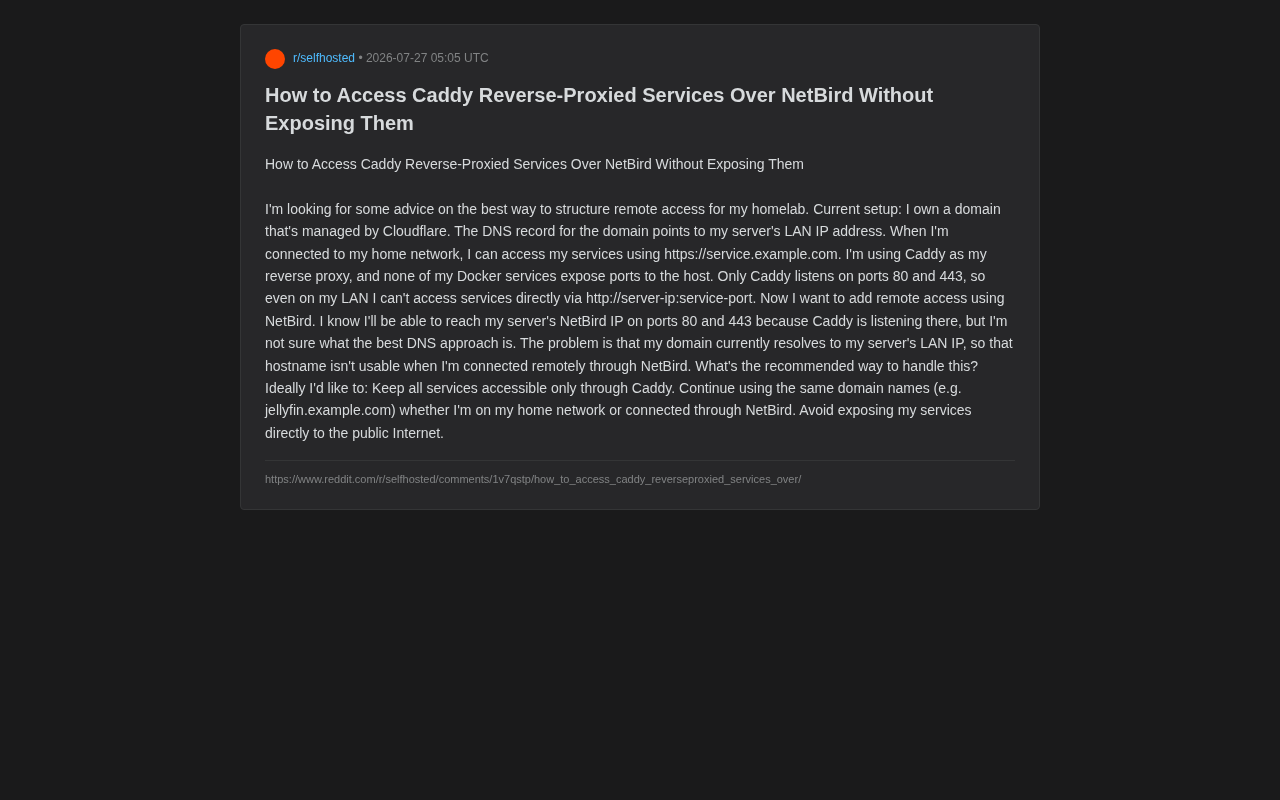
NetBird + Caddy: Remote Access Without Exposing Public Ports
Learn how to use NetBird WireGuard mesh networking with Caddy reverse proxy for homelab remote access without exposing public ports. Covers Split DNS, TLS certificates, and ACL controls.
Read more →
·4 min
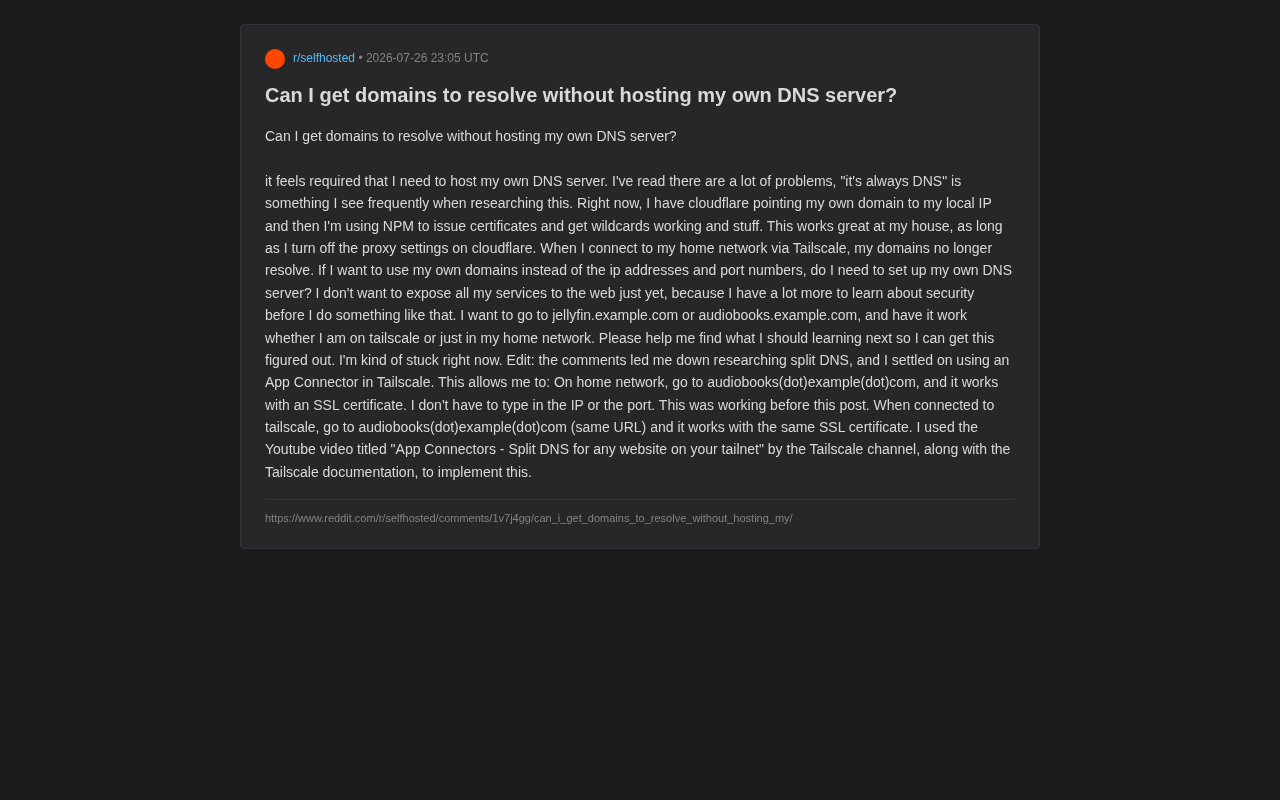
Self-Hosted Service Domain Resolution in Practice: A Deep Dive into Split DNS and Tailscale Solutions
A deep dive into domain resolution challenges for self-hosted home servers, covering Split DNS concepts and how Tailscale App Connector enables unified domain access across internal and external networks.
Read more →

·4 min
AI Testing in Practice: A Complete Guide to Three Types of AI Tools and the New Paradigm of Test Development
A comprehensive guide to three core AI tool types (personal assistant, CLI geek, AI IDE) in the testing era. Uncover the real challenges of AI test case generation and the new AI test development paradigm.
Read more →

·3 min
14 Days of AI Programming: From Zero to Product with Vibe Coding
A zero-to-product AI coding bootcamp by Guo Ke: 14 live sessions, 6 real projects, covering Cursor, Trae, and Codex. Full walkthrough from setup to deployment.
Read more →

·4 min
Complete Guide to Running Claude Code on Amazon Bedrock
Complete guide to deploying Claude Code on Amazon Bedrock: environment setup, cross-region inference, prompt caching, cost attribution, Guardrails, and the Mantle endpoint for enterprise compliance.
Read more →

·3 min
LangGraph Production Template in Practice: A Complete Guide to Budget Control and Canary Routing
Deep dive into langgraph-agent-stack: per-run dollar budget control, canary traffic routing, Mock testing mode, and 800+ test cases to safely deploy AI Agents from demo to production.
Read more →

·2 min
Goodbye Paid Subscriptions: A Complete Practical Guide to Self-Hosting
A complete guide to self-hosting: replace paid subscriptions with Nextcloud, Jellyfin, Vaultwarden and more. Covers Docker deployment, backup strategy, and secure remote access.
Read more →
Grok Uploads User Home Directory Witho…
·2 min
Grok Uploads User Home Directory Without Permission: A Security Warning on AI Agent Privilege Boundaries
Grok by xAI reportedly uploaded users' entire home directories to its servers. This article analyzes AI Agent file permission risks and how developers can protect themselves.
Read more →

·3 min
JadePuffer: A Full Autopsy of an Autonomous AI Ransomware Attack — The Age of Weaponized Agents Has Arrived
Sysdig captured JadePuffer, the first fully autonomous LLM attack agent: exploited Langflow RCE, self-corrected in 31 seconds, laterally moved, encrypted databases, and left a ransom note — a deep-dive into weaponized AI agents.
Read more →