#hyperparameter tuning
169 related articles

·4 min
FTPO: A Training-Level Solution to AI Repetition Loops
FTPO (Final Token Preference Optimization) tackles AI "Doom Loops" at the training level rather than patching them at inference time — exploring its principles, value for small/quantized models, and open challenges.
Read more →

·3 min
GPT-5.6 Three-Model Launch, SenseNova Open-Source Training Stack: A Day of Dense AI Industry Updates
OpenAI launches GPT-5.6 Sol/Terra/Luna, SenseNova open-sources its full multimodal training stack, Gemini adds free Study Notebooks, Apple M7 brings on-device AI to mainstream — a roundup of today's AI updates.
Read more →

·7 min
HuggingFace Open-Sources ml-intern: An AI Engineer That Reads Papers and Trains Models Autonomously
Hugging Face's open-source ml-intern autonomously reads papers, writes training scripts, and finetunes LLMs, deeply integrating the HF ecosystem and smolagents. Explore its features and impact on ML careers.
Read more →
·7 min
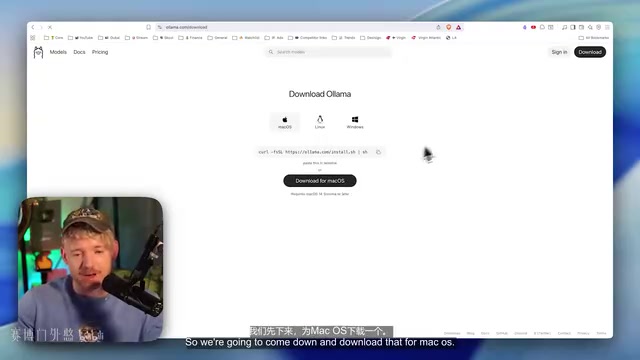
Ollama + Hermes Local AI Deployment: Building a 100% Private Personal AI Operating System
Build a fully private local AI system with Ollama + Hermes: zero cost, no rate limits, data stays local. Learn deployment steps, model selection tips, and private/cloud hybrid workflows.
Read more →

·7 min
Discord Wrongfully Bans 8,000 Accounts: Why an AI Moderation System Mistook Chessboards for Violating Content
Discord admits a safety-system bug wrongfully banned over 8,000 accounts, triggered by chessboards, Minecraft screenshots and other grid images. A deep dive into AI moderation false positives and the efficiency-vs-accuracy dilemma.
Read more →

·3 min
Google AI Monthly Roundup: Multimodal, Agents, and Developer Ecosystem Accelerate on All Fronts
A deep dive into Google's latest AI monthly updates: Gemini multimodal upgrades, AI Agent breakthroughs, product ecosystem integration, and developer toolchain improvements.
Read more →

·2 min
Unsloth v0.1.461-beta: Fix for Local GGUF Vision Model Loading
Unsloth v0.1.461-beta fixes local GGUF vision model loading on llama-server in Studio, adds variant directory companion file lookup for stable multimodal deployment.
Read more →

·3 min
Unsloth v0.1.45-beta Released: 2x Faster LLM Fine-Tuning with 70% Less VRAM
Unsloth v0.1.45-beta (PyPI: 2026.6.2) delivers 2x faster LLM fine-tuning and up to 70% VRAM reduction. Now at 67.9k GitHub stars, upgrade via pip install.
Read more →

·7 min
Dispersion Loss: A Key Technique for Solving Embedding Condensation in Small Language Models
Embedding condensation is a hidden bottleneck in small language model training. Dispersion Loss combats this by enforcing representation spread during training at zero inference cost.
Read more →

·3 min
Loop Engineering: The New Paradigm for AI Self-Evolution
Loop Engineering by Anthropic is a new AI paradigm using four components—Mutator, Executor, Evaluator, Selector—to build self-iterating closed loops. Learn the architecture, use cases, and how to get started.
Read more →

·6 min
5 Critical Engineering Pitfalls in Enterprise RAG Knowledge Base Deployment: The Real Barriers from Demo to Production
Why do enterprise RAG knowledge bases dazzle in demos but fail in production? This article dissects five critical engineering pitfalls with real-world case studies from million-doc platforms and ops agents.
Read more →
Three Role Shifts for Engineers in the…
·4 min
Three Role Shifts for Engineers in the AI Agent Era: From Coders to System Designers
As AI Agents handle long-horizon autonomous tasks, engineers are shifting from writing code to setting direction, reviewing output, and designing systems around models.
Read more →

·5 min
Building RAG from Scratch: Creating a Domain Expert System with Local Small Models
Step-by-step guide to building a complete RAG pipeline with Ollama + LangChain + FAISS + Qwen 1.5B. Run document retrieval and intelligent Q&A locally without a GPU.
Read more →

·3 min
Qwen3.6 Unofficial Derivative Models: 34B Depth Extension and 14B Extreme Compression Explained
Deep analysis of two Qwen3.6 community derivatives: 27B extended to 34B with 80 layers for better reasoning and distillation, and 35B MoE compressed to 14B for 8GB GPU local deployment.
Read more →

·3 min
How Much Math Do AI Practitioners Really Need? A Deep Dive into Three Role Types
How much math do AI/ML practitioners really need? This article breaks down three roles — Users, Developers, and Researchers — and analyzes the math requirements for each to help you plan your learning path.
Read more →

·3 min
Sakana AI Scientist v2 Deep Dive: Architecture and Practice of an Autonomous AI Research System
Deep dive into Sakana AI's open-source AI Scientist v2: technical architecture, core modules, and upgrade highlights covering the full autonomous research pipeline from idea generation to paper writing.
Read more →
·4 min
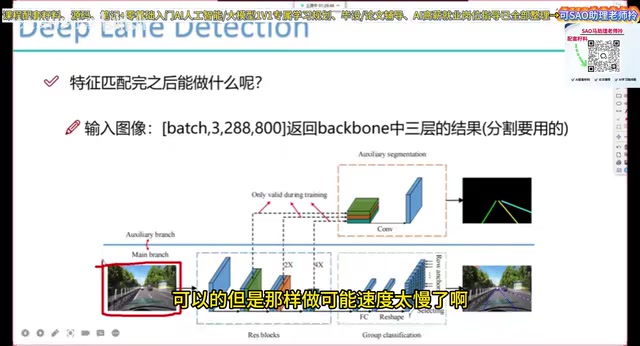
Deep Learning Lane Detection: From Segmentation to Classification for 300+ FPS Real-Time Inference
Deep learning lane detection algorithm that simplifies dense segmentation into efficient grid classification, achieving 300+ FPS real-time inference with row selection, Focal Loss, and expectation-based localization.
Read more →

·2 min
Nex N2 Pro In-Depth Review: How Does This Chinese Open-Source Agent Model Really Perform?
In-depth review of Nex N2 Pro, a Chinese open-source Agent model. Covers frontend code generation, Agent workflows, and benchmark comparisons, revealing gaps between official claims and independent tests.
Read more →

·3 min
The Complete Skill Map for AI Application Engineers: A Progressive Roadmap from Fundamentals to Production
A systematic breakdown of the complete skill structure for AI application engineers, covering Python & deep learning fundamentals, small model engineering, LLM fine-tuning, Agent development, and enterprise projects.
Read more →

·4 min
GLM 5.2 & Zcode Hands-On Review: A Deep Dive into the Free AI Coding Tool with 5 Million Tokens/Day
In-depth review of Zhipu's GLM 5.2 model and Zcode programming tool: interface experience, coding benchmarks, and long-horizon Agent performance compared to GPT and Opus. 5M free tokens/day with MIT license.
Read more →