#knowledge worker efficiency
251 related articles

·5 min
Agentic MapReduce: The Key Architecture for AI Agents to Achieve Distributed Reasoning Across Entire Codebases
Cognition's Agentic MapReduce architecture combines classic distributed computing with autonomous agents to break LLM context window limits, enabling multi-Agent parallel reasoning across entire codebases.
Read more →

·2 min
PocketMage Review: The E-Paper Clamshell PDA Bringing Back the Physical Keyboard
PocketMage is a crowdfunded clamshell PDA by Talisman Design, combining an e-paper display with a physical keyboard for distraction-free writing and note-taking.
Read more →

·7 min
The Five Pillars of Production-Grade AI Agents: A Battle-Tested Guide from Demo to Deployment
Databricks tech lead Sandy shares a five-pillar framework for production-grade AI Agents—evaluation, observability, data foundation, orchestration, and governance—with a £85K retail banking failure case to bridge the demo-to-production gap.
Read more →

·7 min
Complete Guide to Training Small Models on Kaggle's Free Compute: GPU Quotas and Practical Tips
In-depth guide to Kaggle's free-tier compute: P100/T4 GPU with 30 hours/week quota, 12-hour sessions, suitable models like CNN and BERT fine-tuning, plus tips like mixed precision and checkpointing to start deep learning at zero cost.
Read more →

·7 min
21-Day Python Automation Testing Crash Course: A Complete Breakdown of the Three-Stage Learning Path
Learn automation testing from scratch! This article breaks down a three-stage path: Selenium/Appium tools, Requests+PyTest API testing, performance testing and CI/CD, with real projects—build a complete skill set in 21 days.
Read more →

·6 min
The Hidden Cost of AI-Assisted Programming: How Developers Can Cope with LLM Burnout
When GitHub Copilot, ChatGPT and other AI coding tools shift from help to burden, developers face a new kind of professional fatigue—LLM burnout. Learn its causes, symptoms, and coping strategies.
Read more →

·7 min
The Four-Stage Learning Path for AI Agent Development: From Beginner to Real-World Deployment
A systematic four-stage roadmap for AI Agent development: fundamentals, core principles, enhancement, and real-world deployment. Build complete Agent skills.
Read more →

·7 min
Dify 1.8.0 in Practice: A Complete Guide to Building Enterprise-Grade AI Workflows with Zero Code
An in-depth walkthrough of deploying Dify 1.8.0 and building applications: three-step Docker deployment, five app types compared, and Workflow vs Chatflow use cases—build enterprise AI apps with zero code.
Read more →
·6 min
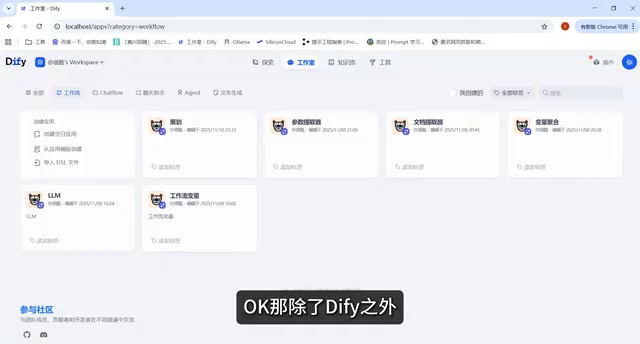
Complete Guide to Deploying Dify Locally: Docker + Ollama + RAG Setup Tutorial
A detailed guide to deploying the Dify agent platform locally: from Docker setup and integrating Ollama + DeepSeek local LLMs to workflow orchestration and RAG knowledge base construction.
Read more →

·7 min
Zero-Basis Learning Path for AI Agents: A Three-Stage Journey from Beginner to Deployment
A systematic zero-basis learning path for AI Agent development, covering Python and LLM fundamentals, five core capabilities like task planning and RAG, and LangChain hands-on practice.
Read more →

·4 min
Getting Started with AI Agent Development: Core Mindset and Learning Path for Beginners
Intimidated by AI Agent development? This article breaks down the two biggest beginner pain points and reveals why the real skill isn't memorizing APIs, but mastering requirement decomposition, workflow design, and problem-solving.
Read more →

·5 min
Building an AI Second Brain: The Complete NotebookLM + Obsidian Workflow
Use NotebookLM for cross-document AI research and reasoning, Obsidian for long-term knowledge storage and linking. Combine both to build a second brain that gets smarter with use.
Read more →

·4 min
Microsoft 365 Price Hike of 42%: AI Feature Bundling and What Users Should Do
Microsoft 365 prices rise up to 42%, driven by Copilot AI integration. We analyze the compute cost logic, enterprise impact, and whether Google Workspace alternatives are worth switching to.
Read more →

·7 min
LangSmith Engine: An Intelligent Operations Tool That Automatically Diagnoses and Fixes Agent Failures
LangChain's LangSmith Engine is an intelligent agent tool for tracking Agent failures, prioritizing issues, and auto-drafting fixes. Deep dive into its core capabilities, sandbox isolation, sub-Agent architecture, and continuous evaluation challenges.
Read more →

·7 min
The Revenge of the Philosophy Majors in the AI Era: Why Critical Thinking Has Become the New Scarce Resource
As generative AI sweeps the workplace, once-marginalized philosophy and humanities are being revalued. This article explores why critical thinking, ethical judgment, and questioning are the new scarce competencies in the AI era.
Read more →
·7 min
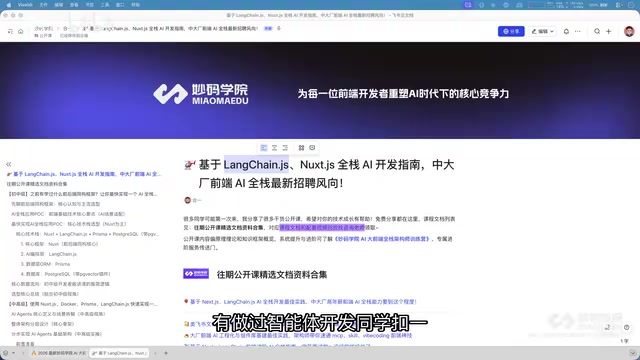
LangChain.js + Nuxt.js: An AI Full-Stack Advancement Path for Frontend Engineers
Frontend hiring now treats AI capabilities as a core assessment, covering RAG knowledge bases, AI Agent development, and LangChain.js engineering. Learn how LangChain.js + Nuxt.js helps frontend developers build memory- and retrieval-capable AI full-stack apps.
Read more →

·6 min
AI Agent Learning Roadmap: A Four-Stage Guide from Beginner to Practical Mastery
A systematic AI Agent learning roadmap in four progressive stages: fundamentals → ReAct core paradigm → memory & tools → multi-agent collaboration. Master LangChain, AutoGen, and more, growing from beginner to practical developer in three months.
Read more →

·4 min
Google UK Report: How AI Can Solve the Productivity Puzzle and Build a Nation of AI Trailblazers
Google UK's Economic Impact Report argues AI could be the key to breaking the UK's productivity puzzle, focusing on skills access, SME enablement, and public-private collaboration.
Read more →
Amazon MTurk Closes to New Customers: …
·4 min
Amazon MTurk Closes to New Customers: The End of the Crowdsourcing Era and the AI Revolution
Amazon MTurk stops accepting new customers after nearly 20 years. Explore its legacy in AI training and academic research, and how LLMs are reshaping the data annotation industry.
Read more →

·7 min
Gemini CLI: The AI Development Powerhouse in Your Terminal, Ending Tool Fragmentation
Gemini CLI is Google's open-source AI terminal tool that deeply integrates Gemini model capabilities into the command line—supporting code generation, file operations, Shell execution, and MCP protocol extensions, with 1,000 free daily requests.
Read more →