#large codebase AI
1934 related articles

·2 min
Cursor Gives Users $20 in Free Credits: A New User Retention Strategy for AI Coding Tools
Cursor gives users $20 in free credits, sparking Reddit discussion. A deep dive into AI coding tool credit marketing strategies and how Cursor builds reputation advantage against GitHub Copilot.
Read more →

·2 min
A Go Developer's Guide to Gemini: Complete Model Family Breakdown
A comprehensive Gemini model family guide for Go developers, covering Pro vs Flash selection strategies, multimodal capabilities, official Go SDK integration, and token management practices.
Read more →

·3 min
Prime Agent: An Open-Source Coding Agent That Can Improve Its Own Underlying Framework
Prime Agent is an open-source self-improving coding agent using Recursive Language Models and Continual Harness abstractions, achieving 95.5% on ARC-AGI-3.
Read more →

·2 min
Google SDK Accidentally Leaks Gemini 4 Flash: Real Roadmap or Just a Placeholder?
Google's public SDK was found containing Gemini 4 Flash references, sparking developer speculation about next-gen models. We analyze the leak's credibility and what it means.
Read more →

·2 min
Ladybird Browser: An Independent Browser Engine Built from Scratch
Ladybird is an independent browser engine written from scratch, free from Chromium, WebKit, or Gecko. With 65,000+ GitHub stars, this nonprofit community project advances Web diversity.
Read more →

·2 min
TAKT Open-Source Tool: Ending Unsupervised AI Coding with Unskippable Reviews
TAKT is an open-source CLI tool that wraps AI coding assistants into reproducible YAML workflows with a plan→implement→review→fix loop, enforcing unskippable code reviews.
Read more →

·2 min
DuckDisk: A Table-First Open-Source Disk Space Analyzer for Mac
DuckDisk is a free, open-source Mac storage analyzer with a table-first design. It supports local disk, cloud, and SSH remote scanning. Apple-notarized and on the Mac App Store.
Read more →

·2 min
Already Have Claude Pro — Do You Still Need Cursor Pro? An In-Depth Comparison and Buying Guide
Should developers who already subscribe to Claude Pro also buy Cursor Pro? This article compares both from product positioning, feature overlap, and workflow differences, with buying advice for three typical scenarios.
Read more →

·3 min
The Rise and Fall of Programming Languages: The Interplay of Ecosystems, Markets, and Communities
An in-depth analysis of the forces driving programming language rise and fall—ecosystems, market shifts, corporate backing, and technical inertia—to help developers make rational technology choices.
Read more →

·2 min
Cursor Pro vs SuperGrok: Which Is More Cost-Effective? A Deep Dive into Grok 4.5 Token Economics
Deep comparison of Cursor Pro vs SuperGrok for Grok 4.5 token value. Analyzes platform metering differences, provides testing methods, and offers guidance for choosing the best AI subscription.
Read more →

·2 min
AI Writes Better Code Than You — Should Programmers Still Code by Hand or Let Go?
When AI generates better code than you write by hand, should programmers still code themselves? Explore how to balance efficiency with skill growth in the AI coding era.
Read more →
·3 min
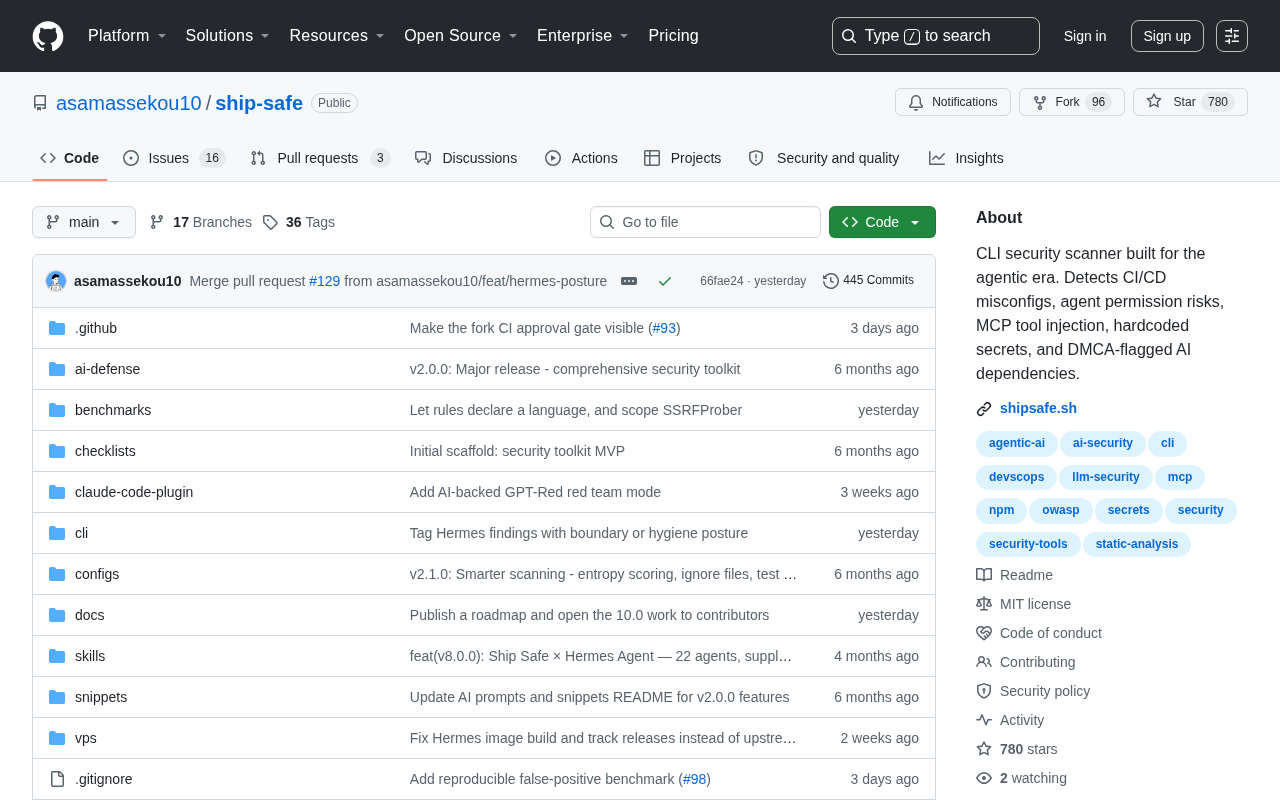
Ship Safe: A Deep Dive into the Open-Source Security Scanner for AI Coding Agents
Deep dive into how Ship Safe provides security scanning for AI coding agents, exploring agent security challenges, closed-loop feedback, and enterprise guardrails.
Read more →

·2 min
CrewCode: An Open-Source Desktop Tool for Parallel Scheduling of Multiple AI Coding Agents
CrewCode is a free open-source Electron desktop app that runs multiple AI coding agents in parallel via Git Worktree isolation, supporting Claude Code, Codex, and more with crew orchestration and context handoff.
Read more →

·3 min
Real-World Reliability Test of AI Model GitHub Connectors: Kimi vs Perplexity — Which One Can You Actually Trust?
Real-world comparison of Kimi and Perplexity GitHub Connector reliability. Kimi offers automatic graceful degradation; Perplexity suffers from silent failures. Analysis of tool-call transparency and fault tolerance in AI code review workflows.
Read more →

·3 min
Meta Muse Code: A Terminal AI Agent Built for Long-Horizon Programming
Meta launches Muse Code, a terminal AI agent powered by Muse Spark 1.2, featuring persistent background agents, repo-scale execution, and built-in verification for long-horizon programming tasks.
Read more →

·2 min
Superbrain Review: How the TokenFold Architecture Saves 50% on Token Costs
In-depth analysis of macOS AI coding tool Superbrain and its proprietary TokenFold retrieval architecture, comparing it with Cursor, Claude Code, and other mainstream products.
Read more →

·3 min
Is Cursor Worth Subscribing To? Real Developer Community Reviews and Usage Strategies
In-depth analysis of AI coding tool Cursor's real-world experience, covering community ratings, multi-model support, BYOK mode, and Chinese LLM integration strategies for developers.
Read more →

·4 min
How Databricks Cut AI Coding Costs by 70%: Strategies and Insights
Databricks cut AI coding tool costs by 70% through intelligent model routing, prompt caching, context optimization, and self-hosted open-source models. Learn actionable strategies for controlling LLM inference costs.
Read more →

·3 min
Reference: A Local Semantic Search Engine Built for AI Agents
Reference is a local semantic search tool for AI Agents that uses tree-sitter code-aware chunking, real-time indexing, and MCP Server integration to eliminate inefficient grep loops in AI coding assistants—all data stays on your machine.
Read more →

·2 min
The Mystery of Composer 3's Disappearance: Replaced by Grok 4.5 or Still in Development?
Cursor's previewed Composer 3 model has vanished from official docs, replaced by Grok 4.5. We analyze three possibilities and the broader build vs. integrate debate in AI coding tools.
Read more →