#linear algebra machine learning
75 related articles

·3 min
Linguistics to NLP Engineer: Comparing Three Pathways and Finding the Optimal Strategy
How can linguistics or translation majors transition into NLP engineering? This article compares three pathways and offers a phased strategy covering core skills, project building, and job hunting tips.
Read more →

·3 min
AI-Powered OSINT in Practice: A Learning Path and Tool Guide for CS Professionals
How can OSINT practitioners with a CS background automate intelligence with AI? This guide covers computer vision, VLMs, and Agent frameworks including YOLO, SAM, and Grounding DINO.
Read more →

·3 min
AI/ML Internship Red Flags: How to Spot and Land Internships That Actually Matter
Is paying for an internship worth it? This deep dive into AI/ML "internship commodification" exposes the real problems with pay-to-intern schemes and offers actionable alternatives — open source, cold outreach, and technical fundamentals.
Read more →

·2 min
How to Choose a Machine Learning Video Course: From Language Barriers to an Efficient Learning Guide
Struggling to choose an ML course? This guide covers language fit, instructor style, and platform resources to help you find the right machine learning learning path.
Read more →
·4 min
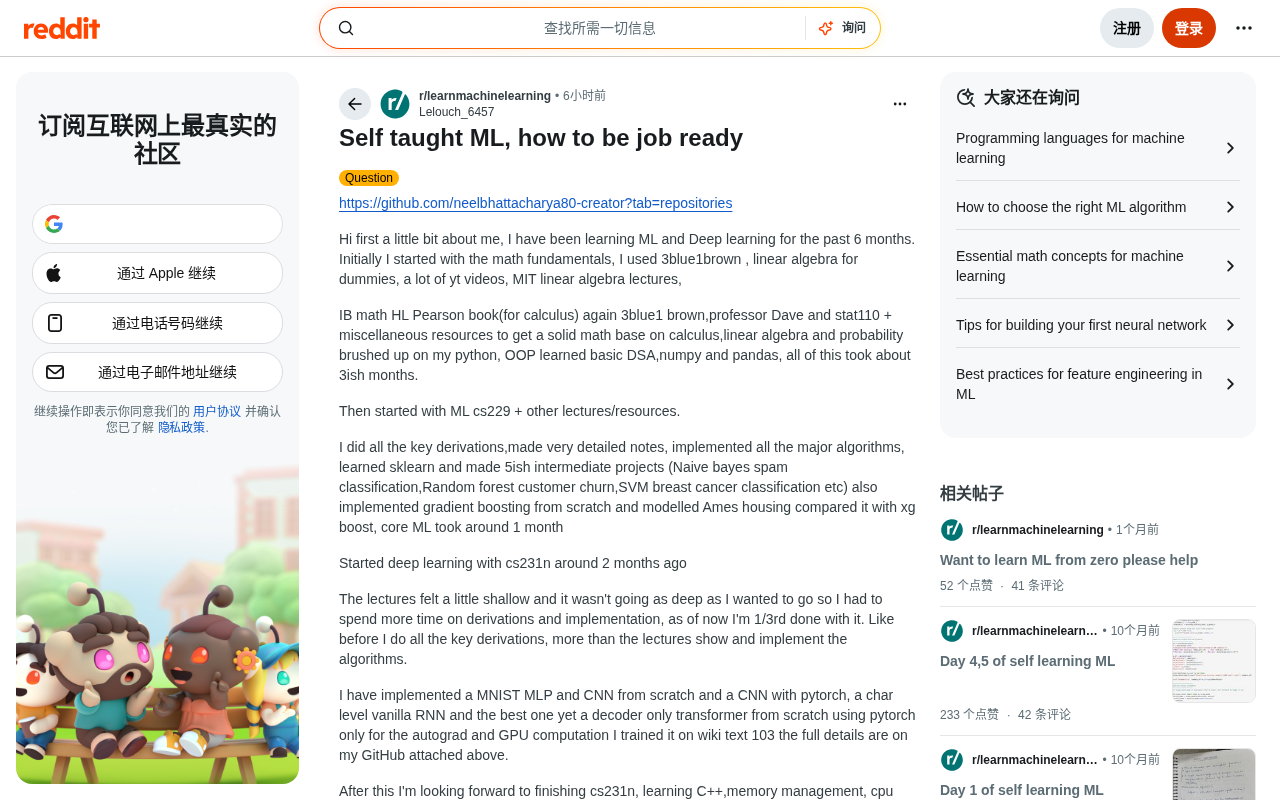
6 Months of Self-Taught Machine Learning: A Complete Roadmap from Zero to Job-Ready
A self-learner completed a full progression from math foundations and core ML to deep learning in 6 months—hand-writing a Transformer and implementing gradient boosting from scratch. This article breaks down the highlights and blind spots of this real roadmap.
Read more →

·5 min
How Can Working IT Professionals Learn AI Efficiently? A Practical Learning Path from Zero to Real-World Projects
Limited time but want to learn AI systematically? This guide maps out a practical learning path for working IT pros—from AI application engineering and prompt engineering to RAG and Agents.
Read more →

·2 min
The 7-Stage Roadmap to Becoming an AI Engineer: Breaking Down the Value and Blind Spots of Each Phase
A roadmap for growing into an AI engineer, from Python basics to production deployment, covering LLM app development, RAG systems, model evaluation, and safety. This article breaks down each phase to help you avoid detours and go from beginner to production-ready faster.
Read more →
·3 min
Career Switch to AI Engineer Without a CS Degree: A Self-Study Roadmap from Scratch
A real case study of an agriculture student breaking into AI: how to start with CS50 and systematically master Python, machine learning, and MLOps skills, with a three-phase transition plan for self-learners.
Read more →

·4 min
Learn ML Free at Public Libraries: A Complete Guide to O'Reilly Tech Book Resources
Getting O'Reilly machine learning books free at public libraries? It's no myth. This article reveals hidden tech learning resources at libraries, including online platform subscriptions and digital database access, helping self-learners build AI knowledge at zero cost.
Read more →

·5 min
Advanced Machine Learning Reading List: How to Choose the Right Book Among These 4 Classics?
Torn between Géron, Chollet, and Raschka? This article breaks down 4 classic ML books for self-learners aiming at finetuning and small language models (SLM), helping you find the best advanced path.
Read more →

·6 min
An Efficient Learning Guide for Data Science: Study Partnerships and Hands-On ML in Practice
Struggling to learn data science alone? This article explores the value of study partnerships and pairs them with the classic Hands-On ML textbook to offer a phased learning plan from math foundations to deep learning.
Read more →

·7 min
AI Agent Runs a Fully Automated Chess Channel: A Real-World Practice of Combining LLMs with Engines
A German engineer built a fully automated chess YouTube channel with an AI Agent, combining LLMs and chess engines to auto-generate explainer videos nightly, reaching 500K views. Here's the tech architecture, tool design, and real costs.
Read more →

·3 min
Should Developers Learn Machine Learning? A Rational ROI Analysis and Learning Path Guide
Should full-stack developers learn machine learning? This article analyzes the difference between applied ML and research ML, breaks down the ROI at each stage, and offers a concrete action path.
Read more →

·6 min
DeepSeek Builds Its Own AI Chips: The Strategic Logic and Challenges Behind Compute Independence
DeepSeek is entering AI chip development, targeting compute autonomy. This article analyzes its motivations, software-hardware synergy, chip R&D challenges, and impact on China's AI vertical integration.
Read more →

·3 min
Computer Science vs. AI & Robotics: How Should You Choose?
Computer Science or AI & Robotics—which is more stable and promising? This article analyzes major nature, job prospects, and risk hedging to help you plan wisely.
Read more →

·4 min
How to Choose a Machine Learning Course for Beginners: A Complete Roadmap
Not sure where to start with machine learning? This guide covers the community-approved ML roadmap: from math and Python basics to Andrew Ng, fast.ai, Kaggle, and CS229.
Read more →

·5 min
Essential Math for AI/ML Research: Should Undergrads Choose the Specialist Sequence or the Major Track?
Aiming for AI/ML research? How should you pick undergrad math courses? This article breaks down linear algebra, probability & statistics, and optimization, weighing the specialist sequence vs. the Major track.
Read more →

·8 min
GPT-5.6 Hands-On: Farm Automation, Mathematical Breakthroughs, and End-to-End AI Execution
GPT-5.6 (Sol, Terra, Luna) hands-on testing: a Hokkaido farmer controls a greenhouse with AI, a NYC small business builds custom software, and a Polish mathematician breaks a 3-year problem. A deep dive into end-to-end autonomous execution.
Read more →
·6 min
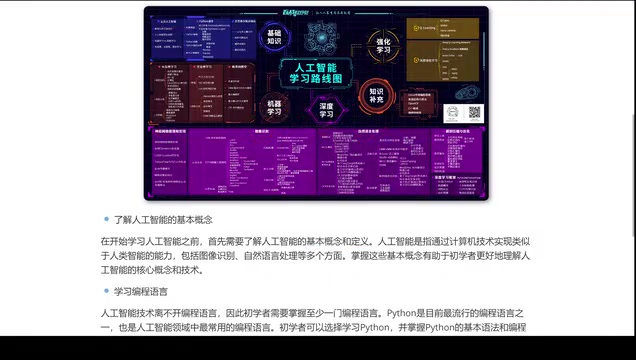
AI for Beginners: A Five-Step Practical Path That Skips the Math and Python Syntax Traps
Struggling with math and Python when learning AI from scratch? This article lays out a five-step entry path: grasp the concepts, learn Python lightly, master ML and deep learning principles, get hands-on with PyTorch, then deepen understanding through real projects.
Read more →

·5 min
In Praise of Observational Evidence: When Randomized Controlled Trials Can't Answer Everything
Are RCTs really the only standard for scientific evidence? This article explores the scientific value of observational evidence, the rise of causal inference methods, and how data scientists can draw reliable conclusions from observational data when A/B testing isn't feasible.
Read more →