#machine learning lifecycle
173 related articles

·2 min
Getting Started with Dify: A Complete Guide to the Open-Source Enterprise AI Application Platform
A complete guide to Dify, the open-source AI application platform: its core positioning, key differences from Coze, workflow-building capabilities, and enterprise private deployment advantages.
Read more →
sqlite-utils 4.1 Released: The --code …
·7 min
sqlite-utils 4.1 Released: The --code Option, Type Overrides, and AI-Assisted Development in Practice
sqlite-utils 4.1 brings practical new features: the --code option for generating rows via Python, type overrides to solve ZIP-code leading-zero loss, STRICT table mode switching, drop-index, and more. A deep dive into the design and AI-assisted dev workflow.
Read more →

·7 min
Dify Local Deployment Guide: Full Walkthrough with BT Panel + Docker
A step-by-step guide to locally deploying the Dify open-source AI platform using BT Panel on a VMware virtual machine, covering Ubuntu setup, Docker config, and image pull troubleshooting—beginner-friendly.
Read more →

·7 min
Dify Local Deployment in Practice: A Complete Guide with BT Panel + Docker
A step-by-step guide to locally deploying the open-source Dify AI platform using the BT Panel on a VMware virtual machine—covering Ubuntu setup, Docker config, and image pull troubleshooting.
Read more →

·3 min
Dify Getting Started Guide: A Complete Walkthrough of Low-Code AI App Development
Dify is a low-code AI app platform supporting chatbots, Agents, and workflows. Compatible with DeepSeek, ChatGPT, and more. Learn cloud and local deployment options.
Read more →

·3 min
Dify for Beginners: A Complete Guide to Building AI Applications
A beginner's guide to Dify covering Docker deployment, MySQL setup, model integration, five app types (Chatbot/Agent/Workflow), and publishing — build LLM apps fast.
Read more →

·3 min
Dify Getting Started: A Complete Zero-to-Production Guide for Building AI Applications
A complete guide to Dify — covering deployment, five core app types (chatbot, Agent, workflow, and more), LLM integration, and publishing for zero-experience developers.
Read more →

·3 min
Dify 1.8.0 Deployment Guide: Build AI Apps Without Writing Code
A complete guide to deploying Dify 1.8.0: Docker setup, environment config, five app types explained, and workflow-building tips for beginners.
Read more →
Microsoft Open-Sources Ontology Playgr…
·2 min
Microsoft Open-Sources Ontology Playground: A Free Tool for Learning Ontology Visually
Microsoft's open-source Ontology Playground is a zero-backend static web app for visually designing ontologies, with RDF/XML export and Microsoft Fabric IQ integration.
Read more →

·3 min
Deutsche Telekom's AI Customer Service Revolution: How 40 Million Interactions Are Reshaping the Service Experience
Deutsche Telekom partners with OpenAI to embed generative AI across the full call lifecycle — live translation, in-call assistance, and post-call summaries. Containment rate hits 50%, costs drop. A deep dive into telecom AI transformation.
Read more →

·4 min
Cursor Designer: Why Software Must Retain Its Human Touch in the Age of AI Acceleration
Cursor designer Rio: AI compresses build loops dramatically, but risks flooding the world with mediocrity. From Glass UI principles to the migration of craft — why human agency, taste, and responsibility remain software's true core.
Read more →

·3 min
MLOps from Scratch: A 100-Day Learning Challenge Roadmap and Practical Guide
A college student's MLOps 100-day challenge documents the full journey from Python engineering and Git to Docker, model deployment, and monitoring. A practical roadmap for data scientists transitioning to ML engineering.
Read more →

·3 min
Building Real-Time 3D Digital Twin Wind Farms with Microsoft Fabric: AI Conversation + LIDAR Terrain + Telemetry Fusion
A wind farm digital twin built on Microsoft Fabric and Azure AI Foundry, fusing Finnish LIDAR terrain, real-time telemetry, and conversational AI for smart industrial operations.
Read more →

·2 min
Build From Scratch or Just Use sklearn? A Complete ML Engineer Learning Path Guide
Should you implement ML algorithms from scratch or just use sklearn? This guide breaks down the optimal learning path for ML engineers by career stage and company type.
Read more →

·2 min
AI Task Routing for Cost Reduction: A Framework for Smaller Teams to Evaluate ROI
Task routing is hailed as a silver bullet for LLM cost reduction, but routing strategy design, model training, and self-hosting each carry hidden engineering costs. This deep dive helps smaller teams evaluate ROI and offers a phased implementation path.
Read more →
SendLang: Rethinking Email Automation …
·3 min
SendLang: Rethinking Email Automation with a Domain-Specific Language
SendLang is a DSL for email automation that uses declarative syntax to separate trigger conditions, content templates, and send timing — tackling logic coupling in traditional email systems.
Read more →
Building RL-Powered Autonomous Researc…
·2 min
Building RL-Powered Autonomous Research Agents with NVIDIA NeMo
How NVIDIA NeMo combines reinforcement learning to train agent skills and build an Autoresearch workflow capable of autonomously running ML experiments end-to-end.
Read more →
Agentic Loop Explained: The Three-Loop…
·2 min
Agentic Loop Explained: The Three-Loop Architecture of Reasoning, Tool Use, and Orchestration
A deep dive into the Agentic Loop — breaking down the three-layer architecture of reasoning, tool use, and orchestration to help developers build and debug reliable AI agent systems.
Read more →

·3 min
What to Do When Model Training Fails? A Systematic Debugging and Iteration Guide
Model training failure is the norm in research, not the end. Using a real DiT fine-tuning failure on weather radar as a case study, this guide offers a systematic three-layer debugging methodology — data, training convergence, and evaluation — to help deep learning practitioners diagnose issues and iterate efficiently.
Read more →
·3 min
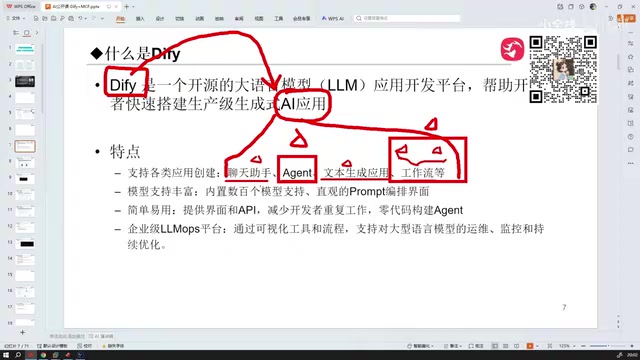
Getting Started with Dify: A Complete Guide to Building Enterprise-Grade AI Apps with Low-Code
A complete guide to Dify, the low-code AI app platform: five app types, multi-model setup, Docker deployment, and enterprise data security. Build LLM-powered workflows and Agents at minimal cost.
Read more →