#mini program builder
120 related articles

·2 min
General Agents Are Essentially Coding Agents: The Paradigm Shift from Tool Calling to Code Execution
Explore why general AI agents are essentially coding agents. From Turing completeness to composability and verifiability, discover the paradigm shift from Function Calling to Code as Action.
Read more →

·3 min
OpenComputer: Deploy Managed AI Agents with a Single Sentence — A Minimalist Launch Solution for Developers
OpenComputer is an AI agent managed deployment platform that gives you a live agent URL from a single description. This article analyzes its workflow design, market positioning, and security/cost considerations.
Read more →

·2 min
Foreguard: A Free Family Care Planning AI Tool Built with ChatGPT
Foreguard is a free family care planning tool built with ChatGPT and Codex, helping families identify public benefit eligibility and plan long-term care insurance at minimal cost.
Read more →

·2 min
Foreguard: A Free Family Care Planning AI Tool Built with ChatGPT
Foreguard is a free family care planning tool built with ChatGPT and Codex, helping families identify public benefit eligibility and plan long-term care insurance at minimal cost.
Read more →

·5 min
Loop Engineering Explained: The New Programming Paradigm Where AI Prompts Itself
Loop Engineering is a paradigm shift in AI usage. Learn how to build automated loops where agents explore, execute, and verify tasks autonomously, with a hands-on e-commerce case study.
Read more →

·4 min
LiDAR Reveals Ancient Cities: How Laser Technology Is Rewriting the History of Lost Civilizations
Discover how LiDAR laser technology penetrates deserts and jungles to reveal Sela's underground cistern system and Nan Madol's hidden structures, rewriting the history of lost civilizations.
Read more →

·2 min
Grimoire Launches Codex Pet Feature: A Gamified Twist on AI Programming Assistants
Grimoire launches its new Codex Pet feature, combining AI code generation with gamified pet interactions to create an engaging programming experience for beginners and creators alike.
Read more →

·4 min
AI Coding Tools in Practice: Which Ones Actually Stuck with the Team?
A 12-person product team shares real-world experiences with Cursor, Codex, Claude Code, and CodeRabbit—exploring efficiency plateaus, scenario matching, and selection criteria for AI coding tools that actually stick.
Read more →

·1 min
Build AI Agents Without Code: A Complete Beginner's Guide to Coze
Coze by ByteDance is a no-code AI agent platform with visual workflows, 60+ plugins, knowledge bases & persistent memory. A complete beginner's guide.
Read more →

·6 min
The Three-Layer GTM Agent Architecture: Enabling AI to Truly Recognize Buyer Intent and Identity
An in-depth analysis of the three-layer GTM Agent architecture—the Signal, Buyer Intelligence, and Action layers—revealing how context graphs identify anonymous visitors and capture purchase intent.
Read more →

·7 min
Claude Code in Action: Building an Embedded Tetris Game with AI in 3 Hours
A hands-on case study: using Claude Code and the LVGL graphics library to build a Tetris game running on an embedded dev board from scratch in under 3 hours.
Read more →

·2 min
Getting Started with LangGraph: Graph Orchestration and State Machines for AI Agents
A comprehensive guide to LangGraph's core concepts: Graph API vs Functional API, three-layer architecture, and workflow visualization methods for building AI Agents.
Read more →

·6 min
The AI Builder's Handbook: A Complete Guide to LLM Principles, RAG Architecture, and Agent Design
From the autocomplete nature of LLMs, tokens, and context windows to RAG vector databases, the MCP protocol, and AI agent loop design — this article uses vivid analogies to unpack the reality of AI engineering.
Read more →

·2 min
WeChat Mini Program Cloud Development in Practice: A Complete Guide for Frontend Developers to Build Full-Stack Apps Solo
Learn how to build full-stack WeChat Mini Programs using only JavaScript. This guide covers cloud databases, cloud functions, and cloud storage with a real-world project.
Read more →

·2 min
Vibe Coding for Beginners: Build Real Apps with AI — No Coding Skills Required
Vibe Coding lets you build real apps using natural language — no coding skills needed. Learn the 3 core traits, see real success stories, and get started today.
Read more →

·4 min
Stop Shipping Skills Blindly! A Google DeepMind Engineer's Hands-On Guide to Agent Evaluation
Google DeepMind engineer Philip reveals: almost everyone uses coding agent Skills, yet almost no one writes evals for them. A deep dive into Skill evaluation methods, 8 actionable tips, and a real Gemini API case study.
Read more →
·4 min
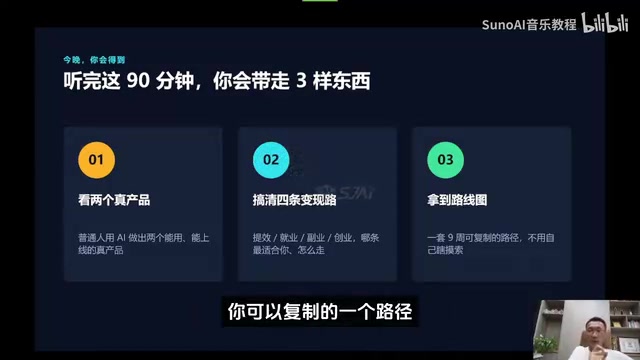
Codex Tutorial: Build Monetizable Products with AI Coding — No Experience Required
Step-by-step Codex tutorial: build a product finder tool and a flashcard mini program from scratch. Learn prompt techniques, requirements breakdown, and 4 monetization paths.
Read more →

·3 min
AirOps in Practice: Building Enterprise-Grade AI Agents with the Claude Agent SDK
How AirOps replaced traditional workflow builders with the Claude Agent SDK to build an AI agent platform for content marketers — covering three architectural iterations, harness engineering, and sub-agent context management.
Read more →

·3 min
One-Prompt Apps: Demos Are Easy, Shipping Is the Real Test
Is one-prompt app generation really that powerful? We break down three tiers of AI dev tools, expose the gap between demo and production, and compare top domestic platforms including Baidu Miaoda and Ant Lingguan.
Read more →
·3 min
Claude Opus 4 + RAG + Knowledge Graph: A Real-World Architecture for AI Novel Writing
Microsoft MVP Michael shares how AI Story Builders uses Claude Opus 4, RAG, and Knowledge Graphs to solve consistency in long-form AI fiction writing.
Read more →