#model commoditization
59 related articles
Local AI Models vs. Cloud: This Tech J…
·2 min
Local AI Models vs. Cloud: This Tech Judgment Call Is Testing Your Thinking
"Your opinion on local AI is an IQ test" — this viral claim reveals the cognitive divide between local and cloud AI deployment, from data sovereignty to TCO.
Read more →

·3 min
How to Monetize AI Automation Skills: A Practical Path from Tools to Business Results
Learned Claude, n8n, or Coze but unsure how to monetize? This article breaks down the core logic of AI automation monetization: prove business value with data, build case studies, and develop a credible personal brand.
Read more →

·3 min
Zero Brand Loyalty Among AI Users: They'll Use Whoever Gets the Job Done
Reddit discussions reveal a new AI user mindset: no brand loyalty, no ideological allegiance — just results. Explore how over-refusal, API standardization, and composable tool strategies are reshaping the AI market.
Read more →

·3 min
The AI Token Cost Crisis: Why Tech Giants Are Collectively Cutting AI Budgets
Palo Alto Networks CEO demands 90% token price cuts. Tesla, Microsoft, Meta pull back AI budgets. A deep dive into why agentic AI costs so much and the industry's shift toward disciplined operations.
Read more →
Will AI Really Replace Human Jobs? Sig…
·3 min
Will AI Really Replace Human Jobs? Signing Authority, Jevons Paradox, and the Distribution Dilemma
Will AI replace human jobs? This article examines AI employment anxiety through accountability, Jevons Paradox, and value distribution — who really benefits from the productivity boom?
Read more →

·2 min
The AI Startup Boom: The Era of One-Person Companies Has Arrived
AI tools are lowering startup barriers, making one-person companies a real possibility. Explore how AI reshapes entrepreneurship, compresses costs, and what challenges remain.
Read more →

·3 min
Nvidia's Dilemma: How the Commoditization of the Compute Market Is Turning Against Its Creator
Nvidia's revenue keeps rising, yet its stock has fallen ~15% from its peak. A deep dive into the double-edged sword of compute commoditization—when cloud giants build their own chips, how much of Nvidia's pricing power and moat remains?
Read more →
·3 min
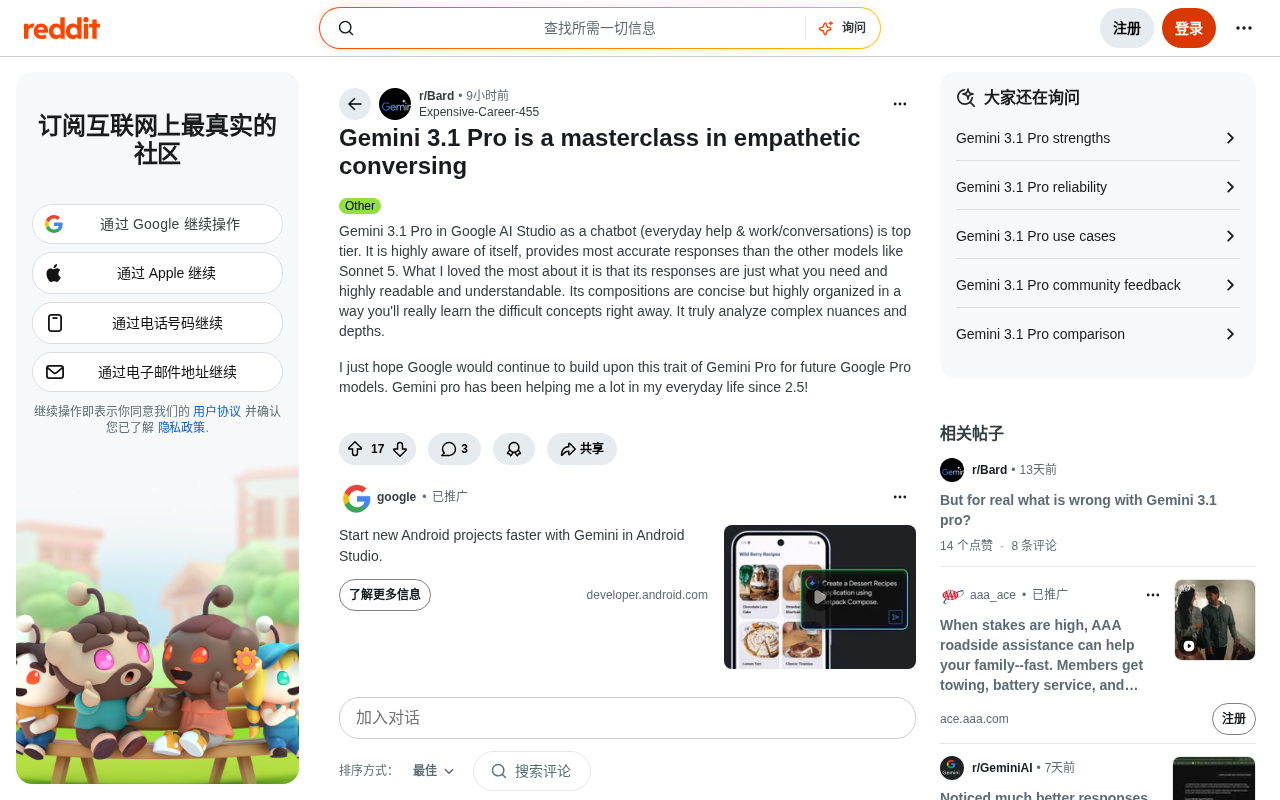
Gemini 3.1 Pro Review: Why Its Empathetic Conversation Style Keeps Users Coming Back
A longtime user calls Gemini 3.1 Pro "a masterclass in empathetic conversing" — concise, context-aware, and intent-driven. We break down why empathy is becoming AI's new competitive frontier.
Read more →

·5 min
The Complete OpenCode Tutorial: Installation, Commands, and Advanced Practice
Systematically learn the OpenCode AI programming tool: covering both desktop and WSL installation, core commands, model and rule configuration, MCP integration, and Agent Skills.
Read more →

·2 min
The Battle Over AI Subscription Rights: The Trust Game Behind Anthropic's Model Availability
A Reddit debate exposes the core tensions in AI subscription services: can providers remove models after adding them to paid tiers? An analysis of trust costs, compute pressures, and user rights.
Read more →

·6 min
Cursor Meets Grok 4.5: A Hands-On Test of an AI Coding Assistant That's 5x Faster with Cleaner Output
A developer deeply tests Grok 4.5 High Fast in Cursor, finding it rivals Claude Opus in quality but runs 5x faster with cleaner, filler-free output. Full hands-on review and analysis.
Read more →

·6 min
AI's Second Half: The Decisive Battle Shifts from Models to Infrastructure
Model capabilities are converging, making inference cost and scalability the new focus of AI competition. A deep analysis of AI infrastructure's core layers.
Read more →

·3 min
Muse Spark 1.1 Released: Competing Through Ultra-Low Cost in a Crowded AI Tool Market
Muse Spark 1.1 launches with an ultra-low cost focus. We break down the pricing strategy, technical approaches behind it, and its real value for developers and small teams.
Read more →

·7 min
ManagedAgents.sh: A Deep Dive into the Model-Agnostic Open-Source Managed Agent Platform
ManagedAgents.sh is a model-agnostic managed agent platform from OpenComputer, supporting Claude, Pi, and Codex runtimes with Slack and GitHub integration.
Read more →

·7 min
Dify 1.8.0 in Practice: A Complete Guide to Building Enterprise-Grade AI Workflows with Zero Code
An in-depth walkthrough of deploying Dify 1.8.0 and building applications: three-step Docker deployment, five app types compared, and Workflow vs Chatflow use cases—build enterprise AI apps with zero code.
Read more →

·7 min
The Revenge of the Philosophy Majors in the AI Era: Why Critical Thinking Has Become the New Scarce Resource
As generative AI sweeps the workplace, once-marginalized philosophy and humanities are being revalued. This article explores why critical thinking, ethical judgment, and questioning are the new scarce competencies in the AI era.
Read more →

·6 min
GPT-5.6 Three-Model Family Launch: A Complete Breakdown of Sol/Terra/Luna Capabilities and the Government Restriction Incident
OpenAI officially launches the GPT-5.6 family, including the Sol flagship, Terra balanced, and Luna lightweight models. Coding capabilities set a new industry benchmark, generating a Minecraft clone in 90 minutes—while OpenAI publicly opposes U.S. government release restrictions.
Read more →

·6 min
GLM 5.2 Arrives: Industry Upheaval on the Eve of AI Margin Collapse
The rise of Zhipu's GLM 5.2 is accelerating the democratization of LLM capabilities. This article analyzes the commoditization of foundation models, the logic behind margin collapse, and the opportunities and challenges facing application-layer and foundation model firms.
Read more →

·6 min
AI Bubble Alarm: Why Banks and Cloud Giants Are Sounding Warnings Together
As cloud giants like AWS and Azure and major banks issue AI bubble warnings, how should markets read this signal? A deep analysis of valuation risks, capex concerns, and the dialectic between tech value and bubble risk.
Read more →

·5 min
Claude Sonnet 5 Integrated with Devin: Enhanced Coding Performance with 30% Lower Quota Consumption
Anthropic's Claude Sonnet 5 launches on Devin Desktop and CLI, delivering frontier-level coding performance while reducing quota consumption by ~30% compared to the previous generation.
Read more →