#multi-agent debate
101 related articles
Codex Encrypts Sub-Agent Prompts: The …
·2 min
Codex Encrypts Sub-Agent Prompts: The AI Black-Box Trend and What Developers Should Do
OpenAI Codex is encrypting sub-agent prompts, sparking debate about AI transparency. We analyze the motivations, community concerns, and strategies for developers navigating the black-box trend.
Read more →

·3 min
Meta Muse Spark 1.1 Deep Dive: The Platform Ambitions Behind Meta's First Closed-Source Model
Meta Muse Spark 1.1 deep dive: native multimodal architecture, platform tools, social data retrieval, e-commerce vision — Meta's first closed-source API model benchmarks against Anthropic Sonnet.
Read more →

·2 min
GPT-5.6 Used 64 Sub-Agents to Tackle a Graph Theory Conjecture — How Far Are We from a Real Proof?
GPT-5.6 Soul Ultra used 64 parallel sub-agents to generate a proof draft for the Cycle Double Cover Conjecture in one hour. We break down the multi-agent pipeline and explain what's still missing before this counts as a real mathematical result.
Read more →

·2 min
The Complete AI Agent Development Roadmap: A Four-Stage Guide from Zero to Production
A complete four-stage AI Agent development roadmap: from LLM fundamentals and core modules, to ReAct/CoT paradigms, multi-agent collaboration, and real-world projects.
Read more →

·3 min
AI Agents Are Reshaping Software Testing: A Practical Guide from Cursor to LangChain
A deep dive into AI-powered testing: Cursor Skills, Coze agents, and LangChain multi-agent systems for automated test case generation, BDD, and review workflows.
Read more →
AI Agent or Workflow? Don't Let the Hy…
·2 min
AI Agent or Workflow? Don't Let the Hype Drive Your Tech Stack Decisions
Should you use AI Agents or deterministic workflows? This deep dive breaks down the real differences, offers clear decision criteria, and helps developers avoid the over-agentification trap.
Read more →

·3 min
Complete Codex Practical Guide: From Getting Started to Enterprise-Grade AI Programming
Master OpenAI Codex end-to-end: CLI setup, slash commands, AGENTS.md design, MCP protocol, multi-agent coordination, and enterprise plugin development.
Read more →

·3 min
In-Depth Review of GPT 5.6 Soul: Sub-Agent Systems, Government Review, and Competitor Comparison
In-depth analysis of GPT 5.6 Soul: multi-sub-agent parallel architecture, Ultra Mode coding in practice, the controversy behind its 91.9% Terminal Bench score, and the trend of frontier AI entering government review.
Read more →

·4 min
AI + Automated Testing: Building an Engine-Agnostic Quality System with Skill + CLI
An in-depth analysis of the AI-driven software testing paradigm: with Skill and CLI as the core hub, supporting both platformized management and digital employees, helping testing teams transform from script writers into capability builders.
Read more →

·5 min
Can a Mixture of Experts Beat a Single Large Model? A Deep Dive into the Hermes 2.0 Architecture
A hands-on analysis of the Hermes 2.0 hybrid multi-agent system: can multi-model collaboration beat a single top-tier LLM? We break down how the Mixture of Experts (MoE) architecture works, AgentOS features, and model-agnostic design.
Read more →

·2 min
AI Agent Learning Path: Mastering Intelligent Agent Development from 0 to 1
Many people learn tons of fragmented content yet remain confused. This article maps out the complete AI Agent knowledge landscape—from LLM and prompt basics, tool calling, and RAG to LangChain and multi-agent collaboration—with a clear learning order.
Read more →
·6 min
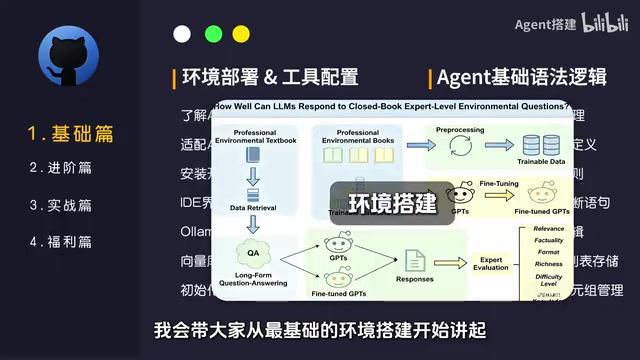
AI Agent Development Learning Path: Four Stages from Zero to Hands-On Projects
A systematic breakdown of the AI agent development learning path, covering four stages: fundamentals, RAG knowledge bases, tool use, multi-agent collaboration, and hands-on projects.
Read more →

·4 min
The Complete AI Agent Development Learning Path: From Zero to Enterprise-Grade Practice
A systematic AI Agent development learning path covering fundamentals, prompt engineering, tool calling, multi-agent collaboration, and hands-on practice with LangChain, CrewAI, and Dify.
Read more →

·2 min
GPT-5.6 Released: How AI Agents Are Moving from the Screen into the Physical World
OpenAI releases the GPT-5.6 model family, focusing on real-world applications: from automating greenhouses and empowering small entrepreneurs, to Codex 5.6 helping a mathematician disprove a three-year problem. A deep dive into GPT-5.6's multi-agent architecture and end-to-end execution.
Read more →

·2 min
Why Is Learning AI Agents So Hard? A Smarter Approach to Beginner Tutorials
Why do beginners struggle with AI Agent development? This article breaks down a concise tutorial approach: real-world examples, core logic focus, and practical mindset-building to help you get started fast.
Read more →

·7 min
Getting Started with AI Agents: A Deep Dive into the Perception-Decision-Action Loop
A clear, in-depth guide to how AI Agents work: the paradigm shift from traditional programs, the perception-decision-action loop, and the four pillars—LLMs, tool calling, memory, and RAG.
Read more →

·4 min
AI Agent Learning Roadmap: From Zero to Real-World Projects
A complete AI Agent learning roadmap covering agent principles, prompt engineering, RAG, multi-agent systems, and hands-on projects — from zero to real-world deployment.
Read more →

·4 min
9 Proven Methods to Make Hermes Agent Actually Work for You
9 battle-tested methods from hundreds of hours with Hermes Agent: model selection (Opus/ChatGPT/GLM), multi-agent failover, cross-device coordination via Tailscale, and reverse prompting workflows.
Read more →

·5 min
Agentic MapReduce: The Key Architecture for AI Agents to Achieve Distributed Reasoning Across Entire Codebases
Cognition's Agentic MapReduce architecture combines classic distributed computing with autonomous agents to break LLM context window limits, enabling multi-Agent parallel reasoning across entire codebases.
Read more →

·6 min
A Three-Month AI Agent Learning Roadmap: From Zero to Hands-On Agent Development
A systematic breakdown of the complete AI Agent learning roadmap, covering prompt engineering, the ReAct paradigm, memory mechanisms, and multi-agent collaboration, with hands-on project advice.
Read more →