#notification queue
62 related articles

·7 min
Getting Started with Dify: A Complete Guide from Local Deployment to Building Enterprise-Grade AI Applications
A detailed guide to Dify, the open-source LLM app development platform, covering its core features and full local deployment via VMware + Ubuntu + aaPanel + Docker. Supports 100+ models like DeepSeek and ChatGPT to build enterprise AI apps fast.
Read more →

·7 min
6 Core Standards of a High-Value Agent Project That Impress Interviewers
Most Agent projects lack competitiveness in interviews due to missing business value and engineering depth. This article breaks down the 6 core standards of high-value Agent projects.
Read more →
C++ Asymmetric Memory Barriers: Princi…
·4 min
C++ Asymmetric Memory Barriers: Principles, Implementation, and Engineering Applications
A deep dive into C++ asymmetric memory barriers: core principles, Linux membarrier syscall, compiler vs hardware fences, and engineering applications in RCU and lock-free data structures.
Read more →

·7 min
DryFox v0.3.3: AI Agent Team Collaboration + Composable UI Panels Explained
In-depth look at DryFox v0.3.3's three core features: multi-role agent team collaboration, one-click reusable team templates, and block-style composable UI panels. With Stop Hook, file mailbox comms, and hot-reload plugins.
Read more →

·6 min
Can AI Antivirus Cure the Chronic Pop-Up Problem? An In-Depth Hands-On Review of Wukong Security
Struggling with Windows pop-ups and rogue software? This in-depth review of Wukong Security reveals how AI antivirus breaks past traditional virus-database limits, blocking ads and bundleware in real time, plus a comparison of five repair shops.
Read more →

·3 min
Kimi K2.7 Code Hands-On: How Does High Speed Mode Feel in Practice?
Hands-on test of Kimi K2.7 Code in High Speed mode across two real projects: a frontend interactive lab and an e-commerce microservice. Speed is noticeably improved, with strong responsiveness for legacy codebases and frontend-backend integration.
Read more →

·2 min
Building an AI Public Opinion Monitoring Platform with 7 Agents: A Full-Stack LangGraph Deep Dive
A deep-dive into an AI public opinion monitoring platform built with LangGraph and LangChain, featuring 7 collaborative agents, ES vector search, email alerts, and automated report generation.
Read more →

·7 min
PP-OCRv6 Deployment Deep Dive: Invoice Recognition Results and the Font-Missing Pitfall Explained
PP-OCRv6 is PaddlePaddle's SOTA-level OCR model. This article covers Docker deployment, invoice recognition testing, and the critical font-missing pitfall causing entire regions to be skipped.
Read more →

·4 min
Claude Code New Features Deep Dive: Remote Control, Multi-Agent Parallelism, and Auto Memory
Deep dive into Claude Code's major new updates: Remote Control for session takeover, Auto Mode to reduce interruptions, multi-agent code review, Auto Memory, and Routines for cloud automation workflows.
Read more →

·4 min
Deep Dive into Hermes Agent Architecture: Loop Mechanism, Memory System, and Gateway Design
Deep dive into Hermes Agent's core architecture: Agent Loop mechanism, three-layer memory system (Markdown/SQLite/external), Gateway multi-platform integration, context compression, and Cron jobs.
Read more →

·3 min
Python Webhook Callbacks in Practice: Ditch Polling for Efficient Async Communication
Build a complete Python Flask project comparing polling vs. Webhook async communication. Learn to implement callback endpoints for payment notifications and production-grade event-driven architectures.
Read more →
·3 min
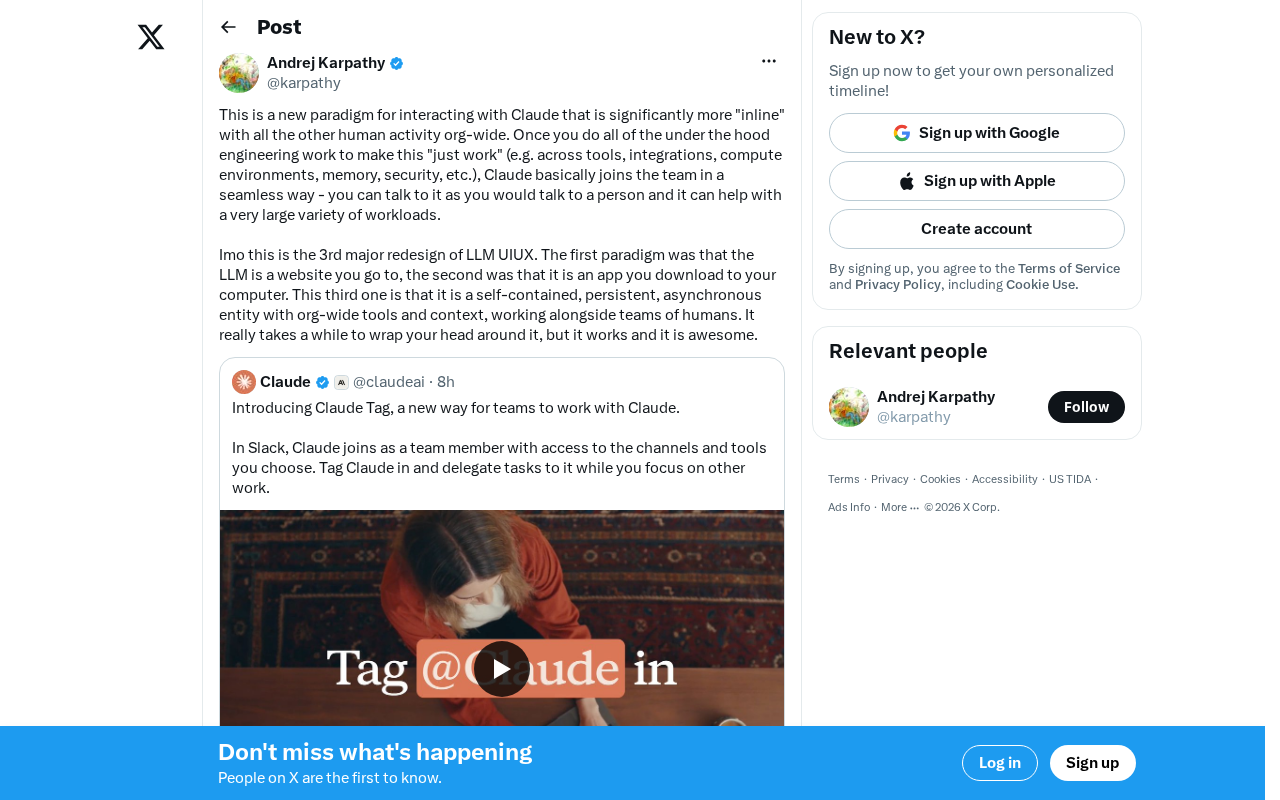
Three Paradigm Shifts in LLM Interaction: From Website to Desktop App to Team Member
Explore the three paradigm shifts in LLM interaction: from ChatGPT as a website, to desktop apps, to autonomous AI team members that collaborate asynchronously with humans.
Read more →

·3 min
CLI-WeChat-Bridge: Remotely Control AI Command-Line Tools via WeChat
CLI-WeChat-Bridge is an open-source tool that bridges AI CLI tools like Codex, Claude Code, and Open Code to WeChat, supporting voice input, file transfer, and multi-CLI parallel switching.
Read more →

·2 min
Keyroll: An In-Depth Look at a Stability-Focused Claude Refill Tool
In-depth review of Keyroll, a stability-focused Claude refill tool. Analyzing its core strengths, security implications, and compliance considerations for developers facing usage limits.
Read more →
·4 min
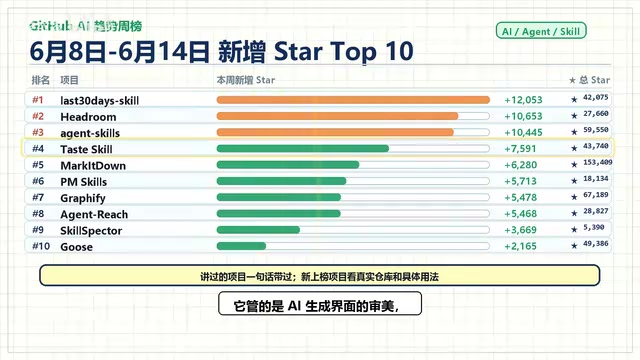
GitHub AI Weekly: Agent Ecosystem Support Tools Explode onto the Scene
June 2026 GitHub AI trends: Agent ecosystem middleware tools surge — PM Skills, Agent Reach, Graphify, and Skill Spectre signal the Agent middleware era.
Read more →

·4 min
Full-Stack Development in a Todo App: 35 Core Technologies Every Programmer Should Know
Using a todo app's full development lifecycle as a guide, this article covers 35 core full-stack technologies from frontend to backend, databases, DevOps, cloud deployment, and scaling architecture.
Read more →

·2 min
Google Antigravity CLI Launch: Unified AI Development Platform and Gemini CLI Migration Guide
Google launches unified AI platform Antigravity, migrating Gemini CLI users to the new Antigravity CLI rebuilt in Go with multi-agent orchestration and async workflows.
Read more →

·3 min
Firebase Full-Stack App Template Launches on ADC: One-Click Cloud Infrastructure Deployment
Google Cloud ADC launches Firebase Full-Stack App Essentials template for one-click deployment of Authentication, Firestore, Cloud Functions with deep VPC, IAM, and Google Cloud integration.
Read more →
 Product Reviews
·3 min
Claude Code v2.1.143 Update: Plugin Dependency Chain Management & Background Session State Persistence
Claude Code v2.1.143 brings intelligent plugin dependency chain management, background session model parameter persistence, Agent mode parameterized configuration, and critical Windows/macOS bug fixes.
Read more →
Deep Dives
The Complete Guide to OpenTelemetry: T…
·4 min
The Complete Guide to OpenTelemetry: The Three Pillars of Observability & DevOps in Practice
Deep dive into OpenTelemetry's core architecture, the three pillars of observability (logs, metrics, traces), with a real-world food delivery app crash debugging case showing how distributed tracing locates microservice bottlenecks and how AI is revolutionizing DevOps monitoring.
Read more →