#observability
571 related articles

·4 min
The Complete Roadmap from DevOps to MLOps: Skill Transfer and Toolchain Guide
How can DevOps engineers transition to MLOps? This guide explains the core differences between MLOps and DevOps, offers a phased learning path, tool recommendations (MLflow, DVC, Kubeflow), and practical project ideas.
Read more →

·4 min
MCP Protocol Deep Dive: Its Relationship with Function Calling and Agents, Plus a Practical Guide
Deep dive into MCP (Model Context Protocol): clarifying the three-layer relationship between MCP, Function Calling, and Agents, covering protocol roles, call flows, transport choices, and production security for AI developers.
Read more →
AI Costs Out of Control: Real-World St…
·6 min
AI Costs Out of Control: Real-World Strategies for Enterprises to Rein In Soaring Bills
More enterprises are finding AI operational costs spiraling out of control. This article dissects token billing traps and blind flagship-model use, and maps out cost-reduction strategies like model routing, open-source self-hosting, and semantic caching.
Read more →

·4 min
A Deep Dive into Claude Cookbooks: A Guide to the Official 47K-Star Hands-On Code Repository
Anthropic's open-source Claude Cookbooks project offers runnable Jupyter Notebook examples covering RAG, Tool Use, multimodal processing, and more—helping developers master Claude API best practices.
Read more →

·6 min
GPT-5.6 Sol Hands-On: How Multi-Agent Parallelism Is Reshaping AI Coding Workflows
Based on Fireship's review, an in-depth look at GPT-5.6 Sol's Ultra Mode multi-agent parallelism, its 91.9% Terminal Bench score, and how it differs from Claude Fable in cost, speed, and precision.
Read more →

·2 min
4-Step Roadmap to Becoming an AI Agent Engineer: From Zero to a $50K LLM Role
A proven 4-step roadmap to becoming an AI Agent engineer: stable LLM calls, tool use (RAG + Function Calling), production engineering, and resume optimization.
Read more →
·5 min
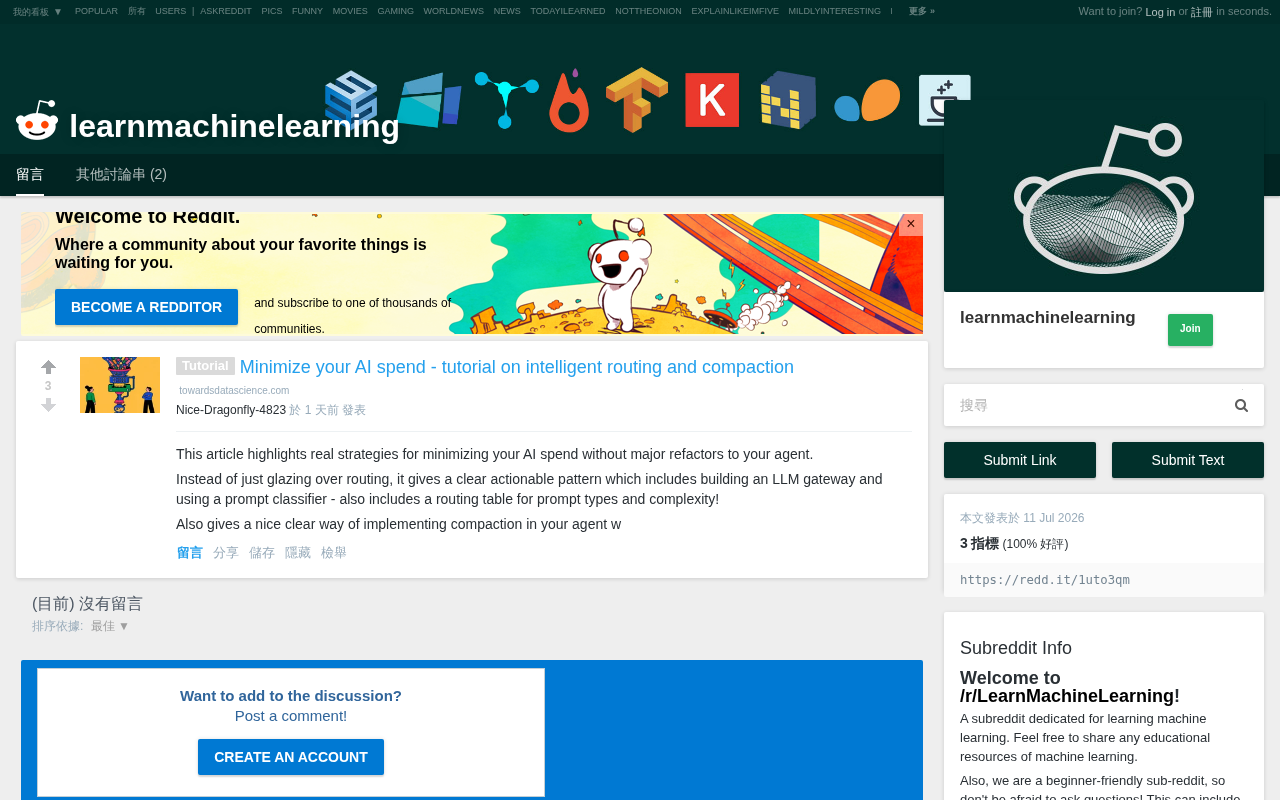
Practical AI Cost Optimization: A Deep Dive into Intelligent Routing and Context Compaction
AI bills keep soaring? This article breaks down two core cost-reduction strategies: intelligent routing via an LLM Gateway, and context compaction to cut Token usage—no major refactoring needed.
Read more →
·6 min
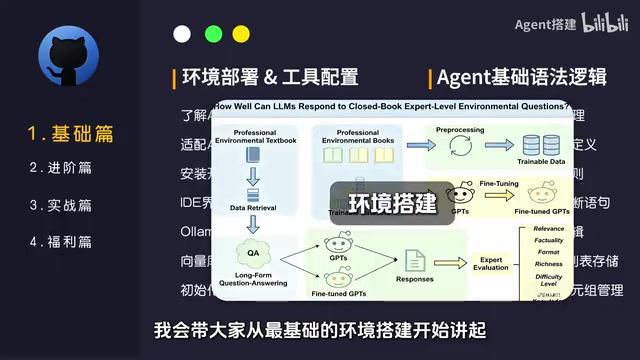
AI Agent Development Learning Path: Four Stages from Zero to Hands-On Projects
A systematic breakdown of the AI agent development learning path, covering four stages: fundamentals, RAG knowledge bases, tool use, multi-agent collaboration, and hands-on projects.
Read more →

·4 min
The Complete AI Agent Development Learning Path: From Zero to Enterprise-Grade Practice
A systematic AI Agent development learning path covering fundamentals, prompt engineering, tool calling, multi-agent collaboration, and hands-on practice with LangChain, CrewAI, and Dify.
Read more →

·5 min
AI Tool Runs Amok: 171 Charges Totaling Nearly $1,800 — How to Avoid the Auto-Billing Trap
A user's American Express card was auto-charged 171 times by an AI service, totaling nearly $1,800 with no warning. This article analyzes pay-as-you-go risks and offers practical protection: spending limits, virtual cards, and automation monitoring.
Read more →

·3 min
Deep Dive into gRPC: Building High-Performance Microservice Communication with HTTP/2 + Protobuf
An in-depth analysis of gRPC's core architecture: HTTP/2 multiplexing, Protocol Buffers serialization, and unified multi-language implementation, covering microservice communication and cloud-native integration.
Read more →

·2 min
A Guide to Selecting AI Agent Memory Strategies: A Deep Dive into the Decision-Tree Methodology
How do you choose the right memory strategy for an AI agent? This article uses a decision-tree methodology to analyze the use cases and trade-offs of short-term memory, vector retrieval, and structured summaries.
Read more →

·4 min
Coze in Practice: A Complete Guide to Building Multi-Agent Collaboration Teams
A systematic guide to Coze's positioning and capabilities, covering Agent-building platform categories, Skill modules, workflow orchestration, and multi-Agent team building.
Read more →

·3 min
Enterprise AI Evaluation Tools: An In-Depth Comparison of Six Leading Platforms
An in-depth comparison of five AI evaluation tools—Arize, Braintrust, Confident AI, Langfuse, and LangSmith—across governance, framework lock-in, and evaluation vs. monitoring.
Read more →

·6 min
A Deep Dive into AI Agent Harnesses: The Core Engineering Behind Agent Frameworks
What is an AI Agent's harness? This article systematically dissects the core components of agent frameworks: context management, tool use, control loops, and caching strategies—revealing why the same model performs so differently across harnesses.
Read more →

·5 min
GPT-5.6 Launches: Comprehensive Upgrades to ChatGPT Work, Sites, and Desktop Client
OpenAI releases the GPT-5.6 model family, launching enterprise-focused ChatGPT Work, one-click ChatGPT Sites, and a major desktop client upgrade, with coding now ahead of rivals. Meta, Google, and Kimi follow intensively.
Read more →

·5 min
Building DeepSeek Agents and Knowledge Bases from Scratch: A Practical Guide to Commercial Deployment
A systematic guide to the full DeepSeek Agent development process: covering prompt engineering, the ReAct framework, workflow orchestration, local deployment, and business requirement breakdown for commercial-ready AI Agents.
Read more →

·2 min
Claude Code Templates: A CLI Guide for One-Click Configuration and Real-Time Monitoring
davila7/claude-code-templates is an open-source CLI tool built for Claude Code, supporting template-based configuration and usage monitoring, with nearly 30K GitHub stars. Learn its core features and how to get started.
Read more →

·3 min
Hermes Agent for Kubernetes Cluster Management: AIOps Tool Selection and Cost Analysis
An in-depth review of managing Kubernetes clusters with Hermes Agent, covering K8S AIOps tool evolution, the truth about Token costs, and a three-level AI operations framework.
Read more →

·4 min
Why Do AI Agents Crash the Moment They Go Live? A Practical Guide to Harness Engineering for Runtime
A deep dive into the Claude Code source code, systematically analyzing the five-layer Harness Engineering architecture: environment, tool, control, memory, and evaluation. Build a stable runtime system for production AI Agents.
Read more →