#programming learning roadmap
194 related articles

·6 min
A Beginner's Guide to AI Agents: How Large Models Are Driving a New Computing Revolution
What is an AI Agent? This article systematically explains the core architecture of AI agents (LLM + Planning + Memory + Tools), how they differ from ChatGPT, their combination with robots, and why developers must master Agent development skills.
Read more →
·7 min
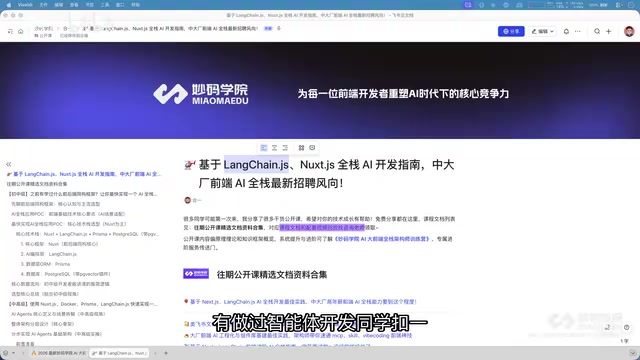
LangChain.js + Nuxt.js: An AI Full-Stack Advancement Path for Frontend Engineers
Frontend hiring now treats AI capabilities as a core assessment, covering RAG knowledge bases, AI Agent development, and LangChain.js engineering. Learn how LangChain.js + Nuxt.js helps frontend developers build memory- and retrieval-capable AI full-stack apps.
Read more →

·7 min
Building AI Agent Frameworks with TypeScript: The Core Development Paradigm for Full-Stack Developers
An in-depth look at why TypeScript is the top choice for AI Agent development: covering Zod structured output validation, LangGraph's graph state machine design, and a full learning path for front-end devs transitioning to full-stack AI.
Read more →

·5 min
A Programmer's Guide to Large Language Models: The Complete Path from Prompts to Agents
A tailored large-model learning path for ordinary programmers: from prompt engineering, API calls, and LangChain, to RAG, Agents, fine-tuning, and enterprise deployment—six steps to build AI application skills fast.
Read more →

·5 min
Anthropic Updates Cybersecurity Safeguards: How AI Safety Governance Balances Security and Usability
Anthropic updates AI cybersecurity safeguards after U.S. government dialogue. New measures slightly raise false positive rates, with flagged requests downgraded to Opus 4.8 responses. Deep analysis of the security-usability balance in AI governance.
Read more →

·6 min
Claude Code Chinese Guide: A Complete Path from Zero to an Efficient Workflow
A systematic Claude Code learning guide built for Chinese developers, covering ten core modules including Slash Commands, Memory, MCP, and Hooks, with a three-tier path to build an AI coding workflow in 11–13 hours.
Read more →

·6 min
LangChain 1.0 Comprehensive Guide: Three Core Frameworks and Hands-On AI Application Development
Deep dive into LangChain 1.0's architecture: LangChain framework, LangGraph multi-Agent orchestration, and LangSmith observability platform, with hands-on RAG and intelligent customer service projects.
Read more →

·2 min
Python + AI Learning Roadmap for Beginners: A Complete Guide from Basics to Practice
New to Python and AI? This guide breaks down Linux, MySQL, and Python into clear learning modules with goals and benchmarks — helping beginners build a solid, executable roadmap from day one.
Read more →

·6 min
Codex Beginner's Guide: Four Product Forms Explained, Plus Comparison with Claude Code and Cursor
In-depth analysis of OpenAI Codex's four usage forms, comparing Codex, Claude Code, and Cursor across price, stability, and frontend/backend fit to help developers choose the right AI programming tool.
Read more →

·5 min
AI-Native Team Practices: How Anthropic Engineers Achieved an 8x Productivity Boost
Anthropic's Fiona Fung shares how AI tools drove an 8x increase in engineer code output, and how AI-native teams are rethinking management, quality, and collaboration.
Read more →

·4 min
Adding a 'Repair Layer' to Open-Source Models: How DeepSeek Can Outperform Claude Opus
Independent developer Ahmad Awais found that open-source LLM failures stem from Tool Calling bugs, not model capability. A deterministic repair layer + repair hints can make DeepSeek outperform Claude Opus.
Read more →

·6 min
OpenAI CFO Deep Dive: IPO Stance, Compute Shortage, and Jony Ive's New Hardware Revealed
OpenAI CFO Sarah Fryer discusses the $122B fundraise, IPO timeline, Anthropic rivalry, compute shortage crisis, and the mysterious Jony Ive hardware collaboration on the All-In Podcast.
Read more →

·7 min
AI Agent Development: A Four-Stage Competency Model from 15K to 40K RMB Salary Growth Path
A detailed four-stage competency model for AI Agent development: from Python/RAG basics (15K) to workflow orchestration (20K), inference optimization (30K), and Agent cluster governance (40K RMB).
Read more →

·6 min
Is Claude Fable 5 Real? Exposing the AI Reseller Service Scam
Anthropic never released a Claude Fable 5 model. This article analyzes fake AI promotions, exposes wrapper service scam tactics, and provides tips for verifying AI claims.
Read more →

·3 min
Python Self-Study Roadmap: A Three-Phase Learning Method from Zero to Hands-On Projects
A detailed Python self-study roadmap in three phases: fundamentals, OOP & intermediate skills, and hands-on projects including web scraping and office automation.
Read more →

·3 min
6-Week AI Agent Development Learning Roadmap: A Complete Guide from Zero to Project Deployment
A systematic 6-week AI Agent development roadmap covering core architecture, ReAct paradigm, multi-agent collaboration, RAG integration, and deployment for beginners to build production-ready agents.
Read more →

·3 min
AI Large Language Model Learning Roadmap from Scratch: From Beginner to Enterprise-Level Practice
A systematic AI LLM learning roadmap from scratch, covering Python basics, Prompt Engineering, RAG, Agent development, and enterprise-level projects.
Read more →
·3 min
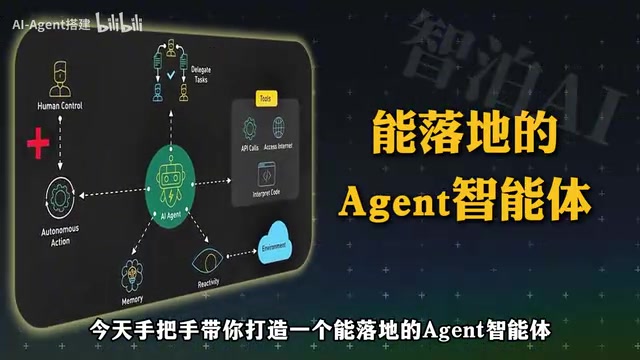
AI Agent Beginner's Guide: A Complete Four-Stage Learning Path
A complete learning path for AI Agent development from scratch, covering core theory, ReAct paradigm, multi-agent collaboration, Prompt optimization, and hands-on projects across four stages.
Read more →

·2 min
AI LLM Development Career Path: Four Stages from Zero to $60K+/Year
A four-stage learning path for AI LLM application development: from Python basics and RAG architecture to Agent cluster orchestration, helping developers transition into AI roles.
Read more →

·3 min
AI Agent Development: A Three-Stage Learning Roadmap from Zero to One
A systematic three-stage AI Agent development roadmap: from Python basics and LLM fundamentals, through five core capabilities like planning and tool use, to hands-on RAG projects for real-world deployment.
Read more →