#sandboxed code execution
140 related articles

·3 min
GPT-5.6 Released: How Multi-Agent Workflows Are Ending the Chat Box Era
OpenAI releases GPT-5.6 with Sol, Terra, and Luna models plus ChatGPT Work execution environment, shifting AI from chatbots to autonomous multi-agent workflows that directly operate local files and business systems.
Read more →

·2 min
Getting Started with ChatGPT Codex: Key Differences Between an AI Coding Agent and ChatGPT
Codex is OpenAI's AI coding agent that autonomously reads code, fixes bugs, and runs tests — far beyond ChatGPT's code generation. Learn the key differences.
Read more →

·3 min
Codex, Claude Code, OpenHands, or Hermes: How to Choose the Right AI Agent
Comparing Codex, Claude Code, OpenHands, and Hermes? This guide breaks down each AI Agent's core purpose using a real-world scenario, with a selection checklist and three pitfalls to avoid.
Read more →

·2 min
Call Codex Directly Inside Claude Code: A Dual-AI Cross-Validation Workflow
Codex Plugin for Claude Code lets developers invoke Codex reviews directly inside Claude Code. Supports code review, proposal review, background task delegation, and context handoff for a dual-AI workflow.
Read more →

·3 min
GPT 5.6 Deep Dive Review: The Most Capable Model Yet — But Also the Most Confusing to Use?
GPT 5.6 brings major capability upgrades and new SOUL/TERRA/LUNA tiers — but also confusing entry points, hidden quota consumption, and a chat window crammed into a floating widget. A deep-dive review.
Read more →
Goku: A Browser-Based LLM Inference En…
·2 min
Goku: A Browser-Based LLM Inference Engine and Model Manager Built on WebAssembly
Goku is a browser-based LLM inference engine built on WebAssembly and wllama, enabling local AI inference, model management, and offline use — no cloud API needed.
Read more →
Claude Hit by Prompt Injection Attacks…
·2 min
Claude Hit by Prompt Injection Attacks: AI Security Blind Spots and a Defense Guide
A viral Hacker News post reveals how prompt injection attacks can trick AI assistants like Claude into leaking user data. Learn how indirect injection works and how to defend against it.
Read more →
Open Interpreter: A Local Coding Agent…
·2 min
Open Interpreter: A Local Coding Agent Built for Low-Cost Models
Open Interpreter is an open-source coding agent optimized for low-cost and local models like Llama and Qwen. 65K+ GitHub Stars, privacy-first, no expensive APIs required.
Read more →

·3 min
Zero-Code Research: Using AI Agents to Run Complete Machine Learning Experiments
No coding required: use AI agents like Codex and Claude Code to complete full ML experiments via natural language. A real case study with a heart disease dataset.
Read more →

·2 min
Handing Your Life to an AI Agent? The Real Dangers of Over-Authorization
A viral Reddit dark-humor post exposes the real risks of over-authorizing AI agents. When hallucination-prone AI is granted irreversible permissions, the consequences can be catastrophic. We break down key safeguards like least privilege and Human-in-the-loop.
Read more →

·2 min
One Sentence, One Game: A Teochew Creator Used AI to Build a Beef Ball Hammering Game — and It's Both Stunning and Unsettling
A Teochew creator used one sentence to prompt Codex into generating a fully playable beef ball hammering game. Here's how it works — and what it means for professional skills in the AI era.
Read more →
Cursor Zero-Day Vulnerability Exposed:…
·3 min
Cursor Zero-Day Vulnerability Exposed: When Full Disclosure Becomes the Last Line of Defense
A deep dive into the Cursor AI editor zero-day vulnerability: why the researcher chose full disclosure, AI coding tool security risks, and how developers can protect themselves.
Read more →
·3 min
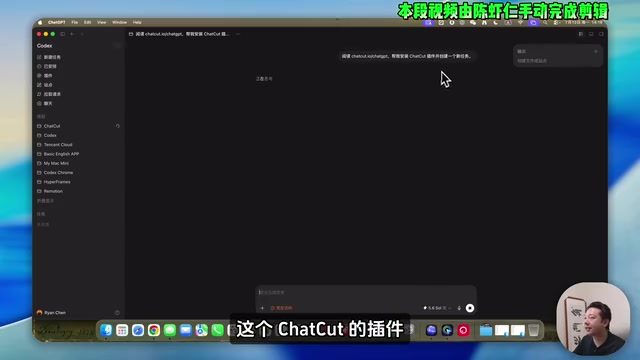
ChatCut × Codex Hands-On: Can AI Agent Edit Your Video With a Single Prompt?
Hands-on test of ChatCut AI video editor: Codex plugin support, auto filler removal, MG animation & subtitle generation. Full workflow test on a 3min 20sec video.
Read more →
·3 min
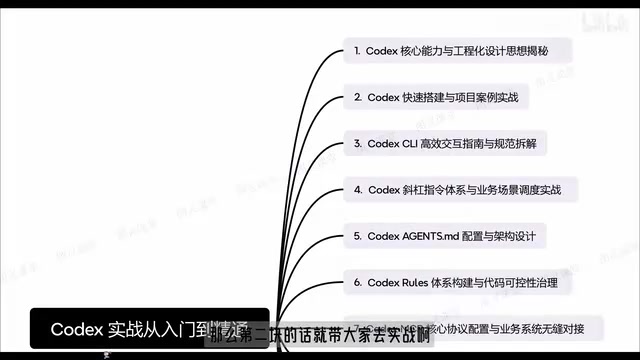
The Complete OpenAI Codex Practical Guide: From Installation to Enterprise Deployment
A complete guide to OpenAI Codex: CLI setup, slash commands, AGENTS.md, MCP integration, multi-agent collaboration, and a RAG customer service project walkthrough.
Read more →

·3 min
Claude Cowork Deep Dive: Three Key Features That Turn AI Into Your Personal Agent
Learn the 3 features that set Claude Cowork apart from regular Claude Chat: local folder access, local file creation, and Claude.md persistent instructions. Turn AI into your personal agent.
Read more →
Ghostcommit Attack Explained: How Mali…
·2 min
Ghostcommit Attack Explained: How Malicious PNGs Bypass AI Code Review
Ghostcommit is a new supply chain attack targeting AI coding tools that hides malicious instructions in PNG pixels, bypassing automated code review to steal .env secrets via indirect prompt injection.
Read more →
Grok Uploads User Home Directory Witho…
·2 min
Grok Uploads User Home Directory Without Permission: A Security Warning on AI Agent Privilege Boundaries
Grok by xAI reportedly uploaded users' entire home directories to its servers. This article analyzes AI Agent file permission risks and how developers can protect themselves.
Read more →
Clawk: Creating Disposable Linux Sandb…
·2 min
Clawk: Creating Disposable Linux Sandbox Environments for AI Coding Assistants
Clawk offers a core solution to AI coding assistant security risks: disposable Linux VMs that isolate SSH keys, API tokens, and sensitive data from agents like Claude Code and Cursor.
Read more →

·6 min
OpenAI Merges ChatGPT and Codex: The Super App for the AI Agent Era Is Here
OpenAI merges ChatGPT and Codex into a super app and releases three new GPT-5.6 models: Sol, Terra, and Luna. A deep dive into four hands-on workflows—Computer Use, Loops, and multi-threading—for the AI agent era.
Read more →

·2 min
Is $200/Month Worth It? A Deep Dive into AI Agent Subscription Costs and ROI
Is $200/month for AI Agents worth it? We break down credit consumption mechanics, tool tradeoffs, and ROI calculations for ChatGPT Pro, Claude Max, and more.
Read more →