#soft robotics
114 related articles

·3 min
UAV Disaster Zone Rescue Priority Assessment: A Deep Feasibility Analysis for Final Year Projects
A deep feasibility analysis of a UAV disaster-zone rescue priority assessment project, covering SARD/HERIDAL/VisDrone datasets, pose detection, YOLO models, and ethical boundaries — a practical reference for CV final-year projects.
Read more →
decisionrl: An Open-Source Reinforceme…
·2 min
decisionrl: An Open-Source Reinforcement Learning Library Built for Operational Decision-Making
decisionrl is an open-source RL library for operational decisions, with built-in environments for inventory, pricing, supply chain, and OR baselines for comparison. Built on PyTorch, MIT licensed.
Read more →
Evaluating General-Purpose Robot Polic…
·2 min
Evaluating General-Purpose Robot Policies: A Scientific Framework for Real-World Deployment
How do you scientifically evaluate general-purpose robot policies for real-world deployment? This article breaks down evaluation challenges, task design, generalization testing, and the sim-to-real gap.
Read more →
Procedural Synthetic Data Generation w…
·2 min
Procedural Synthetic Data Generation with Blender: A New Approach to CV Model Testing and Annotation
A developer repurposed a Blender Python procedural 3D scene generator into a CV & SLAM synthetic data tool, delivering mathematically precise bounding boxes and coverage of hard edge cases like extreme glare, low light, and heavy occlusion.
Read more →

·2 min
Andrew Ng's AI for Everyone: Understanding the Truth and Limits of Artificial Intelligence
Andrew Ng's AI for Everyone course explained: understand ANI vs. AGI, cut through AI hype and fear, and see how deep learning is transforming every industry.
Read more →

·3 min
AI Agent Beginner's Guide: LLMs vs. Agents, and a Full Breakdown of Development Tools
What is an AI Agent? This guide explains the key differences between LLMs and Agents, breaks down the Agent formula (LLM + Workflow + Knowledge Base), and compares tools like Dify, Coze, LangChain, and LlamaIndex.
Read more →
·3 min
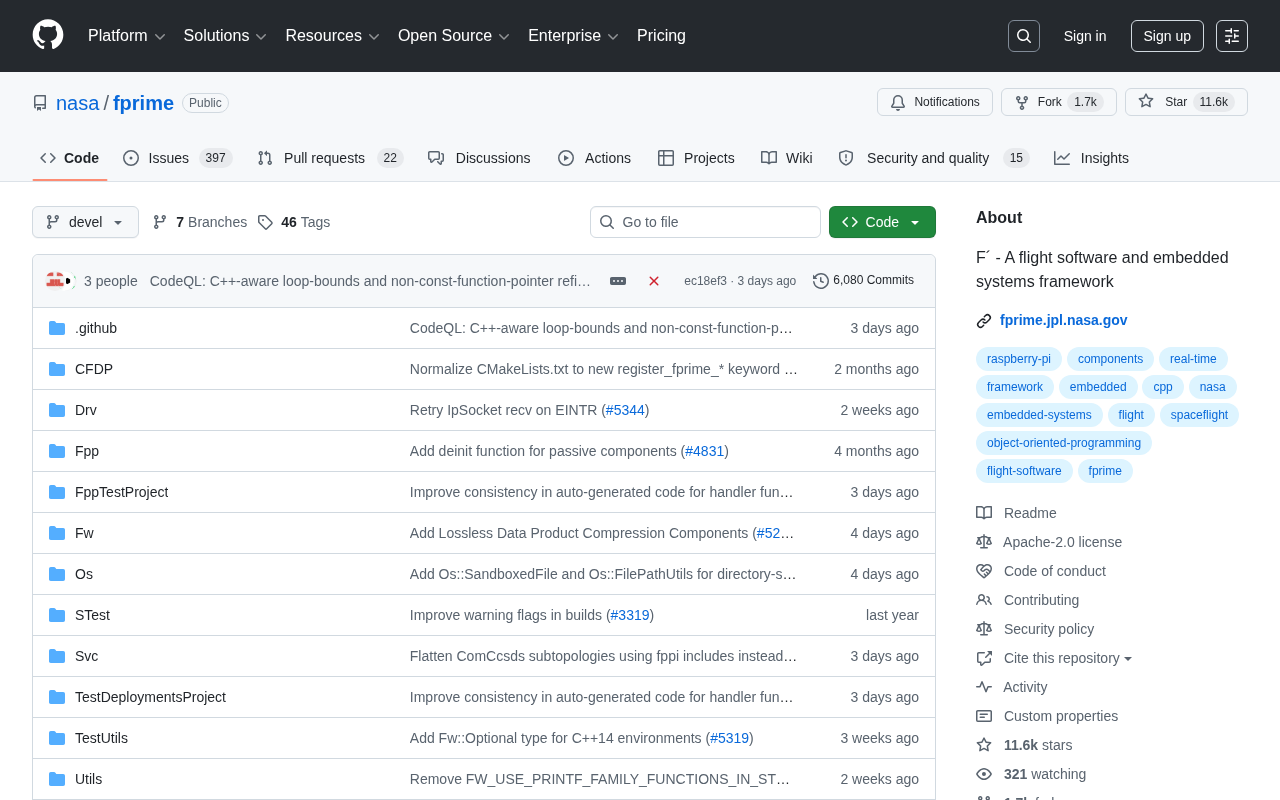
NASA Open-Sources the F´ Framework: A Space-Grade Toolkit for Flight Software and Embedded Systems Development
NASA's JPL open-sourced the F´ (F Prime) flight software framework: C++-based, component-driven, and validated in real space missions. Ideal for CubeSats, drones, and embedded systems, it has over 11,000 GitHub Stars.
Read more →
The Circular Financing Trap in Nvidia'…
·4 min
The Circular Financing Trap in Nvidia's Ecosystem: The Capital Undercurrents Behind the GPU Boom
An in-depth look at the circular financing model among Nvidia, CoreWeave, and Nebius—where suppliers double as investors, capital self-reinforces, and valuation bubbles and systemic risk lurk behind the AI infrastructure boom.
Read more →

·3 min
Why Are Companion AIs Being Pulled En Masse? The Triple Dilemma and a Path Forward for Practitioners
Major players are pulling companion agents en masse, exposing the triple dilemma of high consumption, low payment, and poor retention. A deep dive from Character.ai's financials to the "Day 30 death" phenomenon.
Read more →

·3 min
WorldBench Open-Sourced: A Standardized Evaluation Toolkit for Robot World Models
WorldBench is an open-source Python toolkit for evaluating robot world models, covering prediction fidelity, long-horizon consistency, physical plausibility, and more—enabling standardized comparisons across teams and papers.
Read more →

·3 min
OpenAI GPT Live: Full-Duplex Voice AI That Listens, Speaks, and Executes Tasks Simultaneously
OpenAI launches GPT Live, a voice AI model family supporting full-duplex real-time conversation, deep task delegation, multimodal interaction, and instant translation, with reasoning near GPT-5 level.
Read more →

·6 min
1X NEO Robotic Hand and GPT-5.6: A Full Breakdown of Dual Breakthroughs in Robot Hardware and Software
1X releases a new robotic hand for the NEO humanoid robot—25 DOF, force transparency, and tactile skin enabling data self-labeling. OpenAI launches the three-tier GPT-5.6, boosting coding and cost-efficiency. Hardware and AI brains evolve together, accelerating humanoid robot commercialization.
Read more →

·3 min
Computer Science vs. AI & Robotics: How Should You Choose?
Computer Science or AI & Robotics—which is more stable and promising? This article analyzes major nature, job prospects, and risk hedging to help you plan wisely.
Read more →

·5 min
Getting Started with AI Agents: Concepts, Architecture, and Core Components Explained
What is an AI Agent? Starting from Bill Gates' claim about the computing revolution, this article explores AI Agents' intuitive concepts, four core components (LLM+Planning+Memory+Tools), and what Agent development means for programmers.
Read more →

·2 min
AI/ML Engineer Job Search Roadmap: A Systematic Preparation Guide for ECE Students
A practical job-search guide for ECE students pursuing AI/ML roles, covering direction selection, Python skills, project planning, paper strategy, and overseas opportunities.
Read more →

·2 min
yaml-cpp: The Go-To Open Source Library for Parsing YAML in C++
yaml-cpp is the most popular YAML parsing and emitting library for C++, supporting YAML 1.2 with a clean Node API and custom type conversion. Used by ROS and more.
Read more →

·5 min
The Complete OpenCode Tutorial: Installation, Commands, and Advanced Practice
Systematically learn the OpenCode AI programming tool: covering both desktop and WSL installation, core commands, model and rule configuration, MCP integration, and Agent Skills.
Read more →

·6 min
GPT-5.6 Now Widely Available: The Era of Three-Tier Models and Multi-Agent Orchestration Arrives
OpenAI releases GPT-5.6 (SOUL/TERRA/LUNA), with Ultra mode running four agents in parallel; Meta launches Muse Spark 1.1 with million-token context; ChatGPT desktop unifies Chat, Work, and Codex.
Read more →

·3 min
Does a Robot's Casing Affect Its Degrees of Freedom? The Engineering Truth Behind Bare-Metal Demos
Robot demos often use bare-metal to show off degrees of freedom, but do casings hurt performance? A deep dive into how casings affect range of motion and inertia.
Read more →

·6 min
Is AI Really Smart? The Future Directions and Capability Boundaries of Next-Generation Artificial Intelligence
Are large language models truly intelligent? This article analyzes core AI limitations — pattern matching, hallucinations, reasoning deficits — and explores next-gen directions like inference-time compute, neuro-symbolic AI, and embodied intelligence.
Read more →