#specialization strategy
133 related articles

·2 min
Mercor Races Toward a $20B Valuation: The Capital Logic Behind the AI Data Labeling Race
AI talent and data labeling platform Mercor is in talks for a new funding round targeting a $20B valuation, nearly doubling from $10B months earlier. A deep dive into Mercor's business model and the AI data supply chain logic.
Read more →

·5 min
Advanced Machine Learning Reading List: How to Choose the Right Book Among These 4 Classics?
Torn between Géron, Chollet, and Raschka? This article breaks down 4 classic ML books for self-learners aiming at finetuning and small language models (SLM), helping you find the best advanced path.
Read more →

·4 min
ChatGLM Large Model Development Tutorial: From Zero to Enterprise Deployment
Systematically learn ChatGLM large model development, covering Transformer principles, RAG, private deployment, fine-tuning, and Agent development, with a roadmap and hands-on cases.
Read more →

·3 min
Inside the ML Engineer Coding Assessment at Top US Tech Companies: What's Tested and How to Prepare
A firsthand account shared on Reddit reveals what a machine learning engineer online assessment (OA) at a top US tech company is really like. This article breaks down OA modules, role differences, and prep strategies for FAANG job seekers.
Read more →
·7 min
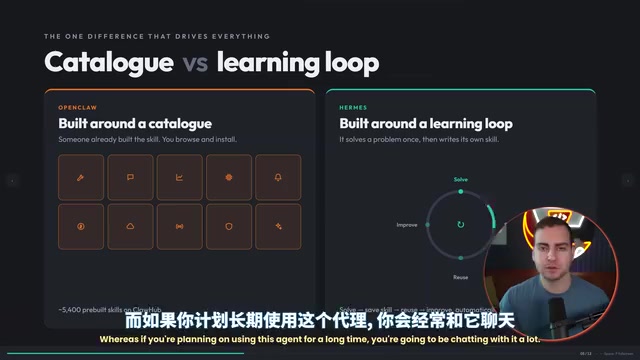
OpenClaw vs Hermes: An In-Depth Comparison and Selection Guide for AI Agent Tools
An in-depth comparison of OpenClaw and Hermes Agent, covering skill management, memory mechanisms, security, and gateway configuration to help you find the right AI agent solution.
Read more →

·5 min
GPT-5.6 Triple Launch: Understanding the Positioning and Key Differences of Sol, Terra, and Luna
OpenAI released three GPT-5.6 models—Sol, Terra, and Luna—covering everything from flagship reasoning to lightweight speed. A deep dive into their positioning, performance differences, pricing, and industry signals.
Read more →
·4 min
Deep Dive into Asio: The De Facto Standard and Core Design of C++ Asynchronous Network Programming
A comprehensive analysis of Asio (Boost.Asio) covering its Proactor async model, completion token mechanism, C++20 coroutine support, and cross-platform I/O abstraction for high-performance C++ networking.
Read more →

·7 min
Practical RL Compute Optimization: Core Strategies to Boost CPU and GPU Utilization
An in-depth look at why CPU and GPU utilization is low in RL training, covering vectorized environment parallelism, distributed Actor-Learner architectures, GPU-side simulation (Isaac Gym/Brax), and Ray RLlib practice.
Read more →

·6 min
GPT Live Full-Duplex, Grok 4.5 Coding, Seedream 5.0 Images: AI Accelerates Across Three Tracks Simultaneously
OpenAI's GPT Live full-duplex voice model, Grok 4.5 coding model with Cursor, and ByteDance's Seedream 5.0 Pro image generation launched together. A deep dive into three AI releases.
Read more →

·2 min
xAI Teams Up with SpaceX to Train Grok 4.5: Entering a New Era of Hardcore Engineering Intelligence
xAI announces a partnership with SpaceX to train Grok 4.5, positioned as its first general-purpose model going beyond software engineering. A deep dive into the collaboration logic, SpaceX's exclusive data value, and its significance in AI competition.
Read more →

·2 min
Why Is Learning AI Agents So Hard? A Smarter Approach to Beginner Tutorials
Why do beginners struggle with AI Agent development? This article breaks down a concise tutorial approach: real-world examples, core logic focus, and practical mindset-building to help you get started fast.
Read more →

·2 min
GPT-5.6 Three-Model Showdown: A Complete Breakdown of So, Terra, and Luna
OpenAI's GPT-5.6 preview introduces So, Terra, and Luna. All three score perfect marks on long-horizon agentic tasks, with Terra priced 50% below GPT-5.5.
Read more →

·4 min
GPT-5.6 Three-Model Deep Dive: Sol, Terra, and Luna Benchmarked and Compared
OpenAI's GPT-5.6 series benchmarked: flagship Sol, balanced Terra, and lightweight Luna tested head-to-head. Agentic tasks rival top models, Luna starts at $1/M tokens. Full comparison with Fable 5 and Opus 4.8.
Read more →

·2 min
GPT-5.6 Sol Series Coming Soon: A Deep Dive into the Three-Model Architecture
OpenAI may release the GPT-5.6 series this Thursday, featuring three models: Sol, Terra, and Luna. A deep dive into the naming logic, product strategy, and competitive implications.
Read more →

·6 min
7 Anima Model Combinations Tested: The Optimal Config Guide for Anime Image Generation
A Reddit user's rigorous controlled experiment testing all 7 Anima combos—base, aesthetic, turbo LoRA, and turbo baked. Key takeaway: choose aesthetic first, add Turbo LoRA for anime-girl style. Includes prompt structures and ComfyUI configs.
Read more →

·6 min
What Is an FDE? Decoding the Most Sought-After Hybrid Engineer in the AI Deployment Era
FDE (Forward Deployed Engineer) is the hottest emerging role in the AI deployment wave, combining a technical CTO, full-stack AI engineer, and business consultant. Learn the two FDE tracks, core skills, and how to transition into one.
Read more →

·7 min
Previewing the AI Engineer Summit: Industry Signals of AI Engineering Reaching Maturity
An exclusive look at the AI Engineer Summit dress rehearsals, decoding the paradigm shift from research to production. A deep dive into AI Engineer challenges, RAG, agent systems, and AI engineering as a distinct discipline.
Read more →

·4 min
Getting Started with AI Agent Development: Core Mindset and Learning Path for Beginners
Intimidated by AI Agent development? This article breaks down the two biggest beginner pain points and reveals why the real skill isn't memorizing APIs, but mastering requirement decomposition, workflow design, and problem-solving.
Read more →
·5 min
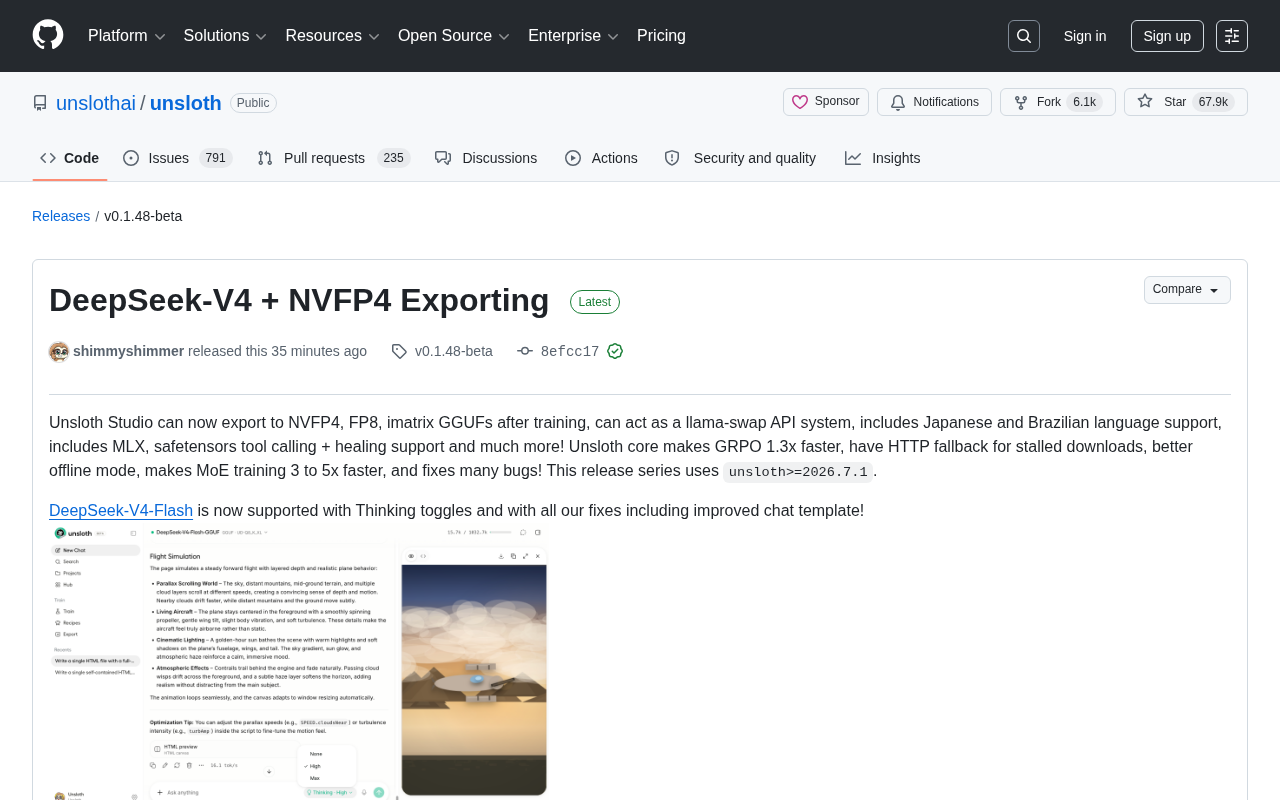
Major Unsloth Update: NVFP4 Quantization Export and DeepSeek-V4 Training Support
Unsloth v0.1.48-beta released, adding NVFP4/FP8 quantization export, OpenAI-compatible API hot-swapping, 3-5x faster MoE training, and 1.3x faster GRPO, covering the full LLM fine-tuning, quantization, and local deployment pipeline.
Read more →

·6 min
Benchmarking as Data Activation: Giving Domain Data a Direction to Climb
How benchmarking transforms dormant domain data into an AI optimization engine. From healthcare to law to manufacturing, building vertical benchmarks activates proprietary data and builds a strategic moat.
Read more →