#specialization strategy
117 related articles

·2 min
Vibe Coding on a Budget: The Brain-vs-Hands Multi-Agent Strategy for Saving Tokens
Always burning through your AI coding quota? This guide breaks down a brain-vs-hands multi-agent strategy: use strong models only for planning, and cheap models like DeepSeek for execution.
Read more →

·2 min
Kimi K3 Leads the Charge: Inside the AI Coding Agent Framework Transparency Race
Kimi K3 sets a new open-weight record at 2.8T params, GrokBuild pivots to local-first after a privacy crisis, Open Interpreter rewrites in Rust — a deep dive into five major AI coding agent developments and the shift toward harness transparency.
Read more →

·2 min
The Truth Behind Anthropic's Account Bans: Client Detection Logic and a Wave of AI Model Launches
Unpacking the technical truth behind Anthropic's account bans: hidden timezone and proxy detection logic sparks privacy debate. Plus Claude Sonnet 5, Linux support, and new releases from OpenAI, NVIDIA, and Google DeepMind.
Read more →

·4 min
The Local AI Inflection Point: Edge Deployment, Multi-Model Collaboration, and the Open-Source Ecosystem
AI Engineer Summit deep dive: Local AI hits a real inflection point, driven by privacy and cost. Multi-model collaboration goes mainstream, NVIDIA + ExoLabs achieve 10x gains, open-source ecosystem accelerates.
Read more →
One Prompt, 50 Games: An Experiment in…
·3 min
One Prompt, 50 Games: An Experiment in Parallel Multi-Agent Orchestration with Claude
One developer used a single prompt to run dozens of Fable-5 agents in parallel, generating 50+ playable games in one day. A deep dive into parallel agent orchestration, Claude Code CLI, and the future of AI-driven software production.
Read more →
Paper Reproduction as an Entry Point i…
·4 min
Paper Reproduction as an Entry Point into Scientific Machine Learning: Path Selection and Pitfall Guide
How can applied math students efficiently enter Scientific Machine Learning (SciML)? This guide covers the value and pitfalls of paper reproduction, with a layered path from numerical PDEs to research.
Read more →

·3 min
AI Agent Learning Roadmap: From Zero to Building Your Own Intelligent Agents
A structured AI Agent learning roadmap covering fundamentals (Agent principles, Prompt engineering), advanced topics (RAG, multi-agent collaboration), and three hands-on projects — ideal for beginners.
Read more →

·2 min
The AI Model Release Frenzy: The Industry Logic Behind the Tech Arms Race
OpenAI, Google, Anthropic and others are releasing models back to back. We analyze the competitive logic, double-edged effects, and what it means for developers, users, and creators.
Read more →

·3 min
How to Systematically Learn Machine Learning After Mastering Math and Python
Already know math and Python? Learn the complete machine learning roadmap: from data science tools and classical algorithms to deep learning frameworks and specialization.
Read more →

·3 min
Linguistics to NLP Engineer: Comparing Three Pathways and Finding the Optimal Strategy
How can linguistics or translation majors transition into NLP engineering? This article compares three pathways and offers a phased strategy covering core skills, project building, and job hunting tips.
Read more →

·3 min
AI-Powered OSINT in Practice: A Learning Path and Tool Guide for CS Professionals
How can OSINT practitioners with a CS background automate intelligence with AI? This guide covers computer vision, VLMs, and Agent frameworks including YOLO, SAM, and Grounding DINO.
Read more →

·3 min
Sent Hundreds of Resumes with No Response? A Deep Dive into Tech Job Search Struggles and How to Break Through
Sending hundreds of resumes with no response? This article breaks down the core pain points in today's tech job market — ATS filtering, spray-and-pray fatigue, neglected referral channels — and offers actionable strategies to break through.
Read more →

·2 min
Mercor Races Toward a $20B Valuation: The Capital Logic Behind the AI Data Labeling Race
AI talent and data labeling platform Mercor is in talks for a new funding round targeting a $20B valuation, nearly doubling from $10B months earlier. A deep dive into Mercor's business model and the AI data supply chain logic.
Read more →

·5 min
Advanced Machine Learning Reading List: How to Choose the Right Book Among These 4 Classics?
Torn between Géron, Chollet, and Raschka? This article breaks down 4 classic ML books for self-learners aiming at finetuning and small language models (SLM), helping you find the best advanced path.
Read more →

·4 min
ChatGLM Large Model Development Tutorial: From Zero to Enterprise Deployment
Systematically learn ChatGLM large model development, covering Transformer principles, RAG, private deployment, fine-tuning, and Agent development, with a roadmap and hands-on cases.
Read more →

·3 min
Inside the ML Engineer Coding Assessment at Top US Tech Companies: What's Tested and How to Prepare
A firsthand account shared on Reddit reveals what a machine learning engineer online assessment (OA) at a top US tech company is really like. This article breaks down OA modules, role differences, and prep strategies for FAANG job seekers.
Read more →
·7 min
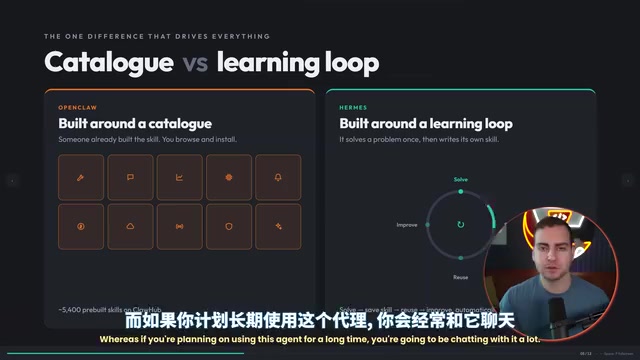
OpenClaw vs Hermes: An In-Depth Comparison and Selection Guide for AI Agent Tools
An in-depth comparison of OpenClaw and Hermes Agent, covering skill management, memory mechanisms, security, and gateway configuration to help you find the right AI agent solution.
Read more →

·5 min
GPT-5.6 Triple Launch: Understanding the Positioning and Key Differences of Sol, Terra, and Luna
OpenAI released three GPT-5.6 models—Sol, Terra, and Luna—covering everything from flagship reasoning to lightweight speed. A deep dive into their positioning, performance differences, pricing, and industry signals.
Read more →
·4 min
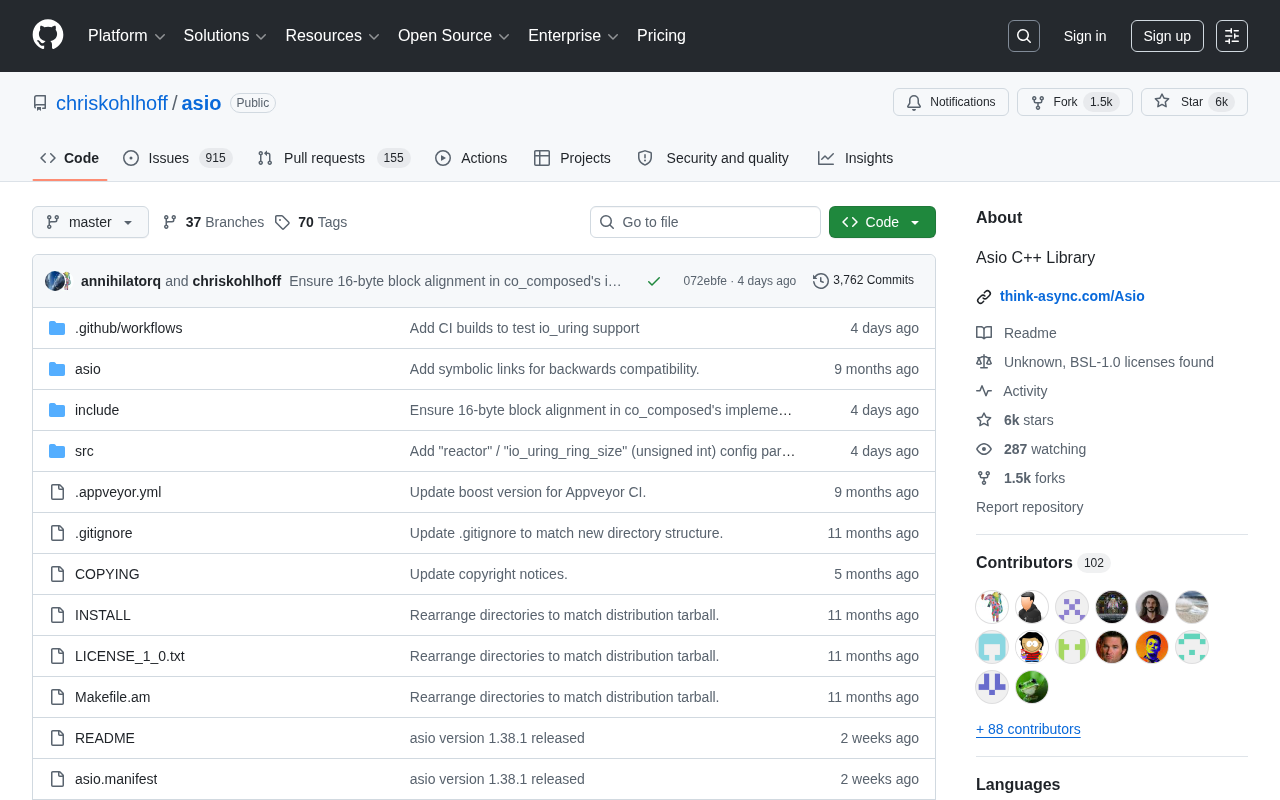
Deep Dive into Asio: The De Facto Standard and Core Design of C++ Asynchronous Network Programming
A comprehensive analysis of Asio (Boost.Asio) covering its Proactor async model, completion token mechanism, C++20 coroutine support, and cross-platform I/O abstraction for high-performance C++ networking.
Read more →

·7 min
Practical RL Compute Optimization: Core Strategies to Boost CPU and GPU Utilization
An in-depth look at why CPU and GPU utilization is low in RL training, covering vectorized environment parallelism, distributed Actor-Learner architectures, GPU-side simulation (Isaac Gym/Brax), and Ray RLlib practice.
Read more →