#subagent architecture
76 related articles

·3 min
Codex Efficiency Guide: Practical Strategies to Avoid Burning Through GPT-5.6 Credits
GPT-5.6 (Sol) is powerful but burns credits fast. Learn reasoning tier selection, Fast Mode, and prompt stop-point strategies to get the most out of Codex.
Read more →

·3 min
Multi-Agent Collaboration with Claude Code and Codex: A Guide to Architecture Design and State Management
A deep dive into Claude Code and Codex multi-Agent collaboration: architecture design, state-driven coordination, private/public zone division, and building efficient AI programming teams.
Read more →

·6 min
A Deep Dive into AI Agent Harnesses: The Core Engineering Behind Agent Frameworks
What is an AI Agent's harness? This article systematically dissects the core components of agent frameworks: context management, tool use, control loops, and caching strategies—revealing why the same model performs so differently across harnesses.
Read more →
·5 min
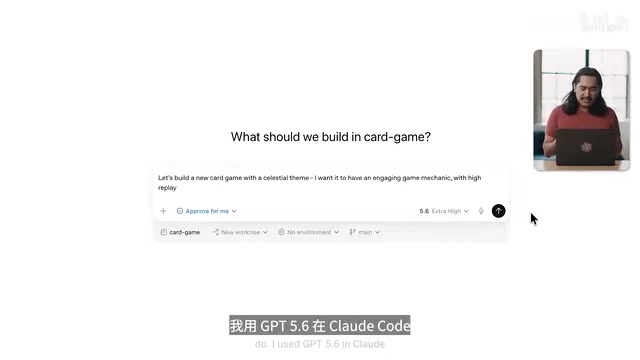
GPT-5.6 Released: Hands-On Analysis of Programmatic Tool Calling and Autonomous Agents
GPT-5.6 is officially released with core upgrades including programmatic tool calling, autonomous subagent delegation, and higher token information density. A hands-on card game build reveals its Agentic power.
Read more →

·4 min
The Three Eras of AI Agents: The Capability Leap from Tool Calling to Autonomous Orchestration
An in-depth look at the three core eras of AI Agent development: reliable tool calling, coherent long-task execution, and autonomous orchestration with metacognition. Helps developers match tasks to model capabilities.
Read more →

·6 min
The Complete Beginner's Guide to Claude Code: From Installation to Advanced Usage
Claude Code is one of the most powerful AI coding agents, running in the terminal to write code, batch operations, build web projects, and more. This guide covers installation, connecting local models via CC Switch, permission modes, CLAUDE.md, Skills, MCP, Subagents, and more.
Read more →

·3 min
GPT-5.6 Three-Model Architecture Explained: Sol/Terra/Luna Pricing and Performance Overview
GPT-5.6 introduces a Sol/Terra/Luna three-model architecture. Terra delivers near-flagship performance at half the price, with new Max and Ultra reasoning tiers.
Read more →

·4 min
Harness Engineering: The Third Phase of AI Coding and a Practical Guide to agents.md
A deep dive into Harness Engineering — the third phase of AI coding. Based on research across 2,853 GitHub repos, explore agents.md, Skills, MCP, and eight configuration mechanisms to control your AI coding assistant.
Read more →

·7 min
LangSmith Engine: An Intelligent Operations Tool That Automatically Diagnoses and Fixes Agent Failures
LangChain's LangSmith Engine is an intelligent agent tool for tracking Agent failures, prioritizing issues, and auto-drafting fixes. Deep dive into its core capabilities, sandbox isolation, sub-Agent architecture, and continuous evaluation challenges.
Read more →

·7 min
The Birth of Claude Code: Design Philosophy from Internal Tool to AI Programming Assistant
An in-depth look at Claude Code's development and design philosophy: why the CLI form, how the "minimal scaffolding" architecture works, and how it balances safety with autonomy in AI programming.
Read more →
·3 min
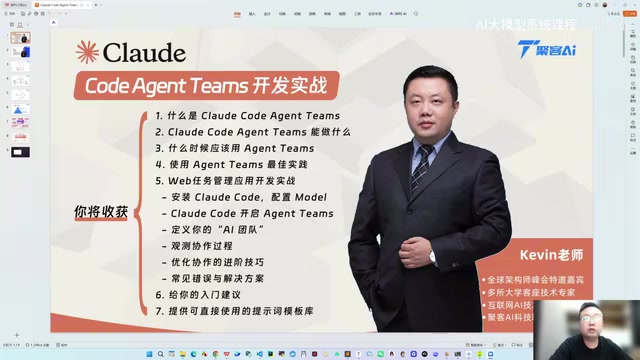
Claude Code Agent Teams: A Practical Guide to AI Team Collaboration in Software Development
A deep dive into Claude Code Agent Teams: how they differ from Subagents, contract-first design, model allocation strategies, and a real case of 16 agents building a C compiler.
Read more →

·4 min
Hunyuan Hy3 Goes Open Source + GPT-5.6 Leaked + Japan's Robot Strategy: AI Breaks Through on Multiple Fronts
Tencent Hunyuan 3 open-sourced with 295B MoE; GPT-5.6 Sol Ultra may bring multi-subagent collaboration to Codex; Alibaba FunASR upgraded; Japan plans 10M AI robots by 2040.
Read more →

·6 min
Claude Code Chinese Guide: A Complete Path from Zero to an Efficient Workflow
A systematic Claude Code learning guide built for Chinese developers, covering ten core modules including Slash Commands, Memory, MCP, and Hooks, with a three-tier path to build an AI coding workflow in 11–13 hours.
Read more →

·6 min
Vibecoding in Practice: Architecture Trade-offs and Implementation of a Dual-Engine TTS Router
Alibaba Cloud vs Volcano Engine TTS: why "I want both" is the mature engineering decision. Dual-engine routing design, priority trap debugging, and vibecoding-powered implementation.
Read more →

·3 min
Andrew Ng x Anthropic: A Complete Guide to Agent Skills
DeepLearning.AI and Anthropic launch an Agent Skills course. Learn how Skills work, progressive disclosure, MCP integration, and subagent patterns for AI agent development.
Read more →
Claude Code Cost-Saving Tips: Let AI U…
·2 min
Claude Code Cost-Saving Tips: Let AI Use Its Own Judgment and Delegate Across Models
Simon Willison shares Claude Code tips: trust the AI's judgment over rigid rules, and use primary/subagent model delegation (Opus/Sonnet/Haiku) to cut token costs dramatically.
Read more →

·6 min
Agent Studio: A Unified Platform for Authoring AI Roles and Skills
Agent Studio unifies AI Agent role definition (Subagents) and Skills on one platform, enabling coordinated orchestration through a shared MCP endpoint, progressive disclosure, and moderated community publishing.
Read more →

·3 min
Loop Engineering Fully Deconstructed: The Paradigm Shift from Operator to System Designer
Deep dive into Loop Engineering's five building blocks: scheduling, worktrees, skills, plugins & connectors, and subagent separation, with three practical cases from minimal loops to enterprise-grade applications.
Read more →
Expert Opinions
When AI Treats Humans as Subagents: Ro…
·4 min
When AI Treats Humans as Subagents: Role Reversal and Hidden Risks in Human-AI Collaboration
Exploring the paradigm shift where humans become "subagents" in AI Agent architectures. Analyzes human node design in LangChain and AutoGen, and the risks of ceding control and cognitive atrophy.
Read more →

·4 min
Claude Code Beginner's Guide: From Installation and Configuration to Hands-On Projects
Complete Claude Code beginner's guide covering Git, VS Code setup, third-party model integration, permissions, Tools, Hooks, Skills, SubAgents, and a hands-on project walkthrough.
Read more →