#subagent orchestration
38 related articles

·5 min
Running GPT-5.6 Inside Claude Code: Best Practices for Subagent Orchestration and System Prompts
Deep dive into running OpenAI GPT-5.6 inside Claude Code: comparing Codex vs Claude Code on subagent orchestration, workflow design, and system prompt quality, revealing how harness engineering determines model output.
Read more →

·2 min
Conduit: AI-Powered Hotel Customer Service — Full-Chain Automation from Conversation to Execution
Conduit is an AI customer service agent built for hospitality, supporting 140+ languages across all channels, serving 300+ brands including Marriott and Hilton with 50M+ conversations processed.
Read more →

·2 min
Conduit: AI-Powered Hotel Customer Service — Full-Chain Automation from Conversation to Execution
Conduit is an AI customer service agent built for hospitality, supporting 140+ languages across all channels, serving 300+ brands including Marriott and Hilton with 50M+ conversations processed.
Read more →

·4 min
Getting Started with Claude Code: Environment Setup, Common Commands, and Git Workflow in Practice
A detailed guide to Claude Code installation, domestic model switching, project analysis commands, and Git workflow practice to help developers quickly master this AI programming collaboration tool.
Read more →

·3 min
Deconstructing Agents: Task Decomposition, Context Compression, and the Case Against Heavy Frameworks
A deep engineering analysis of Agent internals: how LLMs decompose tasks via tool calling, why context compression and memory are essential, and why solo developers should avoid heavy frameworks.
Read more →
·3 min
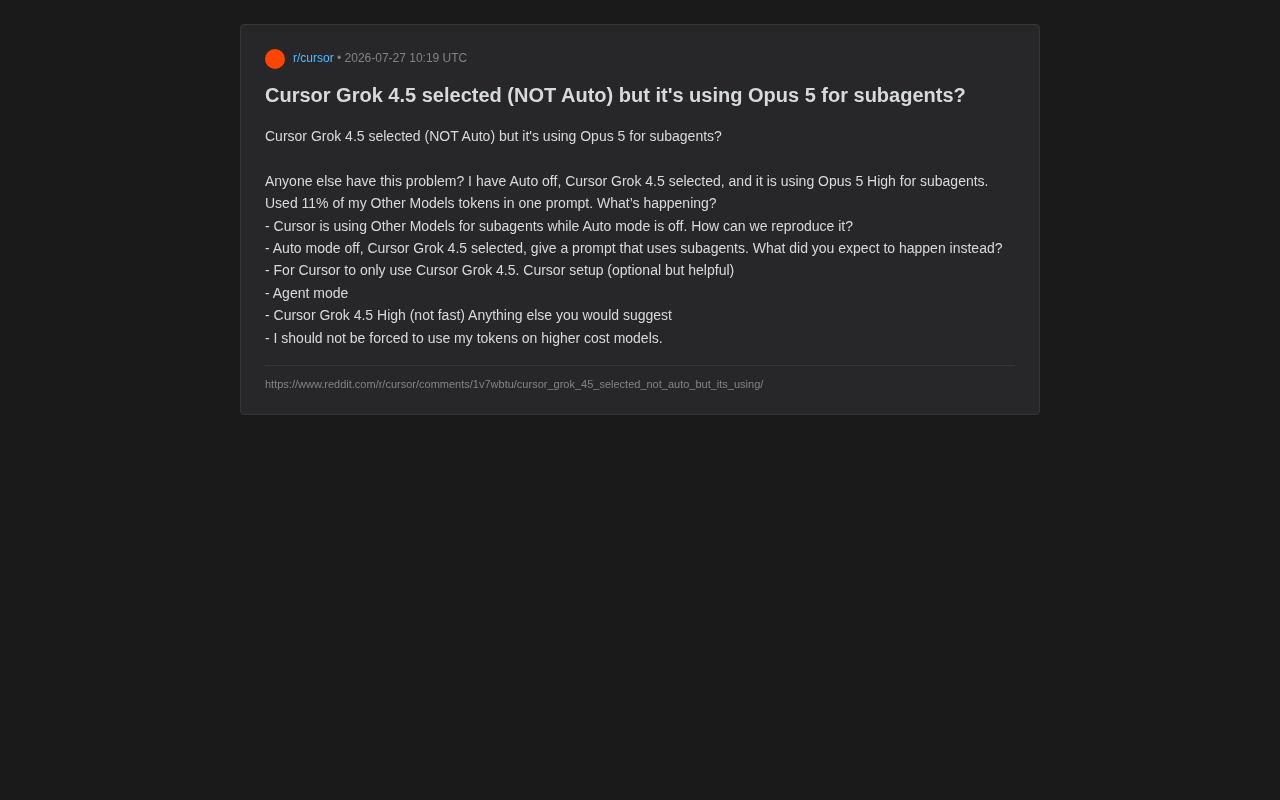
Cursor Selects Grok but Calls Opus: Subagent Model Substitution and Cost Control Issues Explained
Cursor users selecting Grok 4.5 find subagents secretly calling expensive Opus 5, consuming 11% quota per prompt. Analysis of model decoupling, cost transparency, and user strategies.
Read more →

·2 min
Why Does GPT-5.6 Perform Better in Claude Code Than in Codex? A Deep Dive
Tech blogger Theo found GPT-5.6 runs better in Claude Code than in OpenAI's own Codex. A deep dive into their differences in system prompt quality and subagent orchestration.
Read more →

·2 min
Getting Started with Claude Code: A Complete Guide to Installation, Configuration, and Git Workflows
An in-depth guide to Claude Code from installation to hands-on practice: CLI setup, switching to domestic LLMs (CC Switch tool), conversational Git workflows, plus project analysis and automated bug fixing tips for AI-powered coding.
Read more →

·4 min
Claude Code Getting Started: Environment Setup, Core Commands, and Git Workflow Automation
A practical guide to Claude Code covering installation, Chinese LLM switching, project analysis, key commands, and conversational Git workflow automation for developers.
Read more →

·3 min
Claude Code Practical Guide: Environment Setup, Git Workflows, and Engineering in Production
A complete guide to Claude Code: environment setup, switching to domestic LLMs, CLI commands, Git workflows, MCP, Subagents, and enterprise project walkthroughs.
Read more →

·2 min
The Complete Guide to Agent Skills: Andrew Ng × Anthropic Joint Course Breakdown
Andrew Ng's DeepLearning.ai teams up with Anthropic to teach Agent Skills: file structure, progressive disclosure, MCP integration, and the full path from Claude.ai to the Agent SDK.
Read more →

·3 min
Claude Code Enterprise Guide: Environment Setup, Git Workflows, and Switching to Chinese AI Models
Enterprise guide to Claude Code: CLI setup, switching to DeepSeek and other Chinese AI models, Git workflow automation, and bug fix loops to boost team productivity.
Read more →
·5 min
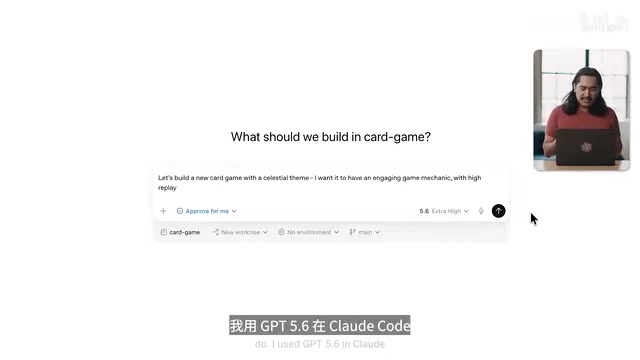
GPT-5.6 Released: Hands-On Analysis of Programmatic Tool Calling and Autonomous Agents
GPT-5.6 is officially released with core upgrades including programmatic tool calling, autonomous subagent delegation, and higher token information density. A hands-on card game build reveals its Agentic power.
Read more →

·4 min
The Three Eras of AI Agents: The Capability Leap from Tool Calling to Autonomous Orchestration
An in-depth look at the three core eras of AI Agent development: reliable tool calling, coherent long-task execution, and autonomous orchestration with metacognition. Helps developers match tasks to model capabilities.
Read more →

·4 min
Harness Engineering: The Third Phase of AI Coding and a Practical Guide to agents.md
A deep dive into Harness Engineering — the third phase of AI coding. Based on research across 2,853 GitHub repos, explore agents.md, Skills, MCP, and eight configuration mechanisms to control your AI coding assistant.
Read more →

·7 min
LangSmith Engine: An Intelligent Operations Tool That Automatically Diagnoses and Fixes Agent Failures
LangChain's LangSmith Engine is an intelligent agent tool for tracking Agent failures, prioritizing issues, and auto-drafting fixes. Deep dive into its core capabilities, sandbox isolation, sub-Agent architecture, and continuous evaluation challenges.
Read more →

·7 min
The Birth of Claude Code: Design Philosophy from Internal Tool to AI Programming Assistant
An in-depth look at Claude Code's development and design philosophy: why the CLI form, how the "minimal scaffolding" architecture works, and how it balances safety with autonomy in AI programming.
Read more →

·4 min
Hunyuan Hy3 Goes Open Source + GPT-5.6 Leaked + Japan's Robot Strategy: AI Breaks Through on Multiple Fronts
Tencent Hunyuan 3 open-sourced with 295B MoE; GPT-5.6 Sol Ultra may bring multi-subagent collaboration to Codex; Alibaba FunASR upgraded; Japan plans 10M AI robots by 2040.
Read more →

·3 min
Andrew Ng x Anthropic: A Complete Guide to Agent Skills
DeepLearning.AI and Anthropic launch an Agent Skills course. Learn how Skills work, progressive disclosure, MCP integration, and subagent patterns for AI agent development.
Read more →

·6 min
Agent Studio: A Unified Platform for Authoring AI Roles and Skills
Agent Studio unifies AI Agent role definition (Subagents) and Skills on one platform, enabling coordinated orchestration through a shared MCP endpoint, progressive disclosure, and moderated community publishing.
Read more →