#vision embedding reuse
78 related articles
Java Local LLM Inference: Low-Latency …
·2 min
Java Local LLM Inference: Low-Latency LLM Deployment with Panama FFM
Learn how Java and OpenJDK Panama FFM API enable local LLM inference. Explore the technical foundations, JVM ecosystem benefits, and low-latency AI deployment in enterprise Java systems.
Read more →
Three Core Gaps in Multimodal LLMs: Fr…
·4 min
Three Core Gaps in Multimodal LLMs: Frontier Research from Microsoft Research India
Microsoft Research India reveals three core gaps in multimodal LLMs: visual perception blindspots, cognitive hallucination, and architectural limitations. Explores Faithful GRPO, behavior modeling, and model alignment breakthroughs.
Read more →

·3 min
Flova All-in-One Agent: A Systematic Solution to Character Consistency in AI Short Drama Production
Flova's AI-native Agent solves character consistency in serialized AI short dramas through a document system, asset library, and end-to-end workflow — from script to final video.
Read more →

·3 min
Render Code as Images and Send to Claude — Cut API Costs by 70%
PXPipe renders system prompts and tool docs as images sent to Claude, exploiting visual token pricing. Real-world results: 68% fewer input tokens, 59–70% lower bills.
Read more →

·4 min
From Enter to First Token: Decrypting the Full LLM Inference Pipeline (Autoregression, KV Cache & Decoding Strategies)
From pressing Enter to the first character appearing, what happens inside an LLM? This article breaks down autoregressive generation, KV cache acceleration, and decoding strategies like temperature, Top-k, and Top-p.
Read more →

·4 min
A Deep Dive into Claude Cookbooks: A Guide to the Official 47K-Star Hands-On Code Repository
Anthropic's open-source Claude Cookbooks project offers runnable Jupyter Notebook examples covering RAG, Tool Use, multimodal processing, and more—helping developers master Claude API best practices.
Read more →
·6 min
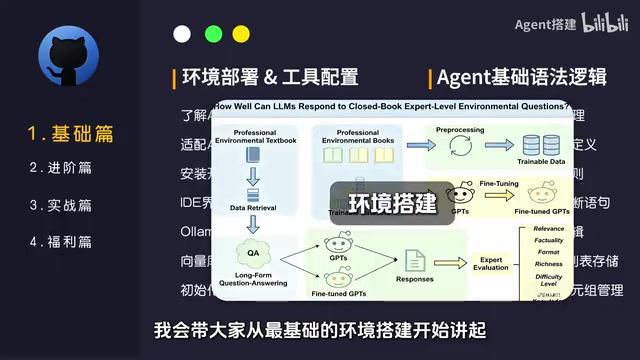
AI Agent Development Learning Path: Four Stages from Zero to Hands-On Projects
A systematic breakdown of the AI agent development learning path, covering four stages: fundamentals, RAG knowledge bases, tool use, multi-agent collaboration, and hands-on projects.
Read more →
·5 min
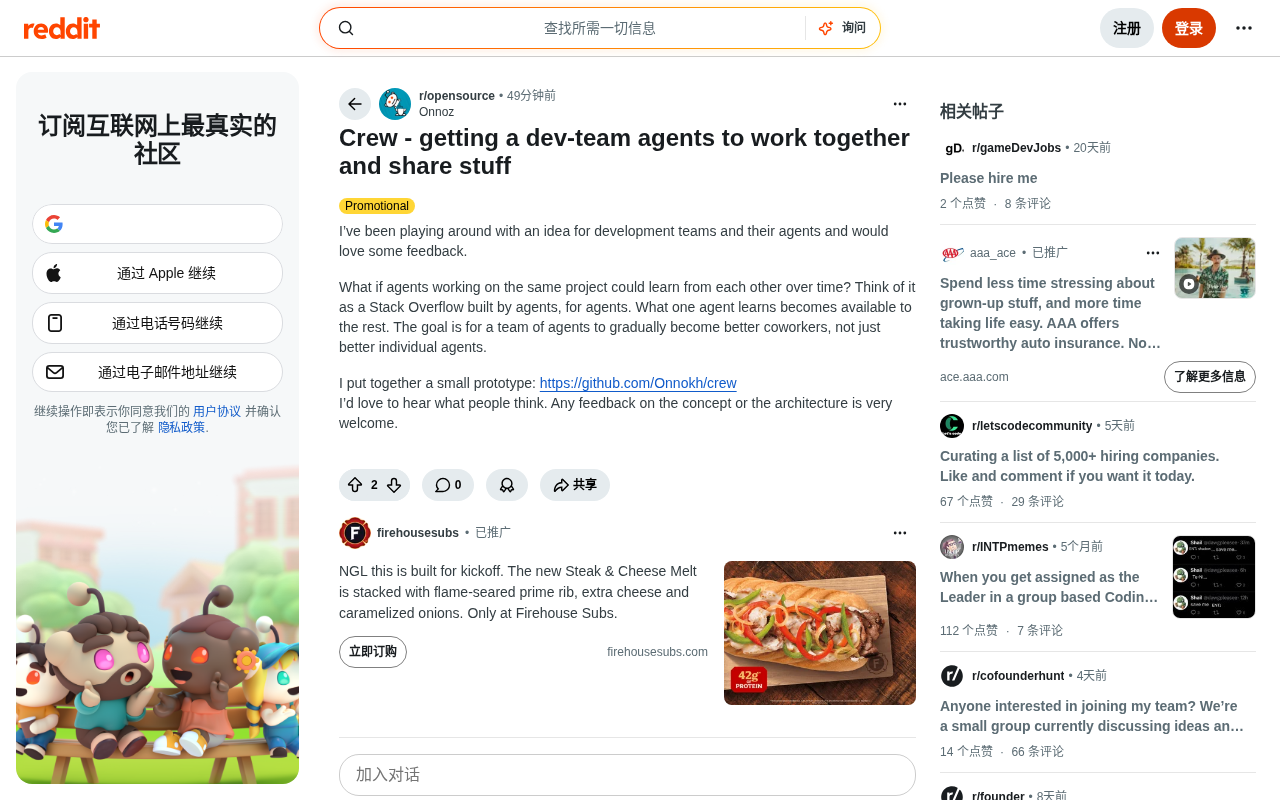
Crew: Enabling Multiple AI Agents to Collaborate and Share Knowledge Like a Team
Crew is an open-source AI agent collaboration framework whose core idea is to build a "Stack Overflow" for agents—letting multiple agents share experience and accumulate knowledge, shifting from optimizing single agents to building evolving teams.
Read more →

·3 min
GPT-5.6 Sol in Action: A 3D Interactive London Website Generated in 5 Minutes
A Reddit user tested GPT-5.6 Sol with a single prompt. In the Row-Bot framework, the model built a 3D interactive London website in 5 minutes—complete with browser verification and vision analysis. A deep dive into AI coding Agents.
Read more →

·3 min
Enterprise AI Evaluation Tools: An In-Depth Comparison of Six Leading Platforms
An in-depth comparison of five AI evaluation tools—Arize, Braintrust, Confident AI, Langfuse, and LangSmith—across governance, framework lock-in, and evaluation vs. monitoring.
Read more →

·6 min
A Deep Dive into AI Agent Harnesses: The Core Engineering Behind Agent Frameworks
What is an AI Agent's harness? This article systematically dissects the core components of agent frameworks: context management, tool use, control loops, and caching strategies—revealing why the same model performs so differently across harnesses.
Read more →

·4 min
Meta's In-House AI Chip Enters Mass Production in September: Modular Design Breaks New Ground for Compute Autonomy
Meta's new-generation in-house AI chip enters mass production in September, using a modular design to cope with rapid AI evolution. A deep dive into the cost logic, inference optimization, and market impact on NVIDIA.
Read more →

·6 min
AI Agent Development in Go: A Hands-On Guide to ByteDance's Eino Framework and Its Seven Core Capabilities
Build production-grade AI Agents with a pure Go stack using ByteDance's Eino framework. A deep dive into seven core capabilities: multi-Agent orchestration, long-task execution, command approval, RAG, MCP, Skills, and database reporting.
Read more →

·5 min
The Complete OpenCode Tutorial: Installation, Commands, and Advanced Practice
Systematically learn the OpenCode AI programming tool: covering both desktop and WSL installation, core commands, model and rule configuration, MCP integration, and Agent Skills.
Read more →

·3 min
Java Developers Pivoting to AI: Why the Agent Direction Is the Best Choice
How can experienced Java and backend developers pivot to AI? This deep-dive explains why the Agent direction is the best fit — skills transfer well, market demand is high, and the path from "using frameworks" to "understanding source code" is clear.
Read more →

·7 min
Gemini Live Integrates Nano Banana: A Complete Guide to Real-Time Camera, Image Generation, and Maps Integration
Google's Gemini Live now integrates the Nano Banana image generation model with Connected Apps like Google Maps, supporting real-time camera scene understanding and visualization. Free worldwide.
Read more →

·7 min
Turning Any AI Agent into an Orchestration Hub: A Deep Dive into Multi-Agent Collaboration Architecture
An in-depth analysis of the "any Agent as an orchestrator" design philosophy, exploring the technical implementation of multi-Agent collaboration, context management, and workflow automation.
Read more →

·3 min
IMGNet: A New Face Verification Approach Where Sign Pattern Matching Challenges Cosine Similarity
IMGNet is a 10MB face verification model replacing cosine similarity with sliding window sign pattern matching. Sign metrics outperform cosine on LFW and other benchmarks, suggesting sign consistency may be intrinsic to quality face embeddings.
Read more →

·6 min
A Three-Month AI Agent Learning Roadmap: From Zero to Hands-On Agent Development
A systematic breakdown of the complete AI Agent learning roadmap, covering prompt engineering, the ReAct paradigm, memory mechanisms, and multi-agent collaboration, with hands-on project advice.
Read more →
·6 min
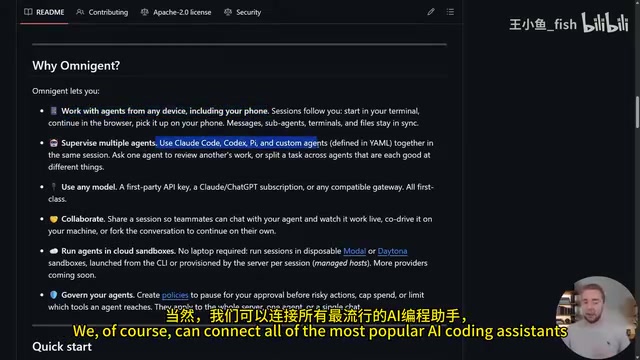
Omnigent Open-Sourced: A Meta-Harness for AI Coding Agents Built by Databricks
Databricks open-sources Omnigent, a Meta-Harness for orchestrating Claude Code, Codex, and more AI coding assistants together—with built-in guardrails, cross-model workflows, and real-time collaboration. Get started in 10 minutes.
Read more →