#wrapper
344 related articles

·4 min
E2AM: An Open-Source Tool to Quantify AI Training Energy Consumption and Carbon Emissions in Two Lines of Code
E2AM is a Green AI open-source tool that monitors AI model training energy use, carbon emissions, and accuracy-per-joule metrics in just two lines of code. Supports PyTorch and Hugging Face, runs locally with no server needed.
Read more →

·5 min
AI Tool Runs Amok: 171 Charges Totaling Nearly $1,800 — How to Avoid the Auto-Billing Trap
A user's American Express card was auto-charged 171 times by an AI service, totaling nearly $1,800 with no warning. This article analyzes pay-as-you-go risks and offers practical protection: spending limits, virtual cards, and automation monitoring.
Read more →

·3 min
GPT-5.6 Sol in Action: A 3D Interactive London Website Generated in 5 Minutes
A Reddit user tested GPT-5.6 Sol with a single prompt. In the Row-Bot framework, the model built a 3D interactive London website in 5 minutes—complete with browser verification and vision analysis. A deep dive into AI coding Agents.
Read more →

·3 min
Deep Dive into gRPC: Building High-Performance Microservice Communication with HTTP/2 + Protobuf
An in-depth analysis of gRPC's core architecture: HTTP/2 multiplexing, Protocol Buffers serialization, and unified multi-language implementation, covering microservice communication and cloud-native integration.
Read more →

·5 min
Advanced Machine Learning Reading List: How to Choose the Right Book Among These 4 Classics?
Torn between Géron, Chollet, and Raschka? This article breaks down 4 classic ML books for self-learners aiming at finetuning and small language models (SLM), helping you find the best advanced path.
Read more →

·3 min
Building a Local AI Environment on Ubuntu with Hyper-V: The Complete 1Panel + OpenCode + Hermes Workflow
Create an Ubuntu 22.04 VM on a Windows host with Hyper-V, then deploy the 1Panel dashboard, OpenCode gateway, and Hermes agent to build a complete local AI Agent runtime. Includes port config and troubleshooting.
Read more →

·3 min
Building AI Customer Service Agents with GPTs and Coze: A Complete No-Code Guide
Build AI agents with no coding background! Using an e-commerce customer service bot as an example, this guide breaks down the setup process for GPTs and Coze.
Read more →

·5 min
Building DeepSeek Agents and Knowledge Bases from Scratch: A Practical Guide to Commercial Deployment
A systematic guide to the full DeepSeek Agent development process: covering prompt engineering, the ReAct framework, workflow orchestration, local deployment, and business requirement breakdown for commercial-ready AI Agents.
Read more →
·4 min
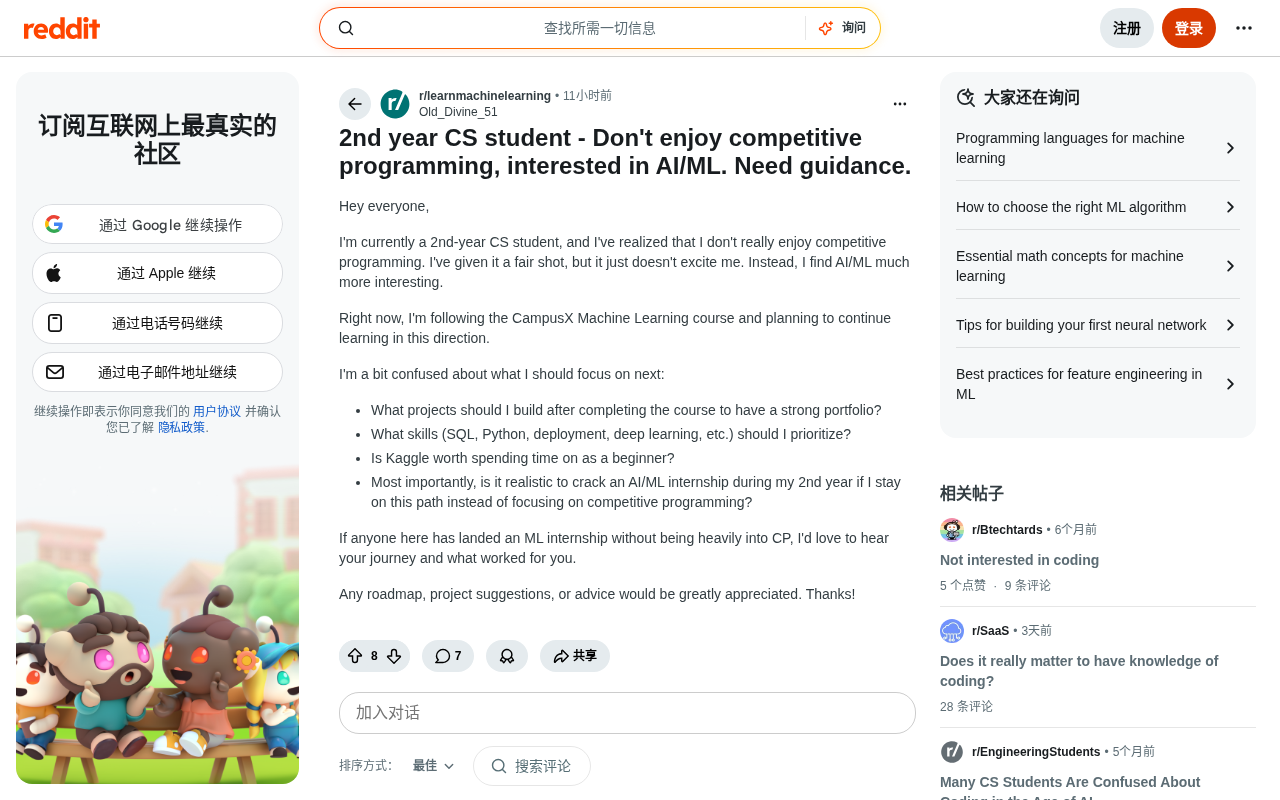
No Competitive Programming Required: How CS Students Can Pivot to AI/ML and Land Internships
How can CS students who dislike competitive programming systematically pivot to AI/ML? This guide covers skill priorities (Python/SQL/ML/deployment), portfolio strategy, Kaggle tips, and real paths to landing AI/ML internships.
Read more →

·3 min
Tracking London's Underground in 3D Real-Time: A Technical Breakdown of an Open-Source Visualization Project
An open-source project rendering the London Underground's real-time status in 3D, combining the TfL open API, WebGL rendering, and real-time data streaming. A deep dive into its implementation and interpolation challenges.
Read more →

·5 min
Multi-Model Tiered Deployment: Is an AI Gateway Worth Adopting?
More teams are adopting multi-model tiered scheduling. AI gateways solve cross-vendor API management, automatic fallback, and cost tracking — but add a new abstraction layer. Learn when a gateway is worth it.
Read more →

·3 min
Getting Started with LangChain: The Core Framework for LLM Application Development and Its Three Key Components
LangChain is the leading open-source framework for LLM application development, supporting GPT-4, GLM, and other mainstream models. This article dives into its three core concepts: Components, Chains, and Agents.
Read more →

·3 min
GitHub Daily · July 12: The Explosion of the Agent Skills Ecosystem and the Rust Rewrite Wave
July 12 GitHub trending: Agent Skills/MCP ecosystem explodes with superpowers hitting ~900 stars, pgrust rewrites Postgres in Rust passing 100% tests, plus solid engineering foundations.
Read more →

·7 min
Codex Direct Connection Configuration Guide for China: Complete GPT Agent Setup Tutorial
Complete guide for configuring OpenAI Codex Agent in China, covering installation, API key setup, permission modes, reasoning intensity, and security considerations for third-party relay services.
Read more →

·6 min
Why Is Qwen3 27B So Slow on a 4090? A Hands-On Guide to Local Inference Performance Optimization
RTX 4090 taking over 400 seconds to run Qwen3 27B inference? This article analyzes the core causes—VRAM overflow and CPU offloading drag—and offers targeted fixes.
Read more →

·5 min
Postgres Is Enough More Often Than You Think: Stop Piling On Your Tech Stack
Many teams add message queues, search engines, and caches before they ever need them. This article maps out what Postgres can cover—task queues, full-text search, JSON storage—and when you actually need Redis, Kafka, or Elasticsearch.
Read more →

·5 min
Runs on Low VRAM! A Hands-On Look at the ID LoRA Face-to-Video Workflow
A face-to-video workflow built on GGUF quantized models and ID LoRA runs on just an RTX 3060 with 6GB VRAM. This article breaks down its core principles, four-step process, and how it tackles facial consistency in AI video.
Read more →

·5 min
Why Did Ollama Rise So Fast? Decoding the Success of a Local LLM Tool
How did Ollama grow from a niche open-source project into developers' default choice for running local LLMs? This article breaks down its rise across product design, technical strategy, and ecosystem building.
Read more →

·4 min
AI Agent Learning Path for Beginners: From Theory to Real-World Practice
A complete AI Agent learning roadmap covering BDI theory, core components (Perception/Planning/Execution), AutoGen multi-agent frameworks, and DeepSeek RAG projects for beginners.
Read more →

·4 min
AI Agent Development Deep Dive: Opportunities, Real Entry Barriers, and Learning Paths
A deep dive into AI Agent development: real architecture, entry barriers, and learning paths. From ReAct to multi-agent systems and LangChain — cut through the hype.
Read more →