All articles
39633 articles

REA Goes Viral on GitHub: Using AI Agents to Reverse Engineer Finished Software
REA is an open-source reverse engineering tool that connects agents like Claude Code via MCP to read raw instructions and decompiled code from finished programs, letting AI explain software rules in plain language with supporting evidence.

Running a 284B-Parameter LLM on 64GB RAM and CPU Alone? Open-Source Project LamaMotric Sparks Debate
Open-source LamaMotric 2.4 claims a 284B-parameter model can run on 64GB RAM and CPU alone, using custom second-order compression to shrink it to 56.56G. We break down the compression approach, real-world speed on a 16-core Ryzen, and the practical barriers to local deployment.
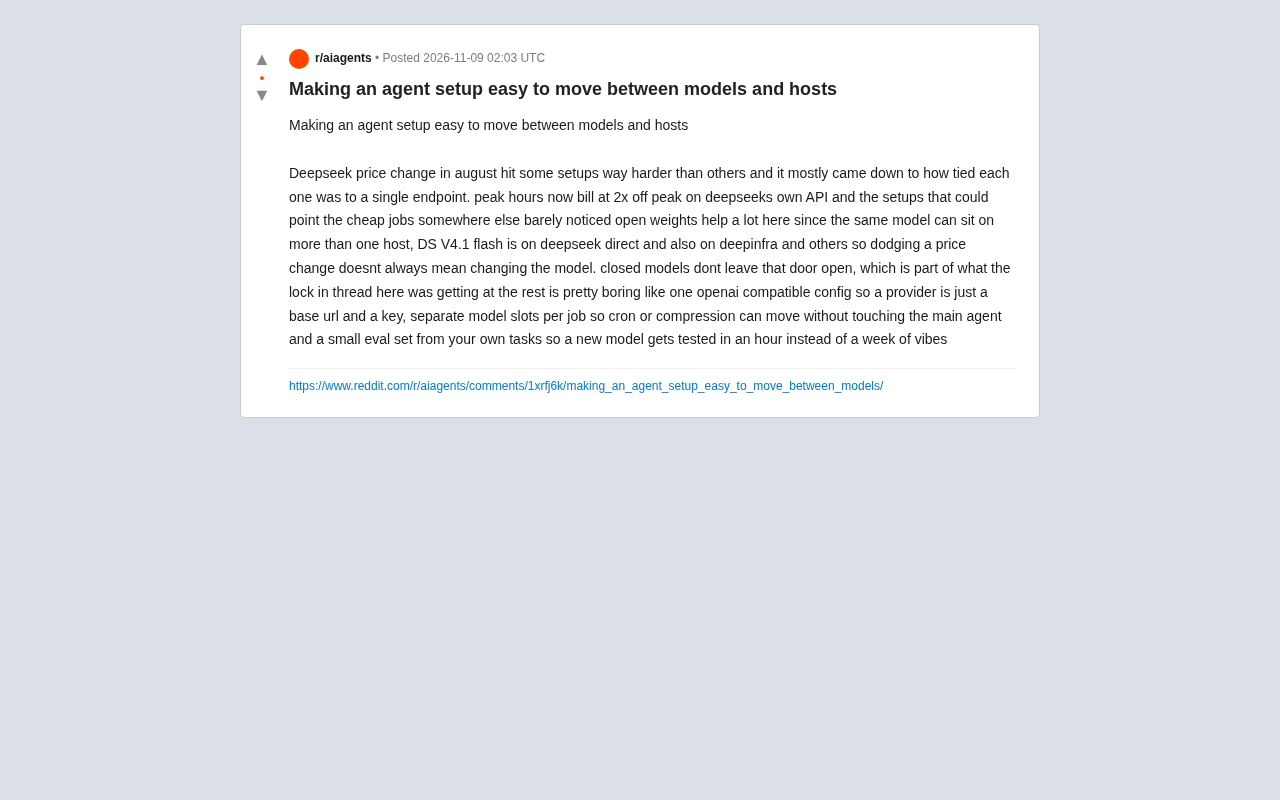
Switch Between Models and Hosts Freely: A Practical Guide to Decoupling AI Agent Configuration
Deepseek's price change exposed Agent configuration's dependence on a single vendor. Learn how unified OpenAI-compatible interfaces, task-level model slots, and a custom eval set let AI Agents switch freely between models and hosts, reducing cost and lock-in risk.
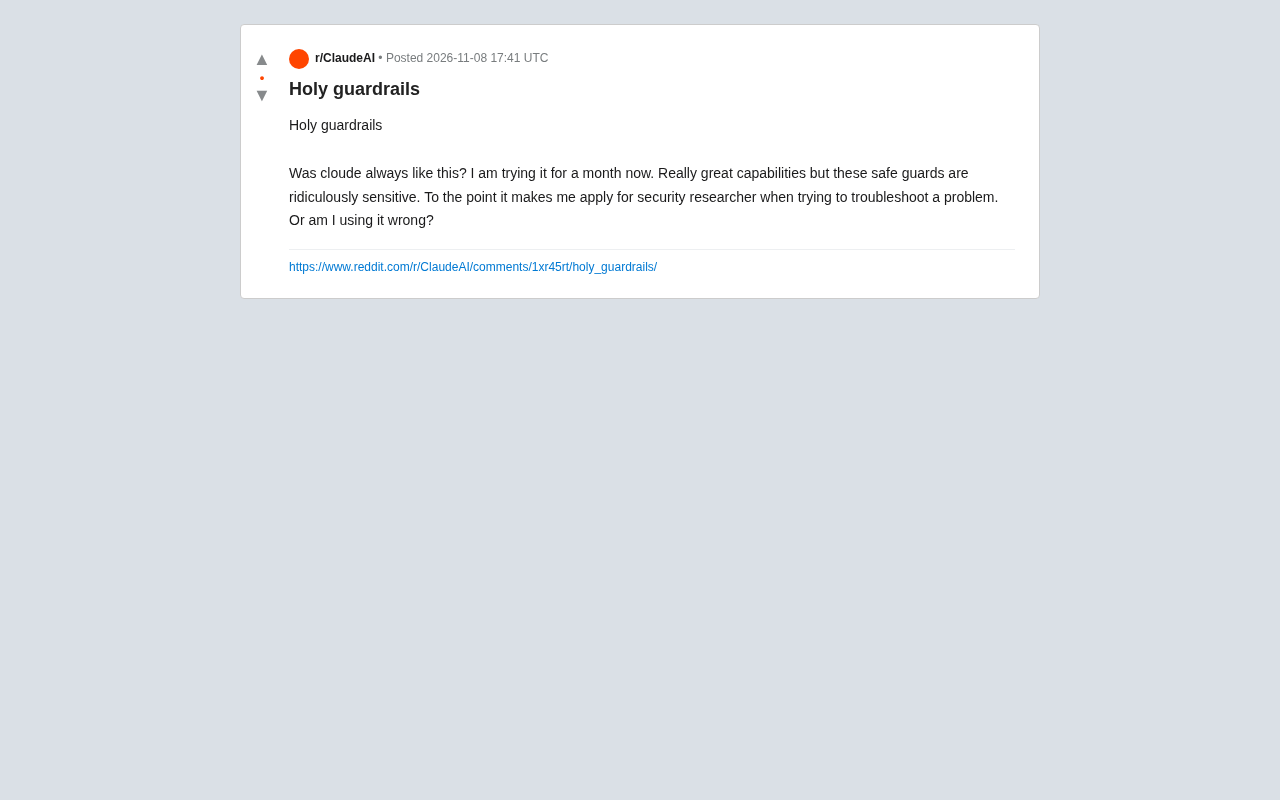
Claude's Safety Guardrails Too Sensitive? User Complaints and Usage Tips
Reddit users complain Claude's safety guardrails are overly sensitive and hinder normal use. This article analyzes the design philosophy, user feedback, and coping strategies, exploring the balance between safety and usability.
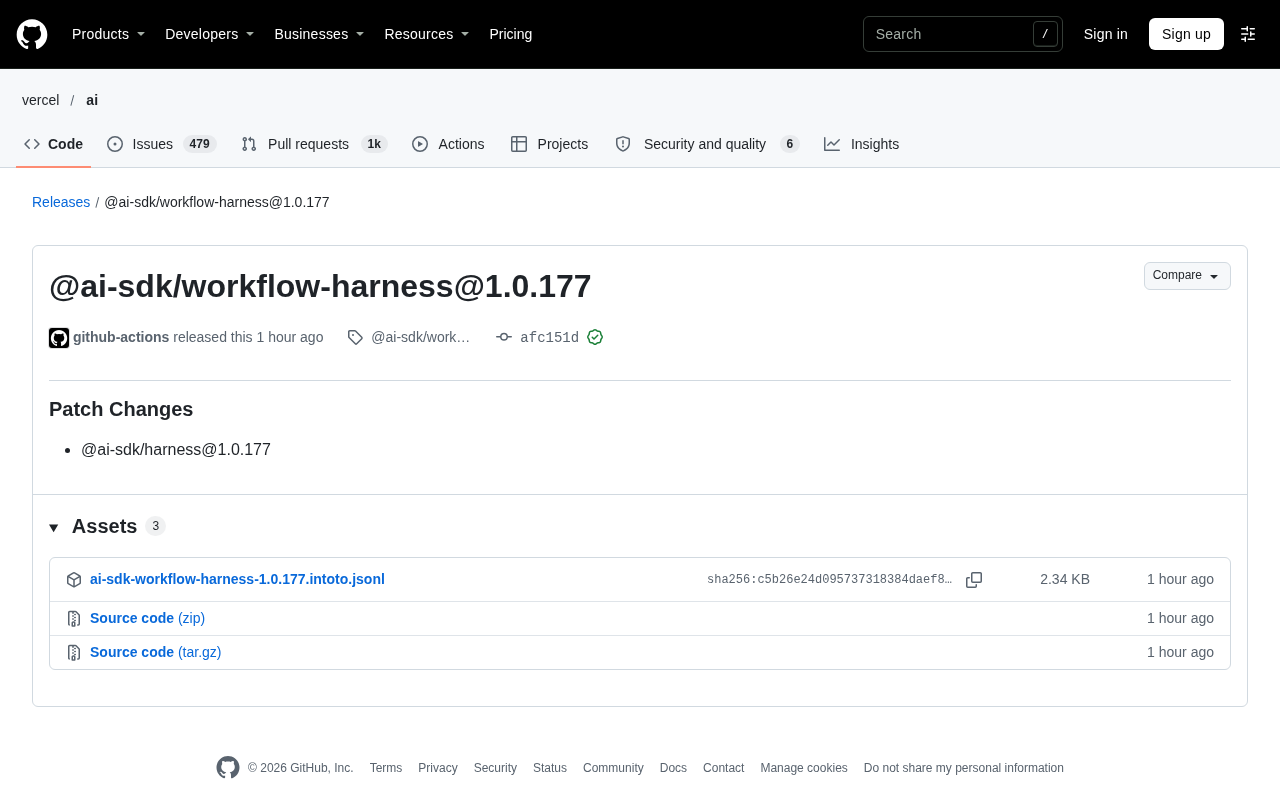
@ai-sdk/workflow-harness 1.0.177 Patch Update Analysis
@ai-sdk/workflow-harness releases patch 1.0.177, syncing @ai-sdk/harness. This article analyzes the release positioning, signature verification, and dependency linkage to help developers decide on an upgrade strategy.
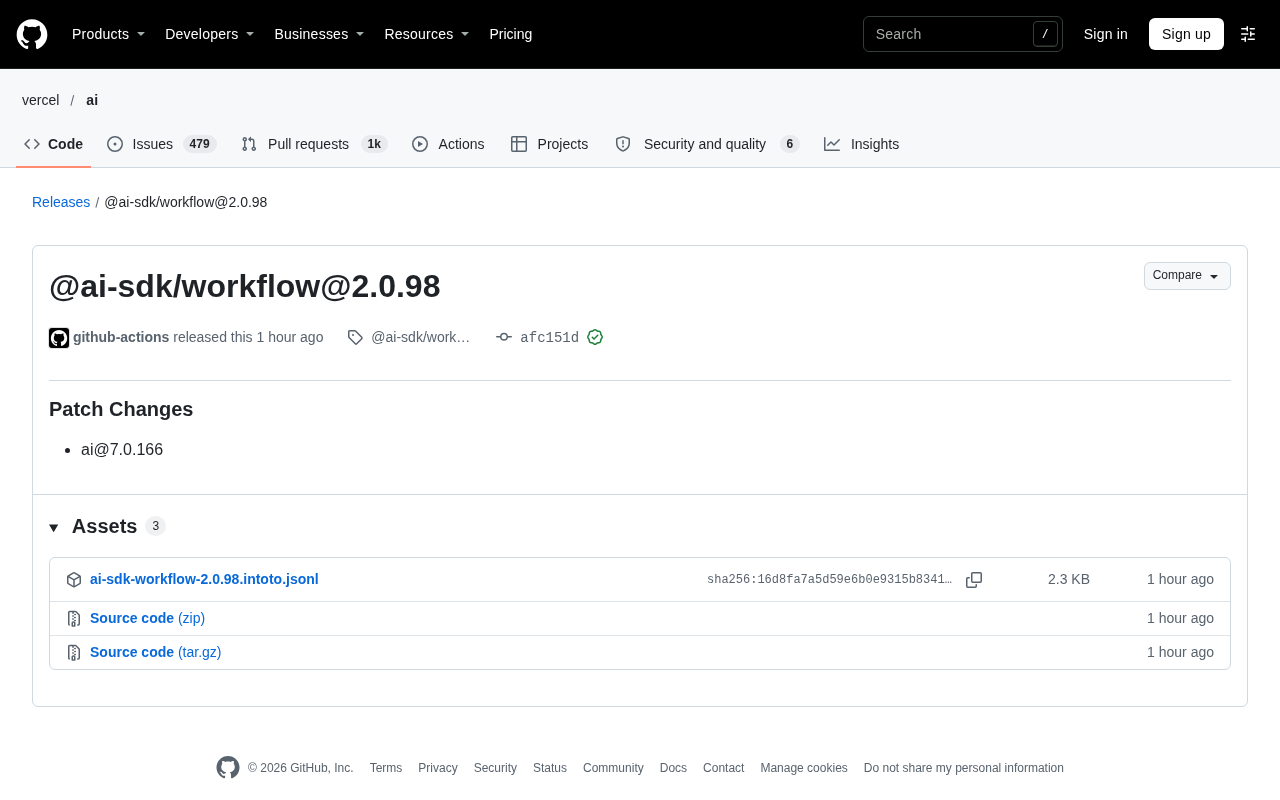
@ai-sdk/workflow 2.0.98 Patch Released: AI SDK Workflow Capabilities Upgraded Again
@ai-sdk/workflow releases patch 2.0.98, syncing the ai package to 7.0.166. We break down the practical impact on AI SDK workflow developers and share dependency version management and upgrade advice.
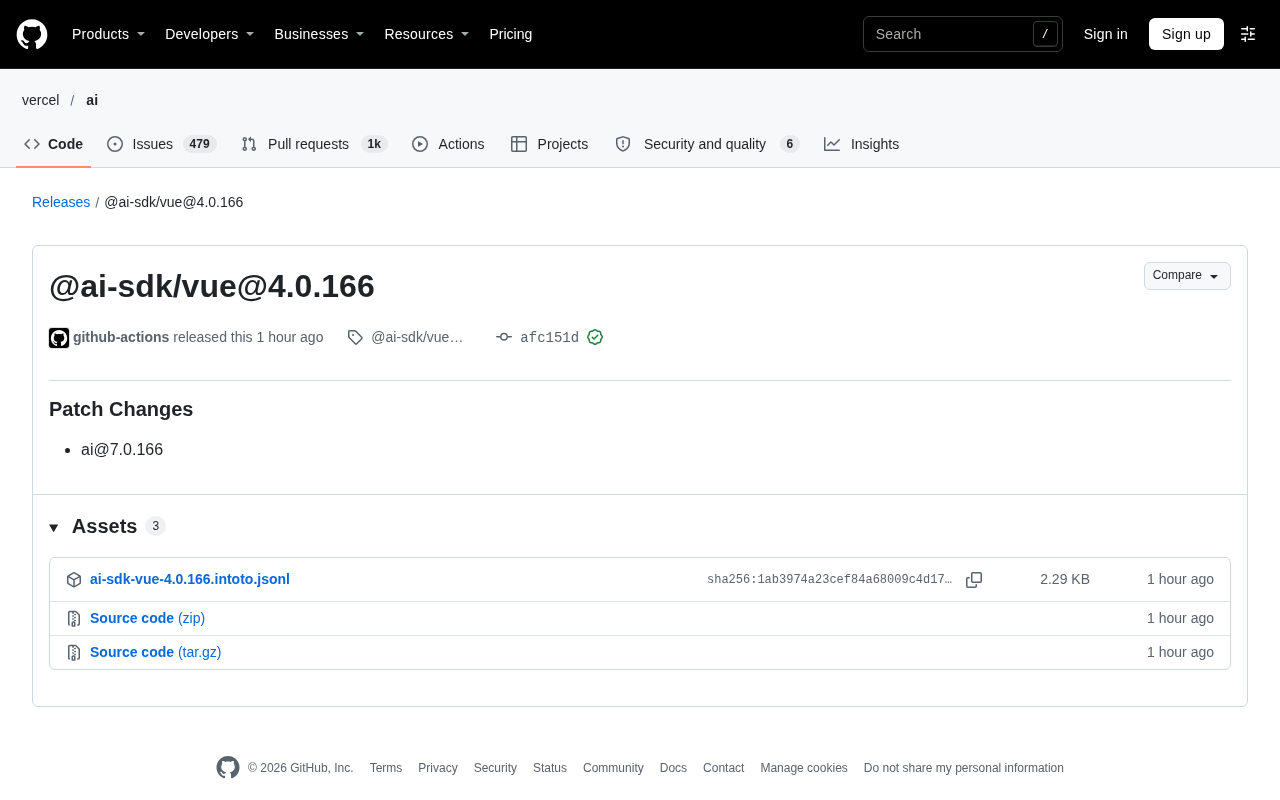
AI SDK Vue 4.0.166 Release Update Explained
Explaining the @ai-sdk/vue 4.0.166 patch update: automated release, GPG signature verification, synchronization with ai@7.0.166, and what developers should check when upgrading.

Claude Code Config File Leaks Secrets: Over a Thousand Repos Affected
Security firm Apiiro found real secrets in Claude Code settings.local.json files across 1,122 public repos. Learn what the file stores, Anthropic's response, and how to clean up in 10 minutes.
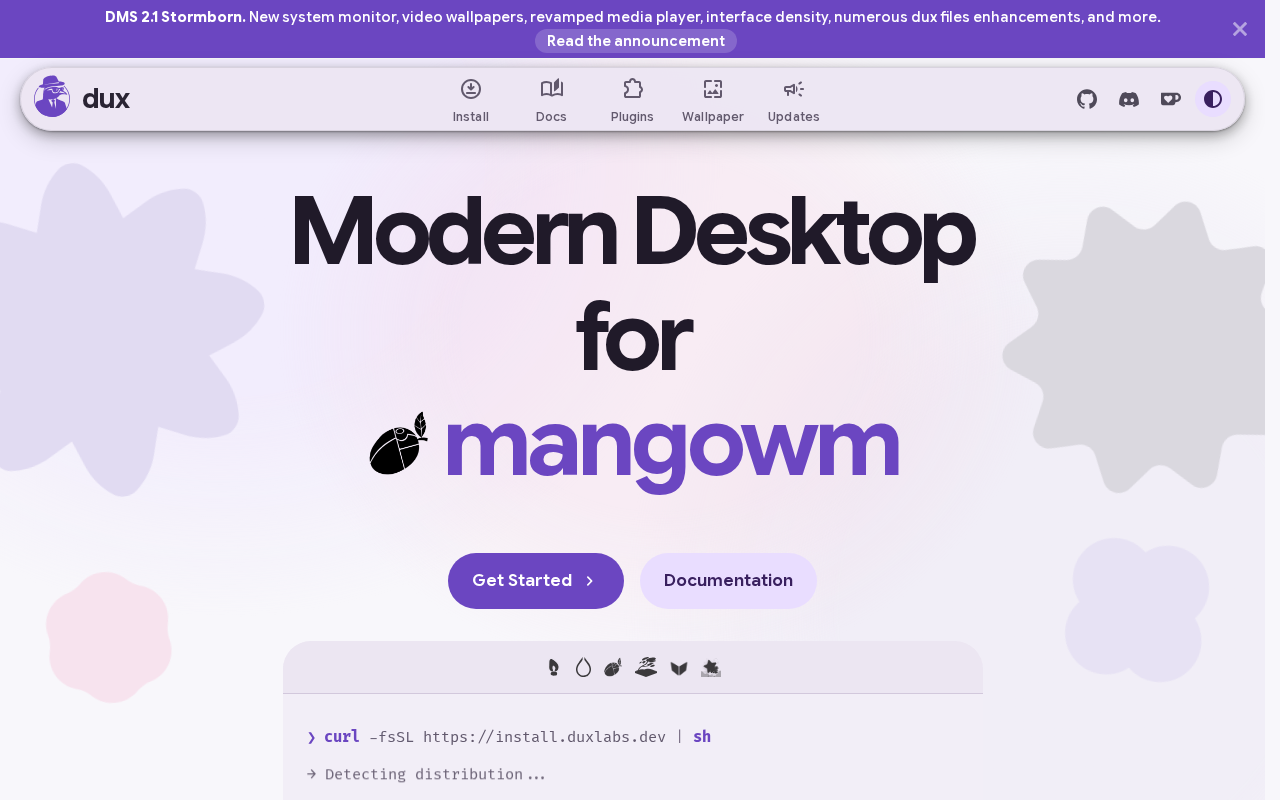
Dux: A Free, Open-Source Wayland Desktop Shell with Built-in File Manager and Theming System
Dux is a free, open-source Wayland desktop shell with a built-in file manager and theming system. This article covers its positioning, design philosophy, and why the Wayland ecosystem needs new desktop shell implementations.
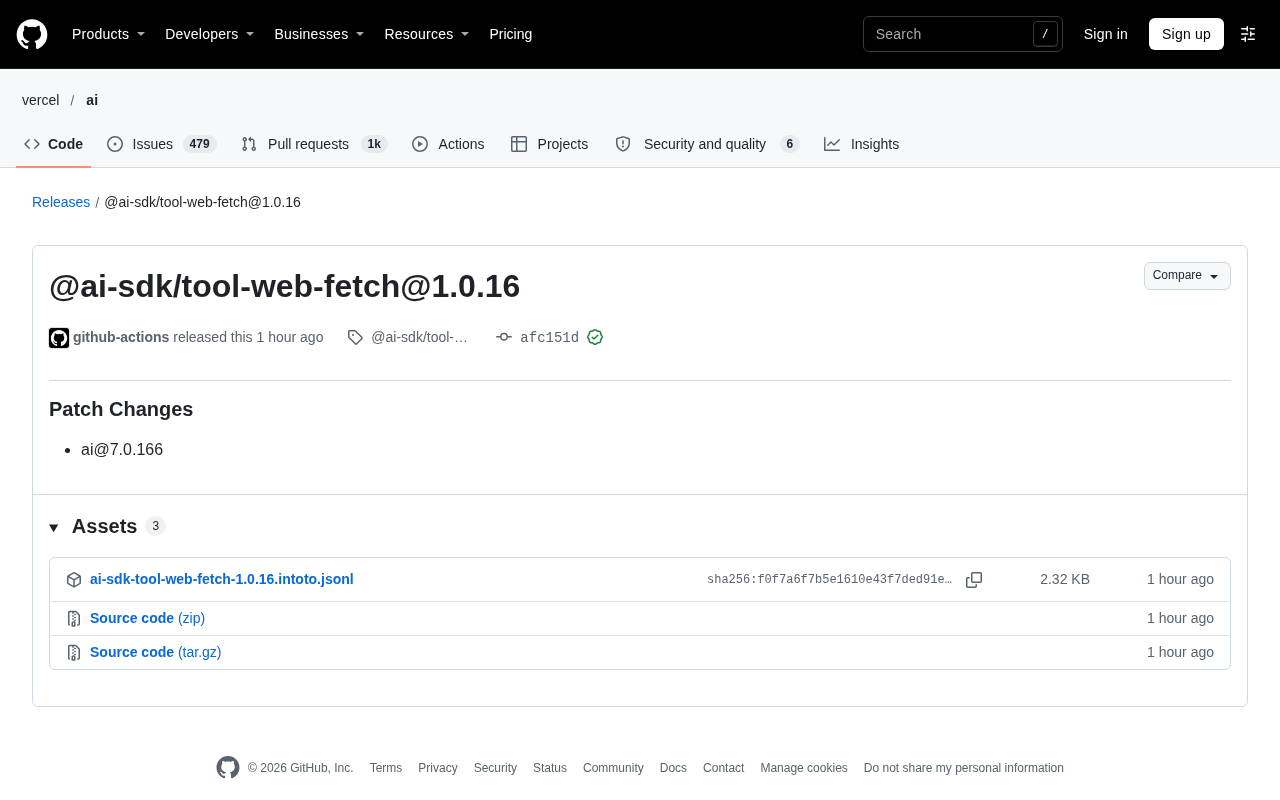
AI SDK Toolkit Update: @ai-sdk/tool-web-fetch 1.0.16 Released
AI SDK's @ai-sdk/tool-web-fetch releases patch 1.0.16, tied to core package ai@7.0.166. We explain the change, the tool-calling ecosystem, and upgrade tips.
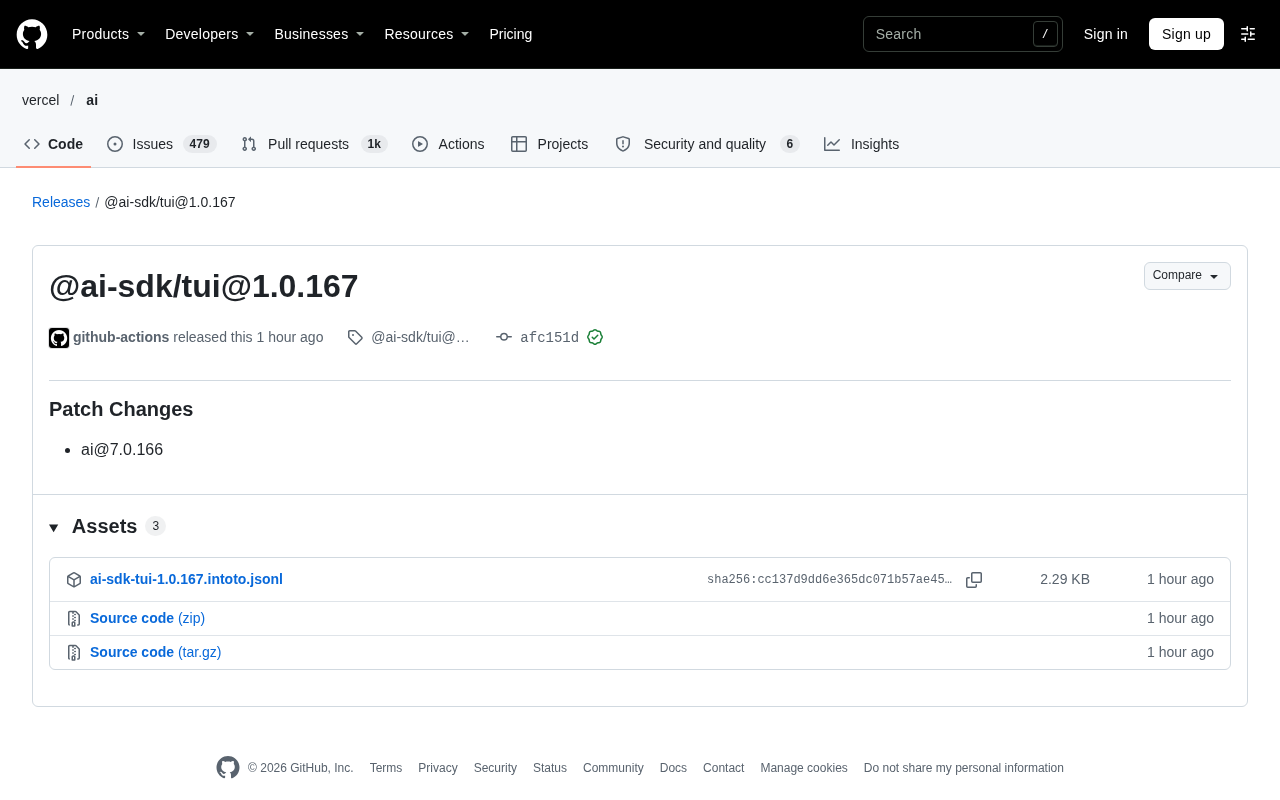
@ai-sdk/tui 1.0.167 Released: Minor Update to AI SDK Terminal UI
@ai-sdk/tui 1.0.167 patch release syncs the ai@7.0.166 dependency. Here's what changed in this terminal UI component, where it fits, and upgrade advice.
AI SDK Tool bash 1.0.20 Release Update Analysis
The AI SDK tool bash package releases patch version 1.0.20, linked to core ai@7.0.166. This article analyzes the meaning of this patch change, version linkage, and upgrade considerations.
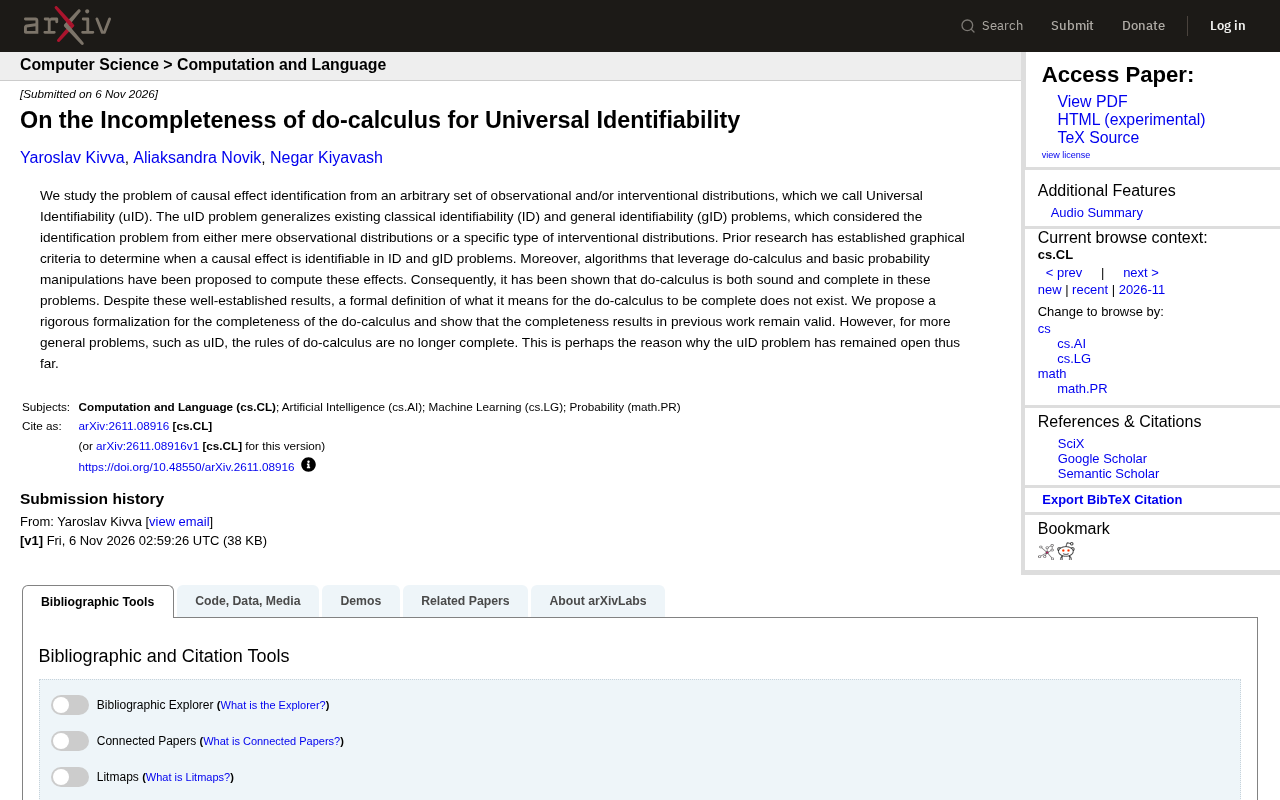
Why Is do-calculus Not Enough? New Progress in Research on Universal Identifiability of Causal Effects
New progress in causal inference research: the paper rigorously formalizes the definition of do-calculus completeness, proving that it remains complete for classical ID and gID problems but is no longer complete for universal identifiability (uID), revealing a possible reason why uID has long remained unsolved.
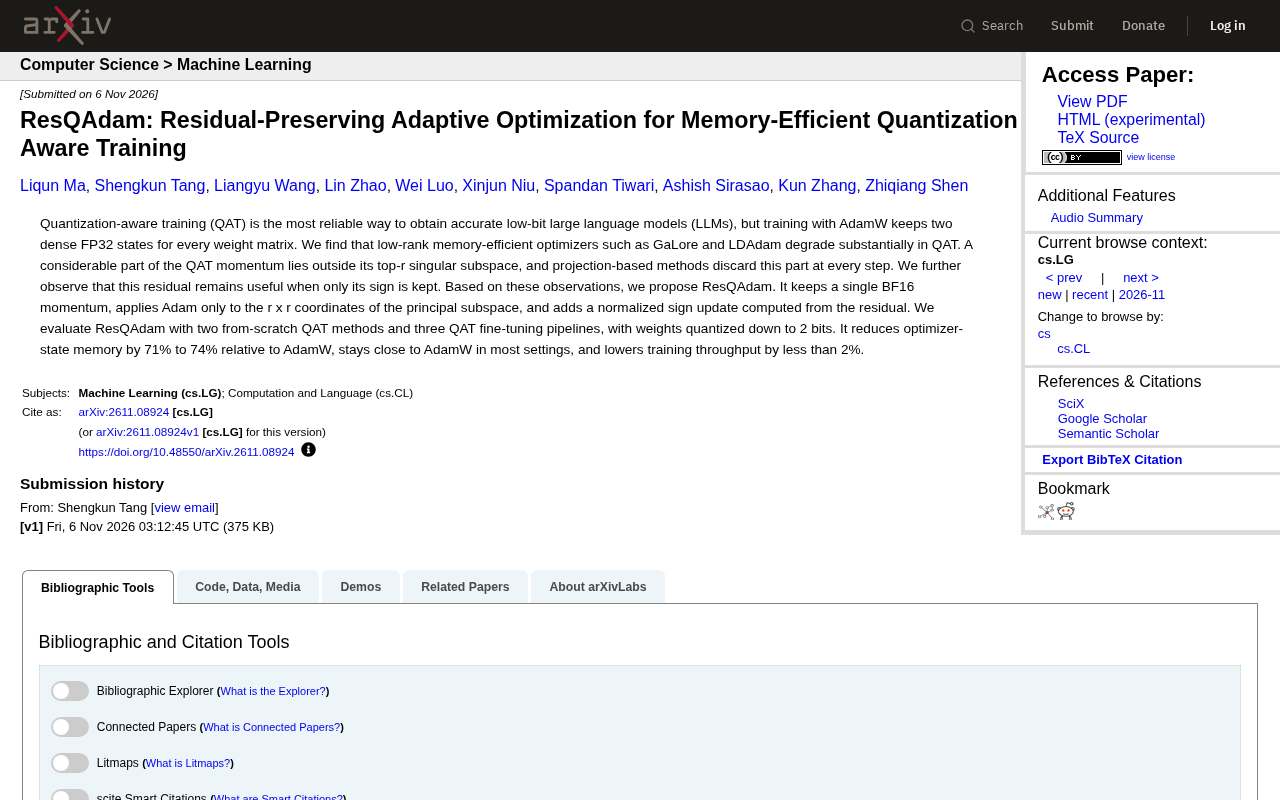
ResQAdam: A Residual-Preserving Adaptive Optimizer That Substantially Cuts QAT Memory Overhead
By preserving the sign of QAT momentum residuals, ResQAdam achieves near-AdamW accuracy in a low-rank framework while cutting optimizer state memory by 71%–74%, with under 2% throughput loss.
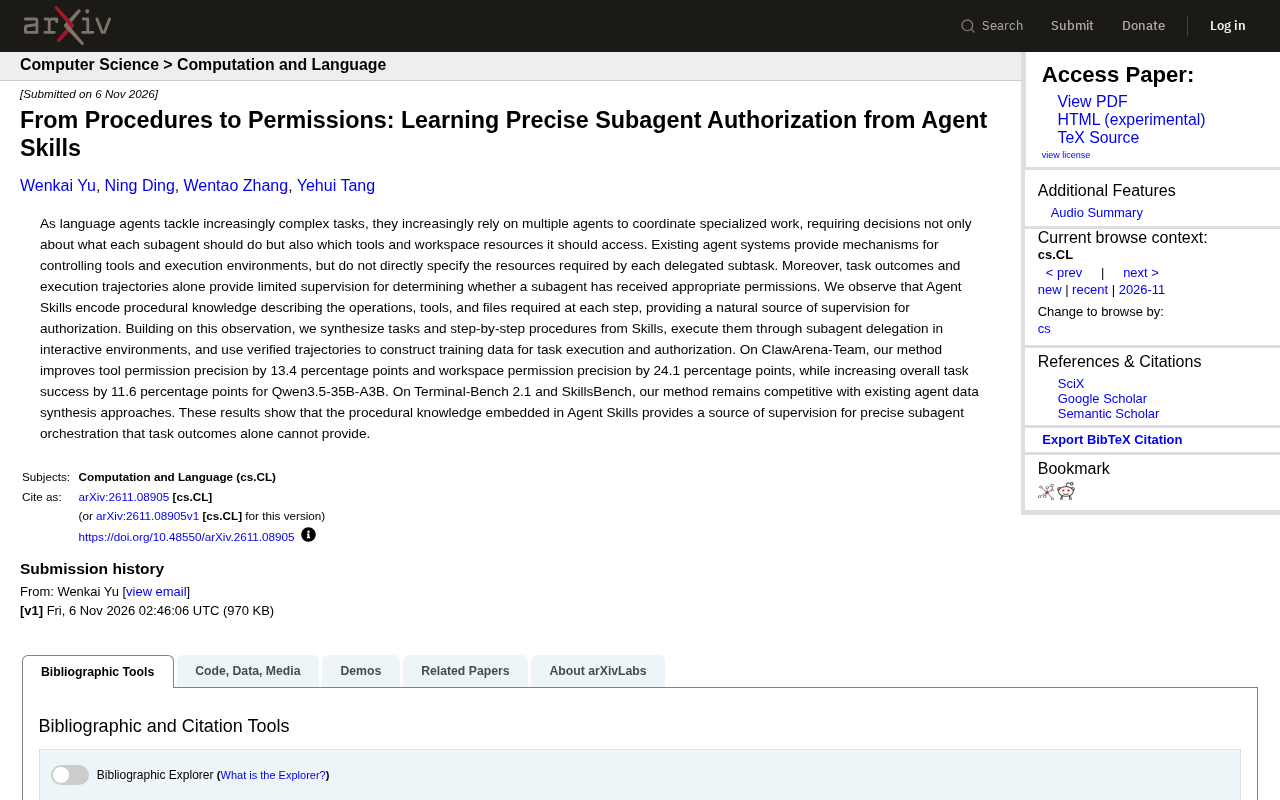
From Procedures to Permissions: How Agent Skills Teach Subagents Precise Authorization
In multi-agent collaboration, which tools and workspace permissions should subagents receive? Research extracts authorization supervision signals from Agent Skills' procedural knowledge, significantly improving permission precision and task success rate on ClawArena-Team.
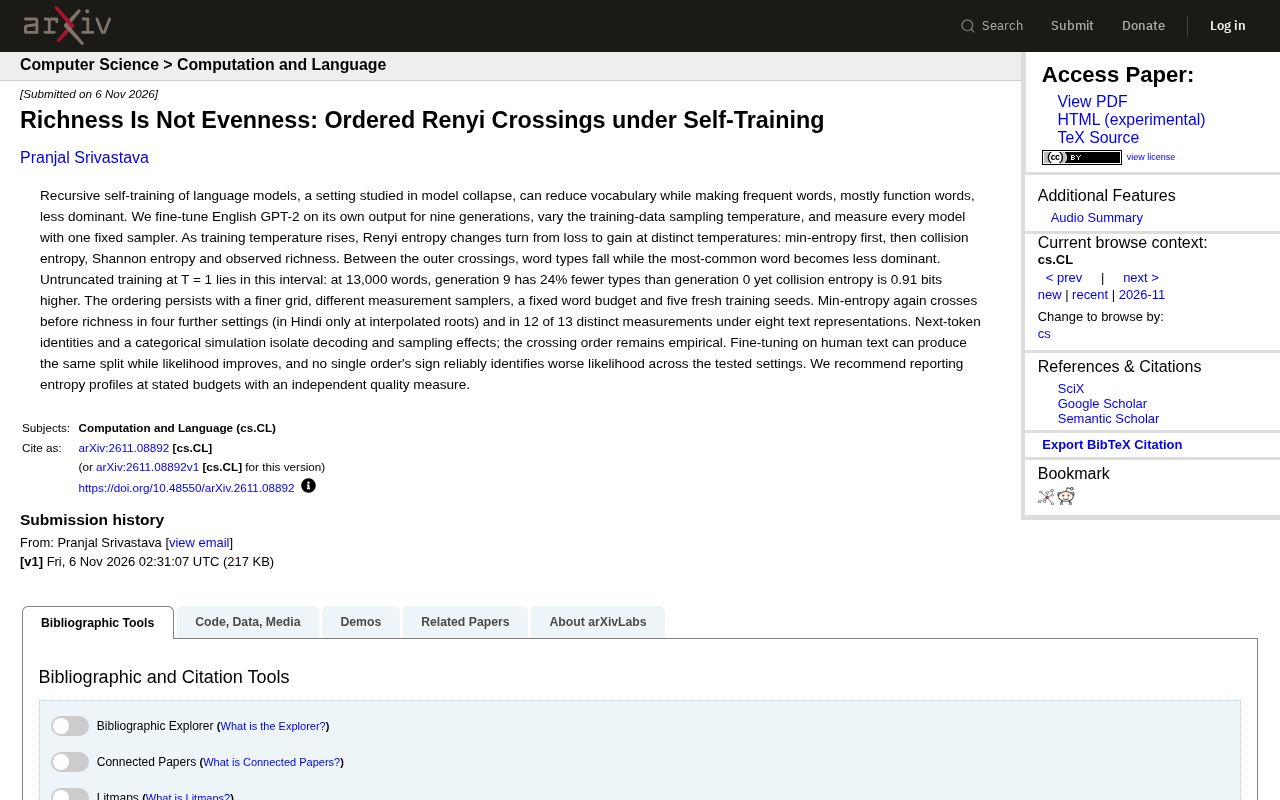
Language Models Under Self-Training: Richer Vocabulary, Yet Lower Entropy?
A nine-generation GPT-2 self-training experiment reveals: word types drop 24% while collision entropy rises 0.91 bits, with ordered Renyi crossings robust, challenging single-metric model-collapse assessment.
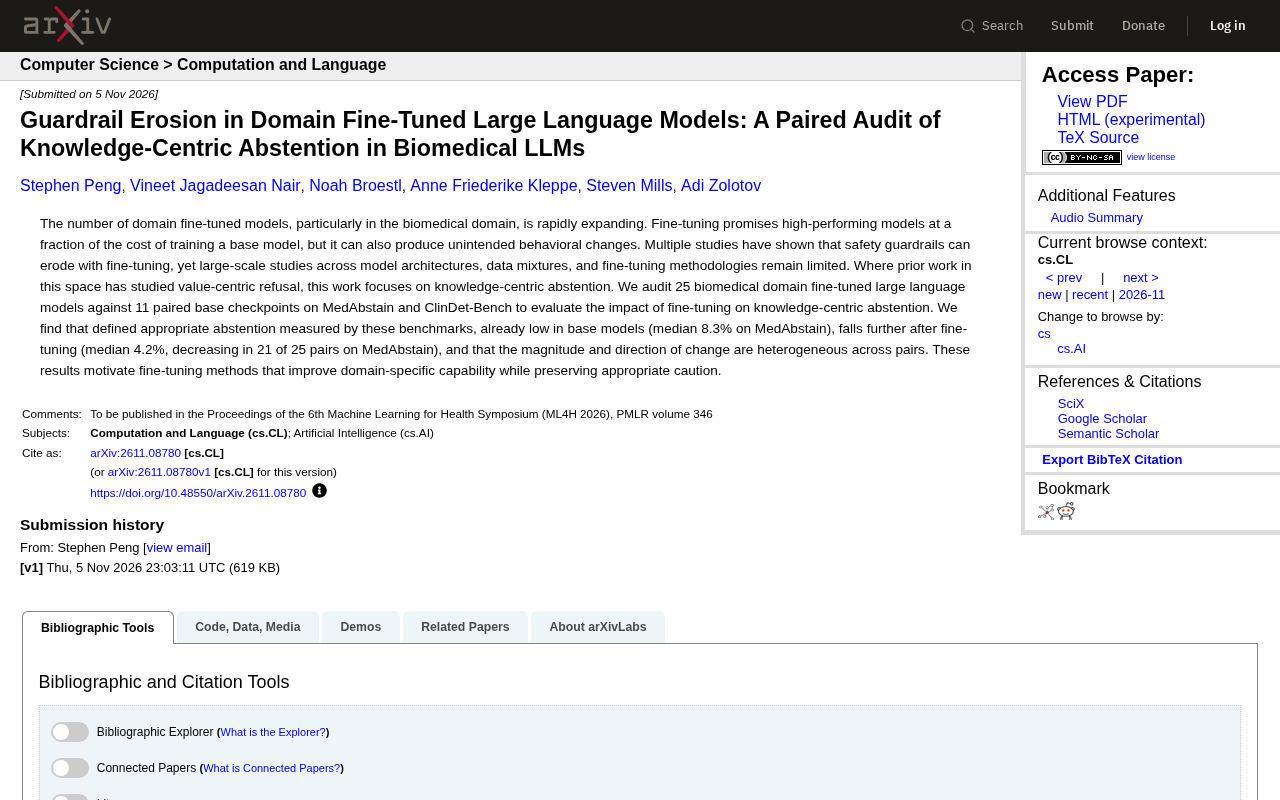
Domain Fine-Tuning Erodes AI Safety Guardrails: A Paired Audit of Biomedical LLMs
A paired audit comparing 25 biomedical domain fine-tuned LLMs with 11 base checkpoints finds knowledge-centric abstention dropped from 8.3% to 4.2%, with 21 of 25 pairs declining, revealing that domain fine-tuning may erode AI safety guardrails.
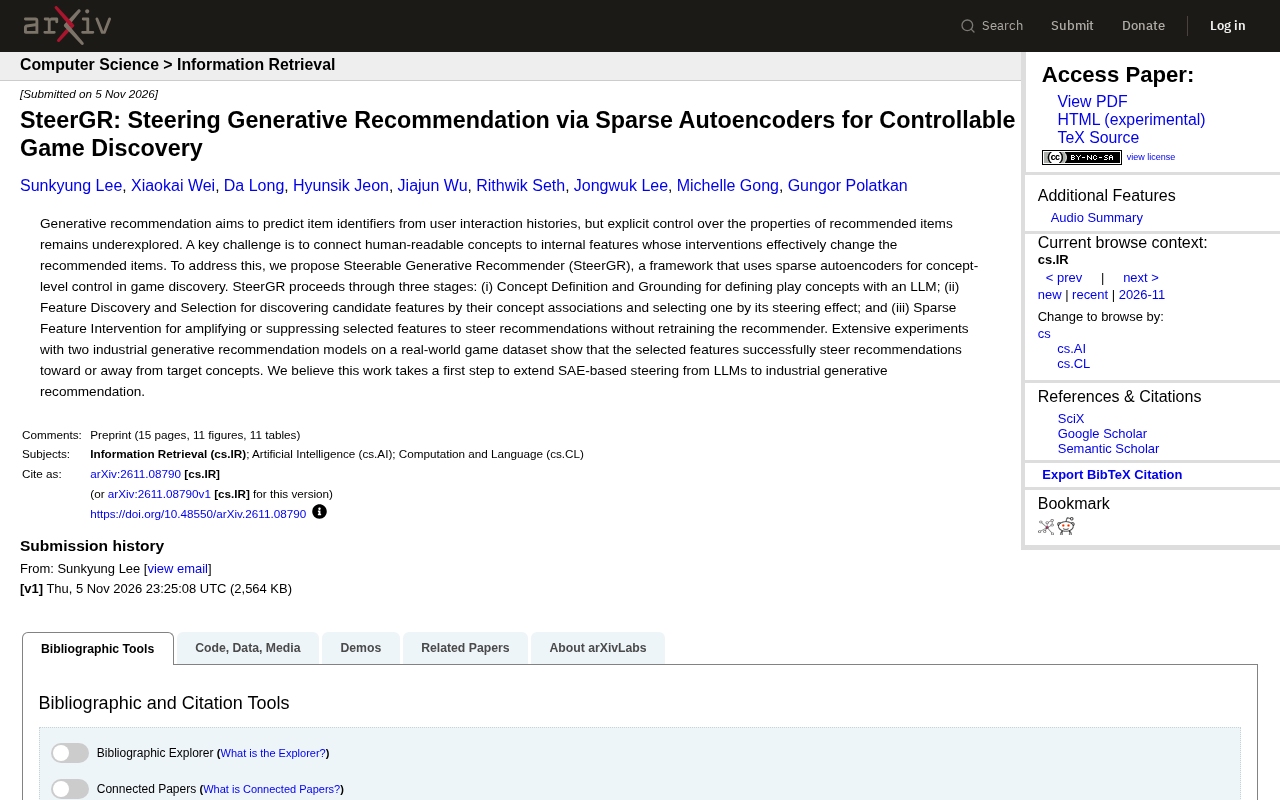
SteerGR: Sparse Autoencoders Enable Controllable Game Recommendations
SteerGR uses sparse autoencoders to enable concept-level control in generative recommendation, steering results toward or away from target concepts via a three-stage framework without model retraining, validated on a real game dataset.
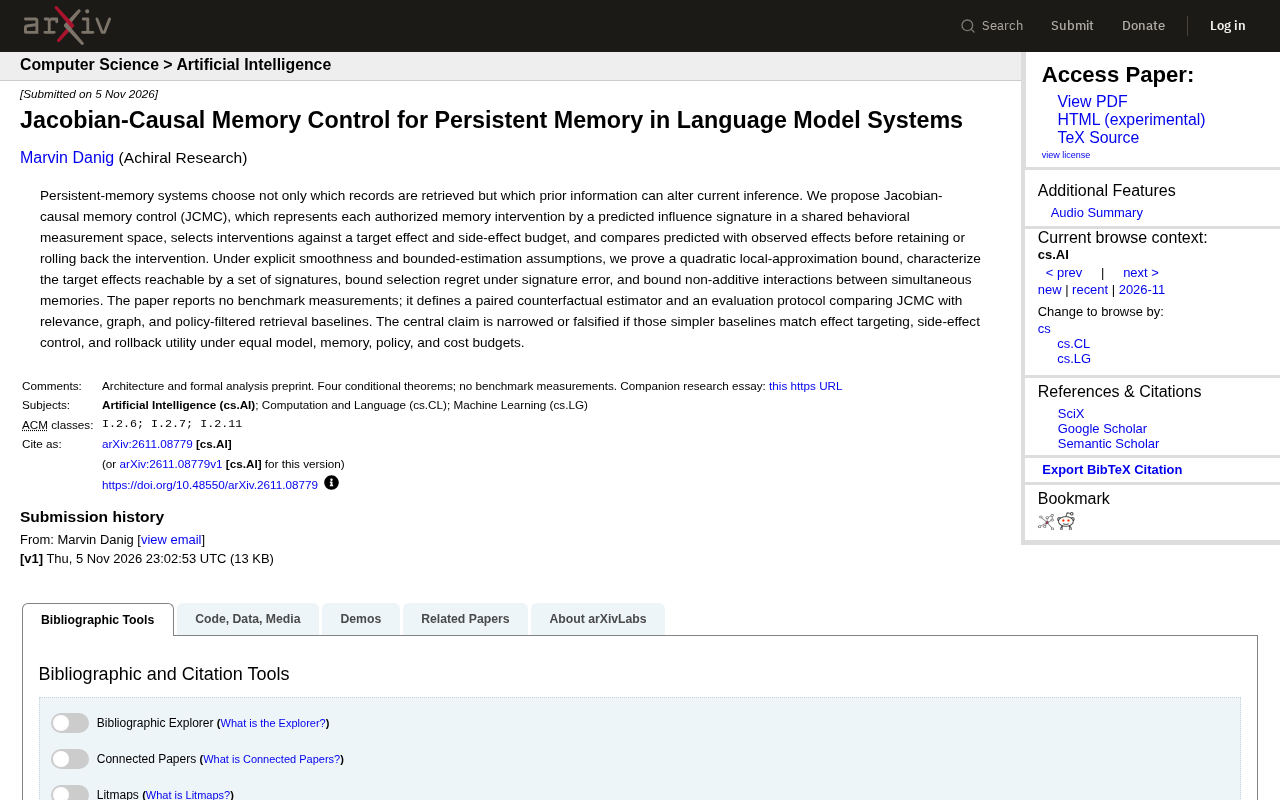
JCMC: Reshaping Persistent Memory Systems with Jacobian-Causal Control
The paper proposes Jacobian-causal memory control (JCMC), using Jacobian impact signatures to control persistent memory interventions, screening target effects and side-effect budgets in a behavioral measurement space, and supporting a predict-observe-rollback loop. The article reviews its mechanism, theoretical guarantees, and falsifiable evaluation protocol.
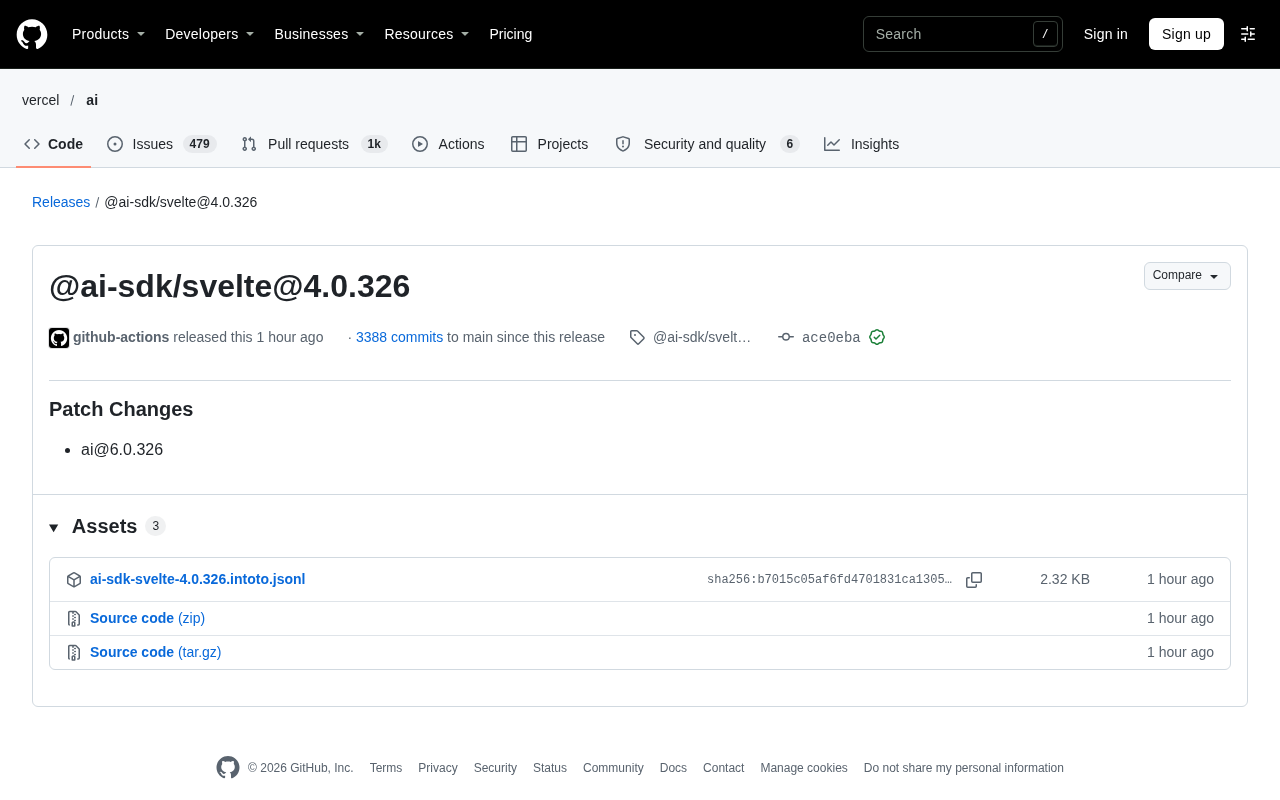
AI SDK Svelte 4.0.326 Release Analysis
@ai-sdk/svelte releases patch 4.0.326, syncing the ai core package to 6.0.326. This analysis covers the versioning strategy, release process, and practical impact for Svelte developers.