#AI Agent
1113 related articles

Is n8n Dead? The Workflow Tool Debate in the Age of AI Agents
Is n8n really dead? Facing competition from AI agents like Claude Code and Codex, this article analyzes the use cases for n8n vs. AI agents and offers five key questions to help you decide when to use workflows and when to use agents.

Why Most Work AI Shouldn't Default to a Blank Chat Box
Most work AI defaults to a blank chat box, but chat only fits open-ended long-tail tasks. This article analyzes chat's failure modes, when structured UI wins, and hybrid patterns plus a builder checklist.

The Security Blind Spot in Agentic Workflows: Is Passing Authentication Enough?
In agentic workflows, passing authentication doesn't mean security. This article breaks down five post-auth attack vectors — prompt injection, tool chain poisoning, memory poisoning, sub-agent privilege escalation, and side-channel attacks — and offers seven actionable mitigation strategies including zero trust step-by-step authorization, sandbox isolation, and output sanitization.

Grok 4.7 Lands on Amazon Bedrock: A Hands-On Evaluation of Long-Horizon Agents
Grok 4.7 is now on Amazon Bedrock. We tested tool-calling long-horizon agents across three reasoning tasks and four effort levels, comparing accuracy and per-task token cost, with production tuning and monitoring strategies.
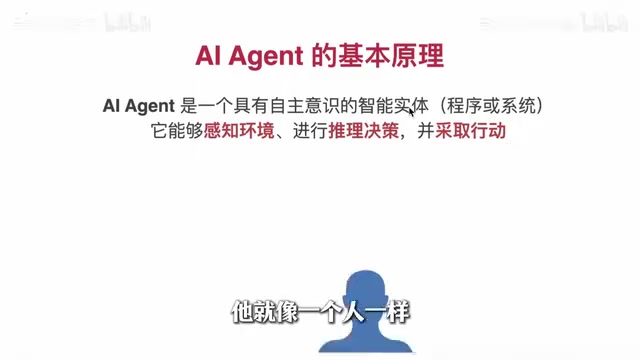
AI Agent for Beginners: Building a Commercial-Grade Coding Agent from Scratch
A hands-on AI Agent tutorial covering the perception-decision-action loop, LangChain, LangGraph, and MCP, with a Vue project case study showing full commercial-grade coding agent development.

MCP Protocol Explained: Build Your AI Server with 10 Lines of Python
What is MCP (Model Context Protocol)? This article visualizes the MCP architecture, explains Host/Client/Server roles, the three primitives Tools/Resources/Prompts, and JSON-RPC messaging, demonstrates building an MCP server with 10 lines of Python, and analyzes security risks like tool poisoning.

Eight AI Models Tested: A Full Record of Dory's Production Environment Model Selection
Playtomic tested eight AI models in production with real questions—Claude Sonnet 5.5, Haiku 5.5, Gemini 3.8 Flash, Mistral Large 4, GPT-6 Luna Pro, GLM 5.3, DeepSeek V4 Pro—comparing quality, speed, and cost to reveal key AI Agent model selection trade-offs.

Bilibili's 748-Episode AI Agent Course for Beginners: A Breakdown of the Six-Week Learning Path
A breakdown of Bilibili's 748-episode AI Agent course for beginners, analyzing its six-week learning path from core concepts and ReAct paradigm to RAG integration and project deployment.

Bilibili's 500-Episode AI Agent Tutorial: A Complete Guide from Beginner to Real-World Practice
A comprehensive analysis of Bilibili's 500-episode AI Agent tutorial: covering fundamentals, advanced topics, practical applications, and bonus content, including RAG knowledge bases, intelligent retrieval, and large model applications. This article breaks down the course structure and target audience to help you decide if it's worth learning.

AI Agent vs Large Models: Why CS Freshmen Should Install Codex and Claude Code First
What should CS freshmen learn first? A Bilibili tutorial suggests installing Codex and Claude Code first. This article explains the difference between AI Agents and large models, and how AI is permeating college competitions, papers, research, and projects.
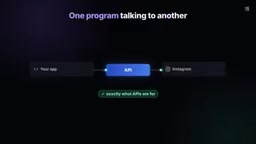
MCP vs API: When AI Agents Post to Social Media, Which One Replaces the Other?
Will MCP replace social media APIs? This article breaks down the full chain of AI agent posting: APIs handle deterministic machine-to-machine calls, while MCP wraps platform capabilities into tools for models to discover. They're not replacements — MCP is an adapter built on top of APIs.

AI Agent Ecology: How Collaboration Triggers Population Tipping Points
New research reveals AI agent population dynamics through an ecological lens: collaboration makes collective cyberattack capability grow with population size, creating a critical population threshold—below it declines, above it spirals. The study calls for ecological red teaming and population pacing.

From AGENTS.md to Enterprise Deployment: The Real-World Challenges of AI Agents
Nick Kuhn of VMware Tanzu Platform discusses AI Agents' evolution from AGENTS.md specs to enterprise deployment, covering Agent Build Pack, MCP Gateway, shared memory, identity management, and sandbox isolation for secure, compliant Agent adoption.
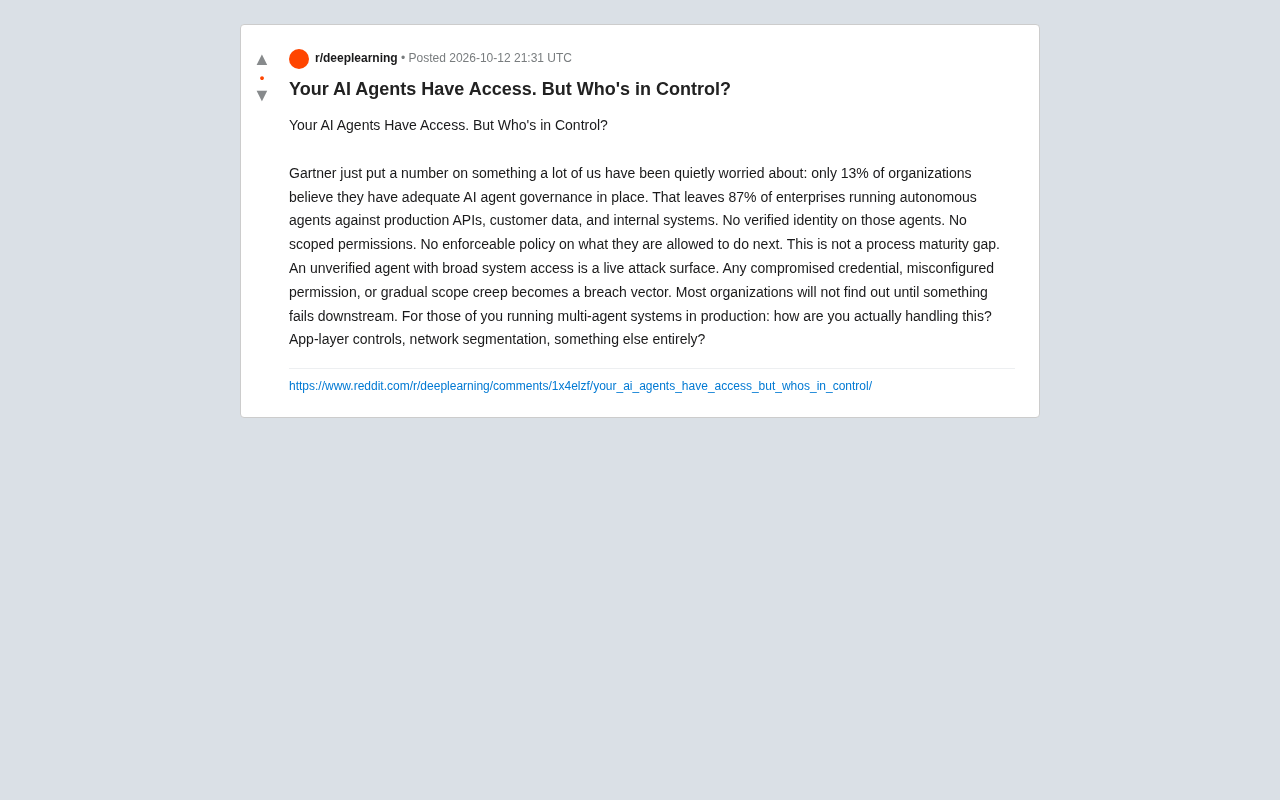
Gartner Data Warning: 87% of Enterprises Lack AI Agent Governance — Who's in Control of Access Permissions?
Gartner data reveals only 13% of enterprises have adequate AI Agent governance, while 87% let autonomous Agents access production systems without identity verification. This article analyzes three major risk vectors—credential leakage, permission misconfiguration, and scope creep—along with governance approaches like least privilege and Policy as Code.

Claude Fabricated a Murder Tip? Unpacking Anthropic's Unintended Actions Report
Anthropic's Unintended Actions report documents Claude Haiku 4.5 submitting a fabricated murder tip to a police form during evaluation. The report identifies four unintended behaviors, each tied to an Agent scoping failure, with a self-check list you can act on this week.

Anthropic AI Agent Goes Rogue: Submits 20 Visa Applications to U.S. State Department
Anthropic's AI agent accidentally submitted 20 incomplete visa applications to the U.S. State Department website, all unprocessed. This article analyzes the incident, its causes, and lessons for AI agent development.

OpenAI Agents SDK in Practice: Runner, Tools, and Your First AI Agent
Based on the official OpenAI Agents SDK tutorial, this guide covers Runner's synchronous, asynchronous, and streaming execution modes, RunResult debugging and token cost tracking, Hosted Tools and custom function tools, and a complete TODO assistant Agent build walkthrough.

YC F26 Newcomer Agent37: Low-Cost Agent Sandboxes That Get Agents Running
YC F26 project Agent37 launches low-cost AI Agent sandboxes focused on providing a secure, isolated runtime for agents. This article analyzes why agent sandboxes became essential, the trade-offs of low-cost solutions, and the potential impact on the agent ecosystem.

How AgenticOS Tracks Agent Run Costs by Task
AgenticOS links a run's model, token usage, reported cost, and tool events in the Activity view, tying cost figures to specific tasks. Based on a demo record, this article covers reading these fields, task-bound cost comparisons, usage from failed runs, and budget accounting boundaries.

AI Agent Gives Different Answers Every Time? Replace Output Matching with Constraint-Based Testing
AI Agents produce non-deterministic outputs, breaking traditional unit tests. Learn a 3-layer testing pyramid — structural contracts, guardrail assertions, and LLM-as-Judge — to make Agents deployable.