#AI coding cost
3618 related articles
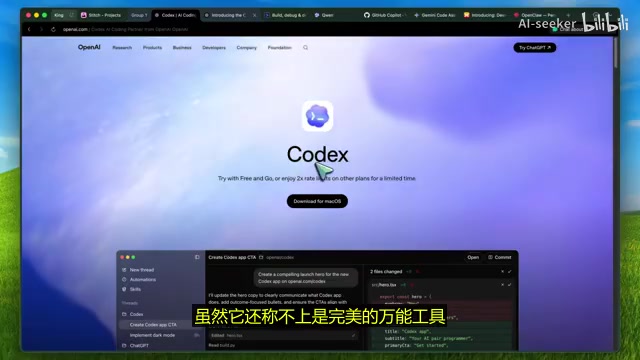 Tutorials
·3 min
8 Free AI Coding Tools: Build a Complete Development Workflow at Zero Cost
A systematic review of 8 free AI coding tools covering UI design, terminal agents, IDE integration, and async coding to help developers build a complete zero-cost AI development workflow.
Read more →
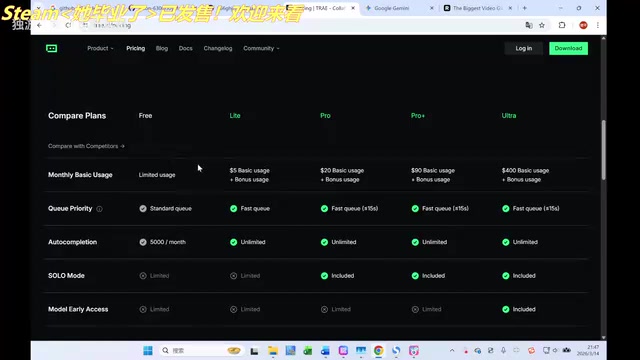 Product Reviews
·2 min
Trae Pricing Strategy Deep Dive: How to Choose the Most Cost-Effective AI Coding Tool
Deep dive into ByteDance Trae's pricing model, auto-renewal tactics, and cancellation methods. Side-by-side comparison with Cursor, Codex, and other AI coding tools to find the best value.
Read more →
 Product Reviews
·2 min
ccusage: One Command to Calculate Your True AI Coding Costs
ccusage is an open-source CLI tool that helps developers analyze token consumption and costs from AI coding assistants like Claude Code, Cursor, and more.
Read more →
 Tutorials
·1 min
AI Coding Burning Through Tokens Too Fast? 5 Practical Strategies to Cut Costs by 80%
Learn why AI coding tools consume tokens so fast and discover 5 practical strategies to cut costs by 80%, including context management and output control.
Read more →
 Tutorials
·2 min
Caveman Plugin: The AI Coding Money-Saver That Slashes Token Costs by 65%
Caveman is a 60K-star GitHub plugin that forces AI to cut filler and respond concisely, reducing Token costs by 30%-65%. Supports Classical Chinese mode for extreme compression.
Read more →
 Tutorials
·2 min
MiniMax M2.7 Free Access Guide: Zero-Cost AI Coding via NVIDIA Endpoint + Kilo CLI
MiniMax M2.7 is now available on NVIDIA's free endpoint. 230B parameter MoE architecture with 204.8K context. Learn how to connect via Kilo CLI for zero-cost AI coding.
Read more →
 Tutorials
·4 min
Codex + Ollama Local Deployment Guide: Build a Free AI Coding Assistant at Zero Cost
Step-by-step guide to deploying Codex with Ollama locally for a free AI coding assistant, covering hardware checks, Ollama setup, model downloads, and full integration configuration.
Read more →
 Tutorials
·3 min
Ollama + OpenCode Local AI Coding: A Complete Zero-Cost Alternative to Cursor
Tutorial: Deploy Qwen3 Coder locally via Ollama with OpenCode for zero-cost AI coding. Covers setup, code generation, auto-debugging, and hardware recommendations.
Read more →
 Tutorials
·3 min
Gemini CLI Free Integration with Cline/RooCode Tutorial: Zero-Cost AI Coding Setup Guide
Step-by-step tutorial on integrating Gemini CLI with Cline and RooCode for free. Get 1000 daily requests to Gemini 2.5 Pro for AI-assisted coding at zero cost.
Read more →
 Product Reviews
·3 min
Claude Haiku 4.5 Review: Sonnet 4-Level Coding at 1% of the Cost
In-depth review of Claude Haiku 4.5: 73.3% on SWE-bench rivaling Sonnet 4, input at just $1/million tokens. Covers code generation, agentic coding, SVG tests, and Sonnet+Haiku collaboration strategies.
Read more →
 Product Reviews
·2 min
Claude Haiku 4.5 In-Depth Review: One-Third the Cost, Coding Performance Rivaling Sonnet 4
Anthropic releases Claude Haiku 4.5: coding rivaling Sonnet 4 at 1/3 the cost and 2x speed. A dev built browser-based macOS for just 28 cents, redefining small AI model capabilities.
Read more →
 Tech Frontiers
·2 min
Claude Haiku 4.5 Released: Double the Speed at One-Third the Price, Setting a New Cost-Efficiency Benchmark for AI Coding
Anthropic releases Claude Haiku 4.5, a distilled version of Sonnet 4.5 with near-flagship coding performance, double the speed, and one-third the cost. Scores 73.3 on SWE-Bench, ideal for developers seeking cost-efficiency.
Read more →

·3 min
WCF Modernization: CoreWCF or gRPC? A Decision Framework and Migration Guide
In-depth analysis of two WCF modernization paths: CoreWCF for smooth transition vs gRPC for full restructuring. Includes a decision framework based on contract compatibility, performance needs, and migration scope.
Read more →

·3 min
Practical Guide to Building a Multimodal RAG Application with Nemotron 3 Nano Omni
Learn how to build a multimodal RAG application with NVIDIA Nemotron 3 Nano Omni, covering Modal cloud deployment, Gradio frontend, and document retrieval Q&A workflows.
Read more →

·3 min
C64 Demoscene Technical Breakdown: Visual Black Magic on Extreme Hardware
A deep dive into Commodore 64 Demoscene techniques including sprite multiplexing, border opening, and raster interrupts—how 8-bit era coders achieved the impossible through cycle-exact programming.
Read more →
GPT-5.6 Upgrade Explained: Enhanced Ca…
·2 min
GPT-5.6 Upgrade Explained: Enhanced Capabilities and Free-Tier Access Strategy
OpenAI announces GPT-5.6 upgrade with free-tier access. This article analyzes the core improvements, business logic behind the free rollout, and its impact on users and the AI industry.
Read more →

·3 min
Deep Dive into Microsoft's AI Strategy: From Copilot to Autonomous Agents
Deep analysis of Microsoft's AI strategy: from OpenAI investment and Copilot ecosystem to autonomous agents, examining how Microsoft builds full-stack advantages in the tech giant AI race.
Read more →

·2 min
LTX 2.3 vs H3: A Hands-On Comparison of Text-to-Video Models
In-depth analysis of LTX 2.3 vs H3 text-to-video models tested with identical prompts, comparing image quality, motion dynamics, and prompt comprehension.
Read more →

·4 min
The Self-Building Agentic IDE: The Next Evolutionary Direction for AI Programming Tools
Exploring the Agentic IDE concept: a self-building, self-iterating intelligent development environment. A deep analysis of how AI programming tools evolve from passive assistance to autonomous evolution.
Read more →

·3 min
Qwen 3.8 Max Tops Agentic Benchmark: Is the Tipping Point for Local Deployment Approaching?
Qwen 3.8 Max tops the Artificial Analysis Agentic Index ahead of Opus 5. Reddit debates the gap between benchmark scores and real-world agent performance, and what it means for local deployment.
Read more →