#AI development guide
1901 related articles

·3 min
The Complete AI Agent Development Workflow: A Seven-Step Guide from Requirements Analysis to Deployment
Want to build an AI Agent but don't know where to start? This guide covers the complete seven-step workflow—from requirements analysis, platform selection, prompt engineering, data storage, and UI building to testing and deployment.
Read more →

·6 min
AI Agent Development in Go: A Hands-On Guide to ByteDance's Eino Framework and Its Seven Core Capabilities
Build production-grade AI Agents with a pure Go stack using ByteDance's Eino framework. A deep dive into seven core capabilities: multi-Agent orchestration, long-task execution, command approval, RAG, MCP, Skills, and database reporting.
Read more →

·2 min
The Complete Guide to Custom Software Development: AI Large Model Applications & Full-Stack Development, All in One Place
15-year full-stack engineering team offering custom development for mini programs, apps, enterprise systems, RAG knowledge bases, and AI agents — no middlemen, no subcontracting, full one-on-one ownership.
Read more →

·3 min
From Raw LLMs to Agents: A Complete Guide to Enterprise-Grade AI Development
Prompt engineering and RAG are just the basics. Real enterprise AI runs on Agents. Explore the 4 stages of LLM deployment, Agent core capabilities, and industry trends.
Read more →

·4 min
8-Step AI Agent Development Guide: From Zero to Production
Demo works but production fails? This guide covers the full AI Agent development path: when to use Agents, hand-writing ReAct loops, tool schemas, RAG, eval sets, and production fallback strategies.
Read more →

·7 min
From Vibe Coding to Engineered AI Programming: A Practical Guide to Enterprise Development
AI coding tools are changing development, but Vibe Coding hides risks in code quality and maintenance. This article explores Engineered AI Programming, compares Codex and Claude Code, and reveals real enterprise development paths.
Read more →
·7 min
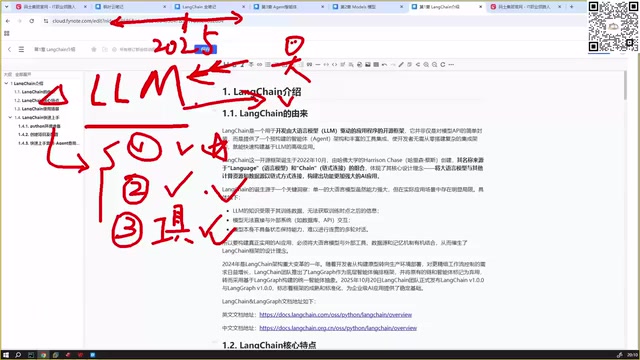
LangChain Hands-On Guide: From LLM Calls to Agent Development
Master LangChain from scratch: the three limitations of LLMs, init_chat_model unified interface config, the Message type system, and the path from LLM calls to Agent development.
Read more →

·7 min
Getting Started with OpenAI LLM Development: A Practical Guide to Model Selection, Token Pricing, and API Usage
A systematic guide to the three cores of OpenAI LLM app development: GPT-4/GPT-3.5 model selection, token billing and cost-saving tips, and practical use of the Models, Completion, and Chat Completion APIs.
Read more →
·3 min
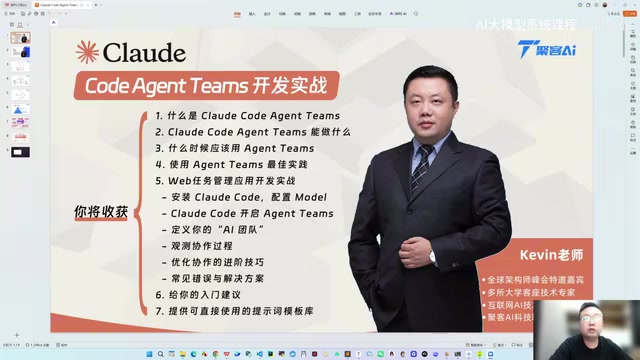
Claude Code Agent Teams: A Practical Guide to AI Team Collaboration in Software Development
A deep dive into Claude Code Agent Teams: how they differ from Subagents, contract-first design, model allocation strategies, and a real case of 16 agents building a C compiler.
Read more →

·6 min
LangChain 1.0 Comprehensive Guide: Three Core Frameworks and Hands-On AI Application Development
Deep dive into LangChain 1.0's architecture: LangChain framework, LangGraph multi-Agent orchestration, and LangSmith observability platform, with hands-on RAG and intelligent customer service projects.
Read more →

·4 min
Enterprise AI Agent Development Guide: Multi-Task Recognition and Dynamic Tool Calling in Practice
A deep dive into AI Agent architecture and enterprise deployment. From LangChain and ReAct design to dynamic tool calling and multi-task recognition — build autonomous enterprise AI assistants.
Read more →

·6 min
Java Developer's Guide to AI Application Development: Building an Airline Intelligent Customer Service System
A practical guide for Java developers to build AI apps without switching to Python. Learn LangChain4j, RAG, Function Calling, and MCP through an airline customer service project.
Read more →

·4 min
Coze for Beginners: A Complete Guide to ByteDance's AI Application Development Platform
A complete guide to ByteDance's Coze platform: agents, AI apps, workflows, nodes, and plugins explained. Build AI applications with no coding required.
Read more →

·3 min
Codex CLI Practical Guide: From Setup to Enterprise-Level AI Development
Master OpenAI Codex CLI from setup to enterprise use: slash commands, AGENTS.md, MCP protocol, multi-agent coordination, plugin development, and RAG project implementation.
Read more →

·2 min
AI Large Model Development Learning Path: A Complete Guide from Zero to Enterprise Projects
A complete learning roadmap for AI large model development — covering Transformer, Prompt Engineering, RAG, LangChain, Agent development, fine-tuning, and deployment.
Read more →

·3 min
Full-Stack AI Development with Vercel: A Complete Guide to AI SDK, RAG, and Production-Ready Applications
Master full-stack AI development with Vercel: from LLM, RAG, and vector embeddings to AI SDK, AI Gateway, and v0 — build production-ready AI web apps end to end.
Read more →

·3 min
Programmer's Guide to the AI Era: Application Development Is a Real Opportunity for Ordinary Developers
Too hard to become an algorithm engineer? Too basic to just use AI tools? This guide breaks down the three levels of AI adoption for programmers, with a focus on Agent development and large model engineering — including salaries, timelines, and window risks.
Read more →

·3 min
6-Week AI Agent Development Learning Roadmap: A Complete Guide from Zero to Project Deployment
A systematic 6-week AI Agent development roadmap covering core architecture, ReAct paradigm, multi-agent collaboration, RAG integration, and deployment for beginners to build production-ready agents.
Read more →

·4 min
LangGraph.js Practical Guide: A Frontend Engineer's Path to AI Agent Development
A practical LangGraph.js guide for frontend engineers covering LangGraph vs LangChain comparison, workflow vs general-purpose agent types, and layered Agent architecture design.
Read more →

·3 min
Complete Guide to Harness Engineering: The Three-Layer Architecture for AI Engineering Development
A deep dive into Harness Engineering's core architecture covering the Information, Constraint, and Automation layers to systematically constrain and verify AI Agent output for reliable development.
Read more →