#AI tax
1735 related articles

·2 min
Next.js Dynamic Routes Explained: The Developer Resonance Behind Square Bracket Syntax
Deep dive into Next.js dynamic routes — the differences between [slug], [...slug], and [[...slug]], the evolution from Pages Router to App Router, and how developers use meme culture to cope with technical complexity.
Read more →

·2 min
Jaithon 3: Analyzing an Experimental Programming Language in Pursuit of Perfect Syntax
An in-depth analysis of Jaithon 3, an experimental language promising "perfect syntax" and high performance, exploring its design philosophy, technical challenges, and community reception.
Read more →

·3 min
Why Do Taxi Drivers Rarely Get Alzheimer's? The Link Between Spatial Navigation and Brain Health
Research shows taxi and ambulance drivers die from Alzheimer's at significantly lower rates. This article explores how spatial navigation protects brain health through hippocampal plasticity and cognitive reserve.
Read more →

·3 min
Democrats Propose Taxing AI Companies to Create Jobs: Proposal Analysis and Controversy
U.S. Democrats propose taxing AI companies to fund job creation. This article analyzes the proposal's logic, challenges in defining taxable entities, innovation-regulation balance, and broader AI-era redistribution debates.
Read more →
·6 min
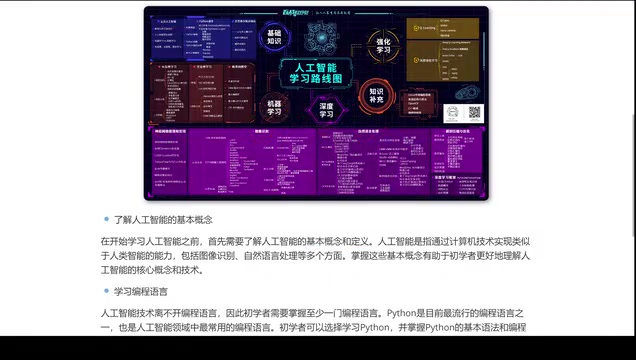
AI for Beginners: A Five-Step Practical Path That Skips the Math and Python Syntax Traps
Struggling with math and Python when learning AI from scratch? This article lays out a five-step entry path: grasp the concepts, learn Python lightly, master ML and deep learning principles, get hands-on with PyTorch, then deepen understanding through real projects.
Read more →

·2 min
Japan's Ride-Hailing Platform Go Completes ¥88.6 Billion IPO, Betting on Robotaxis to Tackle Driver Shortage
Japan's ride-hailing app Go completed the country's largest IPO this year, raising ¥88.6 billion. Facing a severe driver shortage, Go is investing in Robotaxis and industry M&A to reshape Japan's mobility future.
Read more →
 Industry Insights
·2 min
OpenAI Codex Powers a Self-Improving Tax AI Agent: A New Paradigm for Closed-Loop Evolution
OpenAI and Thrive Holdings launch a Codex-based Tax AI with closed-loop self-improvement: error tracing, auto-fixing, and test validation. A deep dive into this new AI Agent evolution paradigm.
Read more →

·3 min
Self-Hosted LLM Tech Stack: A Complete Guide to Managing Your Local AI Cluster from the Terminal
A deep dive into self-hosting LLM tech stacks: inference engines, model management, vector databases, and how to manage your local AI cluster from the terminal.
Read more →

·3 min
Memorex Code Open-Sourced: Giving Coding Agents Long-Term Memory
Memorex Code is an open-source long-term memory system for Coding Agents, solving cross-session memory loss. Features auto-recall, deduplication, and local codebase scanning for Cursor, Claude Code, and more.
Read more →

·2 min
From Vibe Coding to Spec Coding: A Practical Engineering Methodology for AI Full-Stack Development
From Vibe Coding to Spec Coding: master spec-driven AI engineering with full-stack architecture selection, layered implementation, and team-level methodology.
Read more →

·4 min
Deep Comparison of Four Open-Source AI Coding Agents: DeepSeek Harness vs. Prime Agent vs. Pi vs. OpenCode — Which One Should You Choose?
Deep comparison of four open-source AI coding agent frameworks: DeepSeek Harness, Prime Agent, Pi, and OpenCode — covering architecture, performance, security, and use cases.
Read more →

·1 min
Learning in the AI Era: 90% of Knowledge Only Needs Understanding, Not Memorization
In the AI era, 90% of learning material only needs understanding, not rote memorization. Learn how to distinguish core knowledge from information you can look up on demand.
Read more →

·2 min
Unsloth Dynamic v3 Released: 10% Accuracy Gain at Same Size, 1-bit Quantization in Just 6GB
Unsloth releases Dynamic v3 quantization: Qwen3.8-27B GGUF models achieve 10% top-1% accuracy gain at same size, plus 6-8GB 1-bit extreme quantization. New Divergence-300 metric for realistic evaluation.
Read more →

·3 min
OpenAI's Ohio Data Center: A Complete Breakdown of Grid Upgrades, Water Use, and Community Commitments
OpenAI partners with SB Energy and NVIDIA to build a massive AI data center in Pike County, Ohio, pledging grid costs won't burden residents, using closed-loop air cooling, creating 35,000 jobs, and investing $80M in the community.
Read more →

·3 min
Stripe Acquires OpenRouter for $7.5B, Binance Lets AI Trade Crypto Automatically — AI Shifts from Showmanship to Takeover
Stripe acquires model routing platform OpenRouter for $7.5B, Binance launches AI agent OS for automated trading, Beijing robot conference enters procurement day. AI shifts from demos to real business takeover.
Read more →

·3 min
Vercel Zero: A Programming Language Designed Specifically for AI Agents
Vercel releases experimental language Zero, replacing traditional source code with semantic program graphs for AI agents to operate on structured graphs instead of editing strings.
Read more →

·2 min
What Is Vibe Coding? The Ideals and Realities of AI Programming
A deep dive into Vibe Coding: its meaning, how it works, and real-world experience. From Andrej Karpathy's concept to developer community feedback on AI programming tools' benefits and risks.
Read more →

·3 min
Practical Tutorial: Using Tongyi Lingma AI to Generate a Repair Website Service Listing Page
Learn how to use Tongyi Lingma AI to generate a repair company service listing page, covering context referencing, layout instructions, natural language debugging, and style unification.
Read more →

·3 min
The Complete Guide to agent-browser: The Ultimate Tool for AI-Powered Browser Automation
Deep dive into Vercel Labs' agent-browser tool. Its REF element reference mechanism lets Claude Code automate web operations, form filling, login testing, and data collection with 10x efficiency gains and 92% success rate.
Read more →

·3 min
ChatGPT Plus Payment Methods Compared: A Security Guide to Avoiding Pitfalls
Compare three ChatGPT Plus payment methods: third-party proxy, international credit cards, and in-app purchases. Detailed analysis of account security, financial risks, and stability issues.
Read more →