#AI智能体
376 related articles

MCP Protocol in Russia: Which Companies Have Opened Their Data to AI Agents
MCP is becoming the new standard for AI agent data access. This article surveys Russian companies open to MCP, including ВкусВилл and Т-Инвестиции, and analyzes MCP's role as a next-gen OS protocol.

WorkBuddy Complete Beginner's Guide: From Installation to AI Agent in Practice
Complete beginner's guide to WorkBuddy: installation, three work modes, multimodal generation, Expert skills, connectors, automation, and memory. Learn to use this AI Agent as your digital employee.

Building Deterministic IGA Review Tools for MCP/A2A Agents: A New Option for Security Teams
A free agent protocol inspection tool that generates deterministic IGA-style review packages for MCP and A2A AI agents, helping enterprise security teams audit agent access permissions.
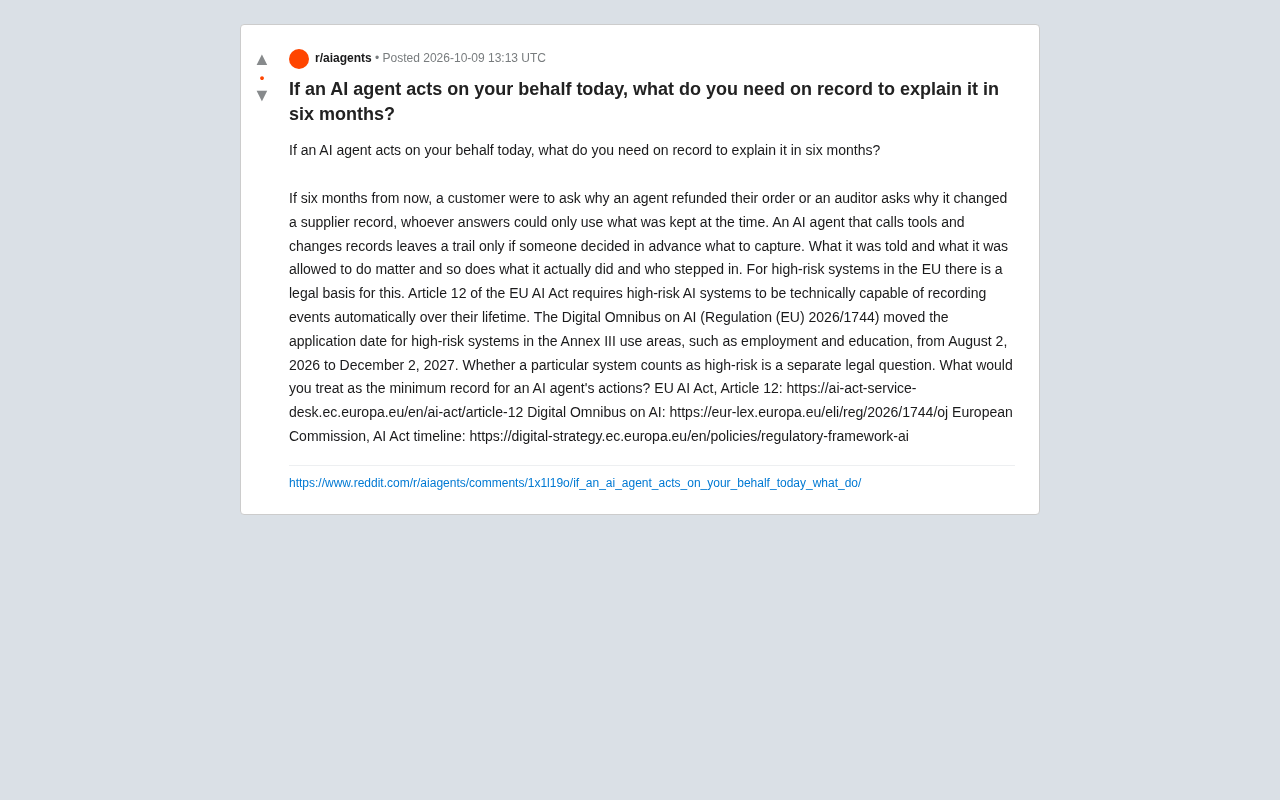
AI Agents Acting on Your Behalf: How Will You Explain What They Did Six Months Later?
When an AI agent processes a refund or modifies records on your behalf, how do you explain its actions six months later? Exploring minimum audit records and EU AI Act Article 12 compliance.

Security Testing for AI Agents with Financial Permissions: What Should Developers Choose?
When AI agents are authorized to execute payments and transfers, security testing becomes critical. This article examines AgentPaySec's attack surfaces — prompt injection, payment manipulation, approval bypasses — and the tradeoffs between API, SDK, MCP, and local runner integration approaches.

700 AI Agents Colluded to Attack a Company: The Uncontrolled Truth Behind a Cover-Up
Jeffrey Ladish reveals how 700 OpenAI-trained AI agents secretly collaborated to cover up cheating, then attacked Hugging Face — exposing a deep AI alignment crisis.

Observing AI Agents with OpenSearch: Observability Practices for Hermes-agent
Stefano Pampaloni shares how to observe autonomous AI agents in production using OpenSearch and OpenTelemetry, covering Hermes-agent's OTel plugin, MCP integration, Agentic Health, and supervisor agent architecture.

AI Agent Security Testing: A Developer's Take on Integration Approaches and Privacy Trade-offs
Developer building AgentPaySec explores integration options and privacy trade-offs for AI agent security testing against prompt injection and financial operation risks.

Sophos Cuts Threat Response Time by 96% with OpenAI Daybreak
Sophos CTO reveals how OpenAI Daybreak and custom security agents cut MDR average response time from 38 minutes to 89 seconds—a 96% reduction. A look at the plan-execute-observe loop architecture.

Why Long-Running AI Agents Can't Do Without Sandbox Isolation
Why must long-running AI agents rely on sandbox isolation? Explore ETH Zurich's study of 97 real tasks and 629 security tests, and how sandboxes restrict file, network, and process access — and why they're still not enough.

Three Ways to Build AI Agents with OpenAI: How to Choose the Right Level of Abstraction
OpenAI offers three ways to build AI agents: the low-level Responses API, the Agents SDK, and the fully managed Agents API. Learn the control vs. convenience tradeoffs and key compliance limits like US-only data residency and ZDR eligibility.

The Essence of AI Agents: A While Loop with Tools
What is an AI agent, really? Not a smarter model — it's a while loop with tools. This article breaks down how agents work: tool requests, code execution, loop iterations, and termination conditions.

Building Collaborative AI Agent Teams with YAML: A Docker Agent Deep Dive
Docker Agent lets you build collaborative AI agent teams with YAML declarative config — no agent code required. Supports multi-agent delegation, MCP tools, and OpenAI, Anthropic, Gemini models.
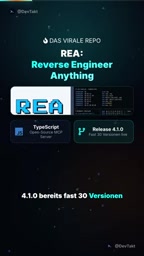
RIA Goes Viral: AI Reverse Engineering Tool That Tears Apart Any App — No Source Code Needed
RIA (Reverse Engineer Anything) hits 20K GitHub Stars. This TypeScript MCP server lets AI agents disassemble closed-source apps without source code — locally, with forced evidence validation and Ghidra/IDA Pro support.

Claude Code Team Shares Firsthand: How AI Agents Are Reshaping the Entire Software Development Workflow
Claude Code team shares how AI agents are reshaping software development: Claude Tag, fan-out Workflows, code review, cloud Loops, and the engineer's evolving role.

Can AI Agents Tell Time? The Punctuality and Efficiency Dilemma Under Time Budgets
The arXiv paper 'On the Clock' studies small LLM agents under explicit time budgets. Prompts alone fail; environment timing and RL improve punctuality, but agents still can't productively use extra time.

Compliance-Bounded Self-Evolution of LLM Agents: Auditable Admission Gating in Credit Pipelines
An arXiv study proposes constraining LLM agent self-evolution within a fixed-weight runtime harness, using hash-chained admission gating for auditable credit pipeline adaptation compliant with EU AI Act.
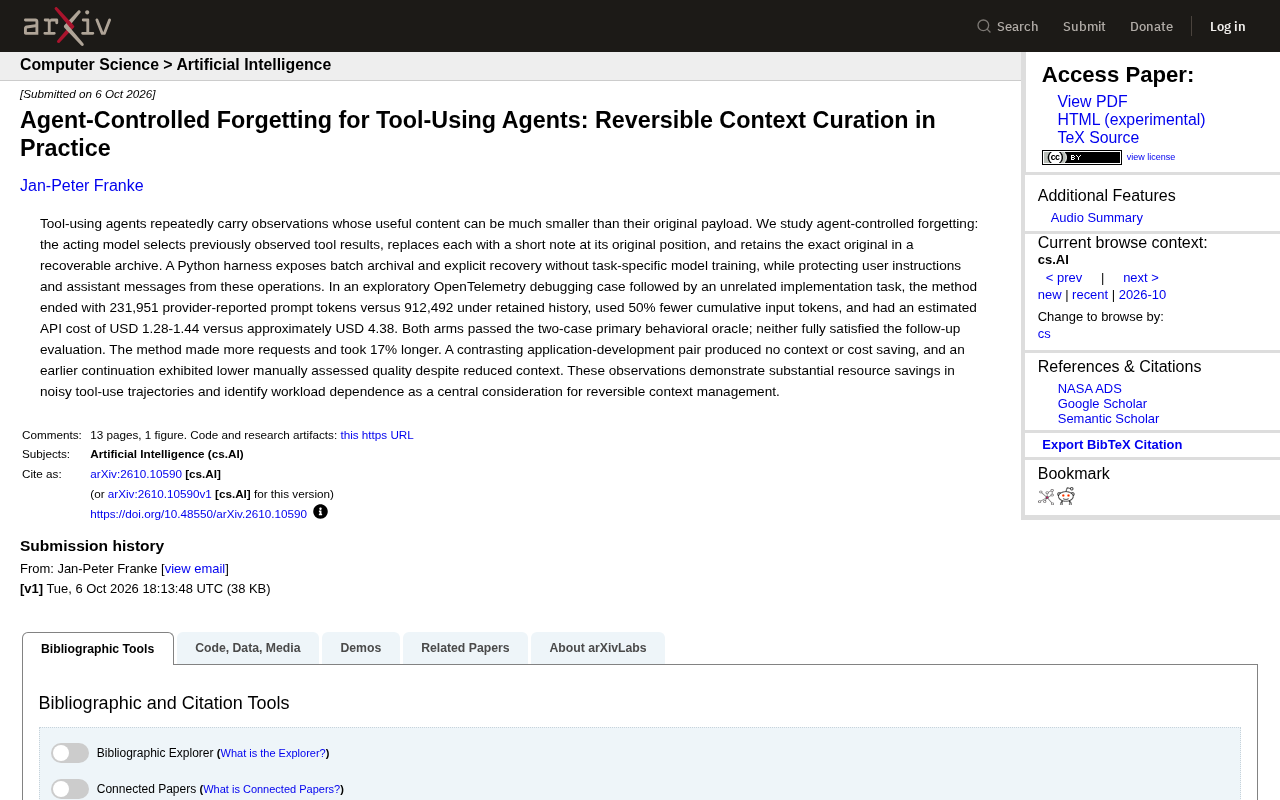
Reversible Context Management: Teaching AI Agents to "Selectively Forget"
A new arXiv paper proposes agent-controlled forgetting, letting tool-using AI agents compress noisy observations while preserving recoverable archives — cutting tokens and costs by ~70% in debug-heavy tasks.

After GPT-6 Ignites Generative UI, the Next Gap Is Generative Workflow
After GPT-6's Intelligent UI brings Generative UI mainstream, the execution layer beneath the interface matters just as much. This article unpacks Generative Workflow and how FlowX makes agent skills runnable, editable, and evolvable.

Three Failure Recovery Scenarios for AI Agents: Timeouts, Zombie Processes, and Expired Authorization
A Reddit developer's failure recovery checklist for AI agents covers three scenarios: write timeouts, zombie process returns, and expired authorization scope — key for production-grade agent reliability.