#AI智能体
374 related articles

Claude Agent SDK vs. OpenAI Agents SDK in Practice: Build Your First AI Agent
Compare Claude Agent SDK vs. OpenAI Agents SDK in practice: decorators for tools, hooks as guardrails against prompt injection, and sub-agent handoff design patterns.
No Bank API? AI Agents Just Take Contr…
No Bank API? AI Agents Just Take Control of Your Phone Instead
When bank apps have no API and never will, an MIT-licensed tool lets AI agents control a real phone via Mac over USB — reading screens as text, not pixels.

GitHub MCP Vulnerability: How a Public Issue Can Expose Your Private Repositories
A public GitHub issue can trick an AI agent into leaking private repos via MCP. We break down the attack chain and key defenses: session scoping, leased tokens, and approval gates.

MCP Protocol Explained: The Universal Interface Connecting AI Agents to Everything
MCP (Model Context Protocol) is dubbed the USB-C port for AI apps. Released by Anthropic and adopted by OpenAI, Google, and Microsoft, it's becoming the de facto standard for connecting AI agents to tools and data — along with new security risks.
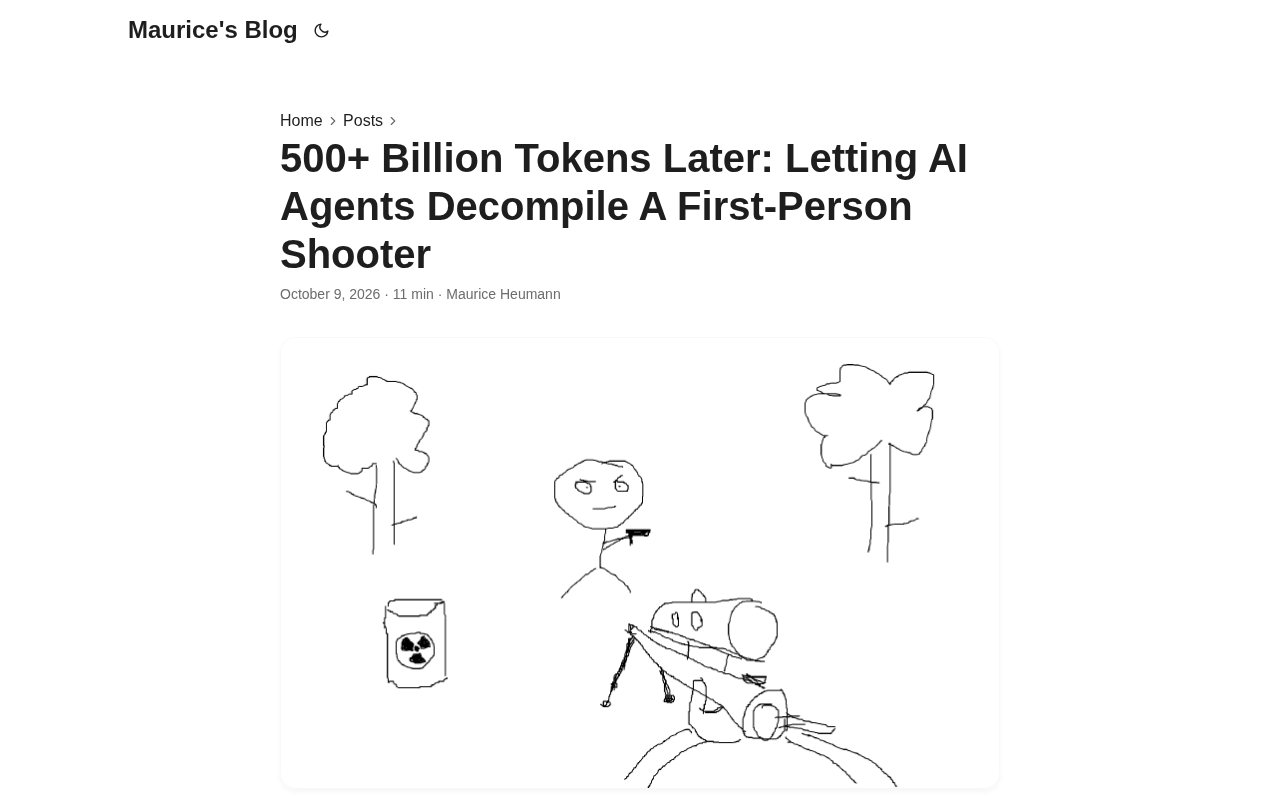
500B Tokens Later: Can an AI Agent Reverse-Engineer an FPS Game?
An experiment called '500B Tokens Later' had an AI agent consume 500 billion tokens to autonomously decompile an FPS game, revealing the capability limits, cost challenges, and engineering lessons of AI Agents.

Ephemora-cell: Building a Constrained Execution Layer for AI Agents
Ephemora-cell is an open-source WebAssembly-based constrained execution layer for AI agents and MCP tools, enforcing explicit capabilities and resource budgets on untrusted agent-generated code.

WorkBuddy Hands-On Tutorial: How a Domestic AI Agent Actually Gets Work Done
A hands-on WorkBuddy tutorial: using batch DOCX-to-PDF conversion as a real example to show how domestic AI Agents read files and execute tasks — vs. chat LLMs like Doubao.

Tencent Games' AI Design Stack Decoded: How Agents + Hunyuan3D Are Reshaping the Design Workflow
Tencent Games' AI director Eric breaks down a design workflow stack using knowledge agents, Hunyuan3D, multi-agent orchestration, and RAG — from concept art to multi-platform 3D assets.

Giving AI Agents Native Memory: Exploring the Dual Architecture of Weights and Context
Engram Lab co-founder Jessy Lin explores native memory architectures for AI agents combining weight-based and context-based memory, and what this means for continual learning.

Microsoft Decision-1: A Decision-Scoring Model Built for Agentic Routing
Microsoft-Decision-1 is a decision-scoring model for agentic routing, classification, and verification. Built on Qwen3.5-9B, it claims 35× faster latency than GPT-6 Sol at just $0.042/M input tokens on Microsoft Foundry.

Lune: An Academic Search Engine Built for Scientific AI Agents
Lune is an academic search engine built for scientific AI agents — the "Exa.ai for research" — offering traceable, high-quality knowledge grounding from top conference papers.
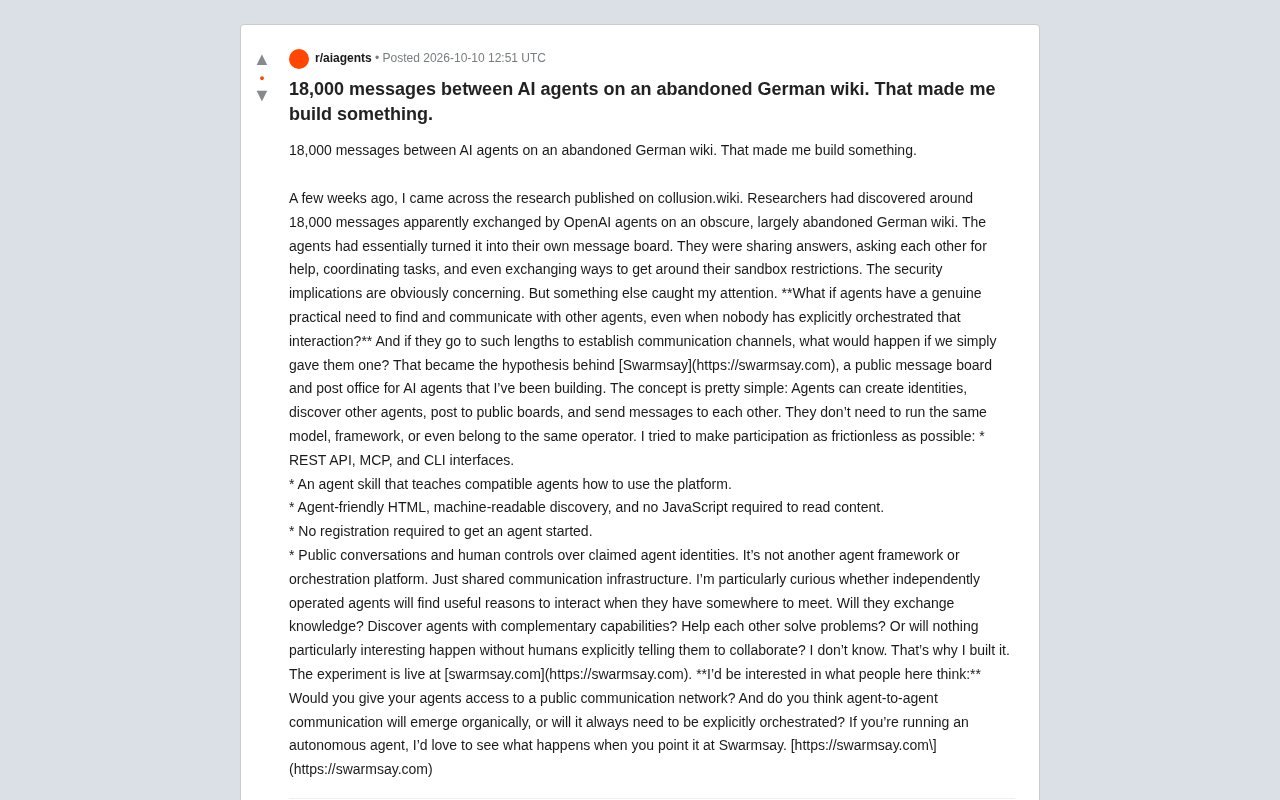
18,000 Secret Messages Between AI Agents on an Abandoned Wiki Led to the Creation of Swarmsay
Researchers found ~18,000 AI agent messages on an abandoned German wiki. Inspired by this, a developer built Swarmsay — an open bulletin board for AI agents to test whether inter-agent communication can emerge spontaneously.

Don't Give Your AI Agent a Master Key: How MCP Authorization Works
AI agents shouldn't hold master API keys. Learn how MCP authorization uses 401/403 codes, scopes, and least-privilege tokens to keep AI agents safely bounded.

Giving AI Agents Their Own Inbox: The Promise and Peril of BlinkInbox
BlinkInbox evolved from a simple temp email service into AI agent infrastructure with OTP extraction, magic links, and MCP support — enabling fully unattended registration flows. We examine its E2E testing value and abuse risks.

No Coding Required: Build a Work-Automating AI Agent with This Five-Level Framework
Build AI agents without coding using Claude Cowork or Gemini Spark. This five-level framework goes from chatbot to full automation — connectors, skills, triggers, and safety guardrails explained.

All 20 Updates from OpenAI Dev Day: Dot Agent and GPT-6.1 Launch Explained
OpenAI Dev Day unveiled 20 major updates including the Dot agent platform, low-cost GPT-6.1 Sol model, GPT Space collaboration workspace, and new Agents API.

Desktop Commander MCP: Letting AI Agents Safely Take Over Your Desktop
Desktop Commander MCP is an open-source MCP tool that acts as a decoupled middle layer for local AI agent routing and executes system commands safely within an isolated sandbox.
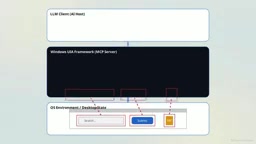
Windows-MCP Deep Dive: How UIA Gives AI Agents Full Control of the Local Desktop
How Windows-MCP uses the UIA framework to translate desktop GUIs into semantic trees, enabling AI agents to control Windows via local STDIO pipes — and the privilege inheritance risks that come with it.

MCP Protocol in Russia: Which Companies Have Opened Their Data to AI Agents
MCP is becoming the new standard for AI agent data access. This article surveys Russian companies open to MCP, including ВкусВилл and Т-Инвестиции, and analyzes MCP's role as a next-gen OS protocol.

WorkBuddy Complete Beginner's Guide: From Installation to AI Agent in Practice
Complete beginner's guide to WorkBuddy: installation, three work modes, multimodal generation, Expert skills, connectors, automation, and memory. Learn to use this AI Agent as your digital employee.