#Agentic Process Automation
265 related articles

·7 min
Complete Guide to Installing and Deploying Claude Code: Configure Your AI Coding Tool from Scratch
A detailed walkthrough of the full Claude Code installation process: environment setup, npm installation, proxy configuration for networks in China, API integration, and CC Switch provider management—helping beginners quickly get started with this AI coding tool.
Read more →

·4 min
Docx-CLI: An Open-Source Tool That Boosts AI Agent Word Document Efficiency by 50%
Docx-CLI is an open-source CLI tool for AI agents that strips redundant XML and enables precise editing, helping LLM agents save half the tokens and time on Word docs.
Read more →
·6 min
GPT-5.6 Sol Limited Preview: The Safety Boundaries Behind AI's Capability Expansion
OpenAI's flagship GPT-5.6 advances on three fronts—Sol, Kara, Luna tiered rollout; ByteDance CGN 5.0 Pro and Meta Muse push image generation toward controllable workflows; AI coding agents expose new supply chain risks.
Read more →

·5 min
GLM-5.2 Hands-On Review: A 753B-Parameter Open Model That Beats GPT and Claude on Value
In-depth hands-on review of Zhipu AI's flagship GLM-5.2: a 1M-token context window and API pricing just one-fifth of GPT/Claude. Covers website building, Chrome extensions, 3D game cloning, and agentic workflows.
Read more →

·3 min
Claude Code Auto-Submitting PRs: Three Guardrails Every Team Must Lock Down First
Claude Code can auto-modify code and submit PRs, but this brings risks around permissions, review gaps, and unclear accountability. Learn the three governance guardrails every team must establish.
Read more →

·7 min
Base44 in Practice: How Claude Code Powered Rapid Scaling from 1 to 80 People
How Base44's product team scaled from a single founding engineer to an 80-person team with Claude Code. Covers AI-assisted onboarding, code review, user evaluation, and QA automation.
Read more →

·3 min
GPT-5.6 Released: Sol, Terra, and Luna Reshape AI Programming and Office Automation
OpenAI launches GPT-5.6 with three models — Sol, Terra, and Luna — plus ChatGPT Work, a new desktop app, and Hosted Sites. Codex now autonomously trains models.
Read more →
·5 min
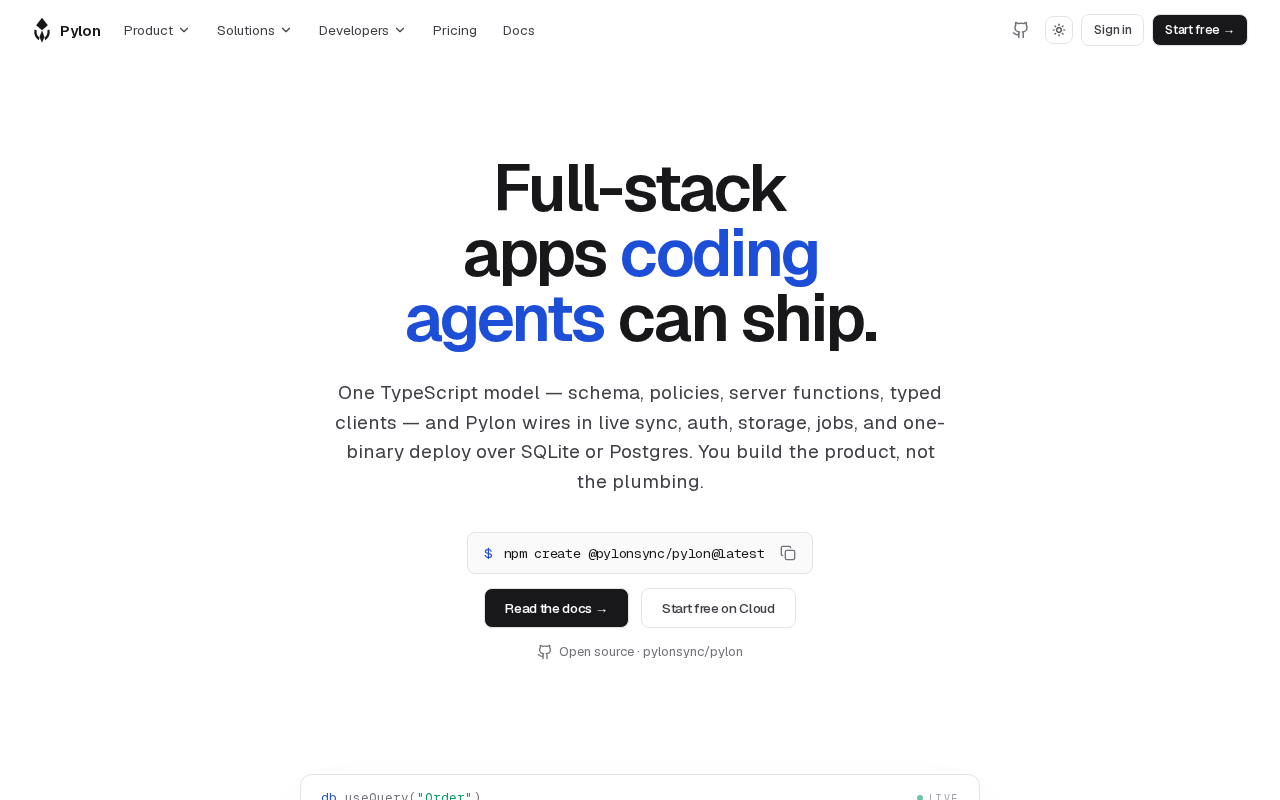
Pylon Sync: An In-Depth Look at the Full-Stack Realtime Framework Built for AI Agents
Pylon Sync is an "Agent-First" full-stack realtime framework that treats AI Agents as first-class design citizens, reducing coding errors via strong conventions.
Read more →

·6 min
Zuckerberg Says AI Will Run Your Entire Business — But Data Ownership Risks Can't Be Ignored
Meta launched an enterprise AI agent, with Zuckerberg claiming it can "run your entire business." This article explores the commercial value of AI agents, the hidden risks of data ownership, and how different businesses can balance efficiency with data sovereignty.
Read more →

·2 min
Meta Launches Muse Spark 1.1: Targeting Enterprise AI Coding and Agentic Automation
Meta launches Muse Spark 1.1, an AI coding assistant targeting enterprise agentic workloads, automated bug fixing, and large-scale code migration to compete with GitHub Copilot, Cursor, and Claude Code.
Read more →

·3 min
Huawei Pangu 2.0-Flash Benchmark Review: #1 in Instruction Following, Last in Engineering Code
Huawei OpenPangu 2.0 Flash review: 92B MoE open-source model tops instruction following at 95.9, excels in math & Agent tasks, but scores last on SWE-Bench engineering code at 63.1.
Read more →

·4 min
Proactive AI Agent Monitoring: Stop Fighting Fires, Catch Bugs Before Your Customers Do
A real case study: team builds AI Agent "Oogway" to auto-patrol after every job, investigate anomalies, create tickets, and update a knowledge Wiki — catching bugs before customers do.
Read more →

·3 min
GitHub Daily · July 10: The Agent Skills Ecosystem Explodes — AI Coding Enters the 'Skills Library' Era
July 10 GitHub Daily: The Agent Skills ecosystem explodes as over half of trending projects revolve around AI coding Agent skill libraries, with MCP as the standard interface.
Read more →

·7 min
GPT-5.6 In-Depth Hands-On Review: How Do Soul, Tara, and Luna Really Perform?
OpenAI releases GPT-5.6 preview with three models: flagship Soul, balanced Tara, and lightweight Luna. Based on real KingBench 3 testing, this article breaks down each model's performance on math, front-end, and agentic tasks, and compares them with Anthropic Fable.
Read more →

·4 min
GPT-5.6 Three-Model Benchmark: How Close Are Sol/Terra/Luna to Claude?
Hands-on benchmark of GPT-5.6's three models — Sol, Terra, and Luna — covering frontend, math, and long-horizon agentic tasks. Full scores, category breakdowns, and selection guidance vs. Fable 5 and Opus 4.8.
Read more →

·6 min
The Complete Guide to GLM-5.2: Hands-On Review of an Open-Source Long-Context Model
An in-depth hands-on review of Zhipu AI's flagship GLM-5.2: 1M-token context, strong coding, mature agent workflows—at one-fifth the price of top frontier models. Covers website testing, Cursor integration, MCP tooling, and production migration.
Read more →

·7 min
Electron + LangGraph in Practice: Building an AI Agent Visual Orchestration App from Scratch
A hands-on guide to building an enterprise-grade AI Agent workflow orchestration app with Electron Forge and LangGraph, covering local LLM deployment (Qwen3-0.6B), node-based visual canvas design, and full Function Calling integration.
Read more →

·7 min
The Birth of Claude Code: Design Philosophy from Internal Tool to AI Programming Assistant
An in-depth look at Claude Code's development and design philosophy: why the CLI form, how the "minimal scaffolding" architecture works, and how it balances safety with autonomy in AI programming.
Read more →

·7 min
GPT-5.6 Hands-On: A Complete Breakdown of the Three New Models — Soul, Terra, and Luna
OpenAI unveils the GPT-5.6 family — Soul, Terra, and Luna. Flagship Soul offers a 500K-token context and built a Pokémon RPG in 31 minutes. Plus Fable 5, GLM 5.5, and Grok 4.5 updates.
Read more →

·4 min
Alibaba Plans to Ban Claude Code: The Battle Between Backdoor Risks and Enterprise AI Security
Alibaba reportedly plans to ban Claude Code internally over backdoor and data leakage concerns. A deep dive into enterprise AI security, supply chain trust issues, and what it takes for AI tools to win enterprise adoption.
Read more →