#Codex Skill configuration
361 related articles

·4 min
Java Developer to AI Architect: A Three-Layer Capability Upgrade Roadmap
How can Java engineers transition to AI Architect? This article breaks down three core capability layers — AI app development, production RAG, and AI Agent orchestration — using Spring AI Alibaba and LangChain4j to turn your Java foundation into a competitive edge.
Read more →

·3 min
Codex Beginner's Guide: A Step-by-Step AI Work Assistant Tutorial for Non-Coders
Complete beginner's guide to OpenAI Codex desktop client: installation, setup, project management, and plugins — no coding required. Let AI actually do work for you.
Read more →

·7 min
Harness Engineering: Why a Powerful Model Isn't Enough — Here's What Really Matters
A data-deletion disaster reveals the biggest AI Agent risk: the problem isn't the model, it's Harness design. Learn context management, process standards, and permission isolation.
Read more →

·7 min
From Chat to Agent Platform: A Practical Guide to Engineering AI Applications
A deep dive into engineering AI applications: from a simple chat page to a multi-layer Agent platform, covering RAG knowledge bases, Workflow scheduling, multi-model management, and run tracing.
Read more →

·6 min
The Complete Codex Guide: From Beginner to Pro with the All-in-One AI Assistant
OpenAI Codex is more than a coding tool—it's an AI agent that writes code, makes slides, and operates browsers. This guide covers its four versions, permission modes, plugins, automation, and six best practices.
Read more →

·3 min
Coze Deep Dive: A Complete Guide to the Agent Building Platform vs. Dify
A deep dive into ByteDance's Coze platform: tool categories, positioning vs. Dify, skill store, multi-agent collaboration, and workflow building — your AI Agent selection guide.
Read more →

·5 min
The Complete Claude Code Guide: Installation, Core Features, and Advanced Workflows
An in-depth guide to Anthropic's Claude Code agentic coding tool, covering installation, pricing plans, model selection, token management, CLAUDE.md global memory, MCP integration, Subagents, and more.
Read more →

·4 min
Cross-Platform AI Agent Setup Guide: Breaking Free from Vendor Lock-In for Good
Model performance gaps are closing. Real competitive advantage lies in portable AI agent architecture. Learn how to build a workspace that works across Claude Code, Codex, and beyond — no vendor lock-in.
Read more →

·3 min
Jetson Edge AI Development: Setting Up a VS Code + Claude Code Workstation
Set up an AI coding workstation on NVIDIA Jetson using VS Code + Claude Code. Covers JetPack NVIDIA Skills, token budget management, headless SSH dev, and coding agent best practices.
Read more →

·4 min
7 Core Components for Designing Long-Running AI Agents
A deep dive into the 7 core components for building long-running AI Agents: Goal, Evaluator, Verifier, Loop, Orchestration, Observability, and Memory.
Read more →
·3 min
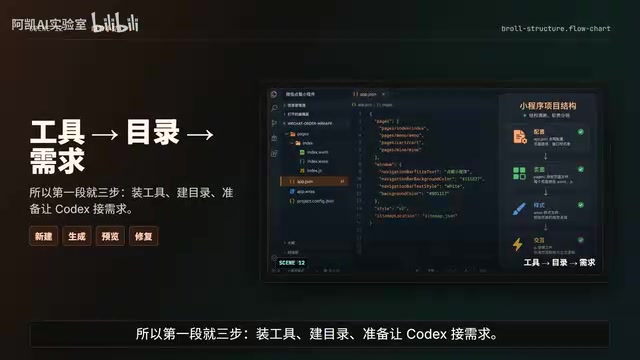
Build a WeChat Food Ordering Mini Program with Codex in 5 Steps — No Coding Required
No coding skills needed! Learn how to build a WeChat food ordering mini program from scratch using OpenAI Codex — covering requirements, file structure, cart logic, order dialogs, and error handling.
Read more →

·3 min
Multica: An Open-Source Tool for Managing Multiple AI Coding Agents from a Single Dashboard
Multica is an open-source AI Agent management tool that unifies Claude Code, Codex, Cursor and more into one visual dashboard with kanban, task queues, and cloud deployment support.
Read more →

·2 min
OpenAI Codex Micro Review: A Deep Dive into the AI Coding Dedicated Hardware Controller
OpenAI and Work Louder launch the Codex Micro custom control panel with voice input, analog joystick, and programmable keys designed for AI-assisted coding workflows.
Read more →

·4 min
Pi Agent Deep Dive: Four Core Advantages of a Minimalist Open-Source Framework
Pi is a minimalist open-source Agent framework with just 4 default tools and under 1,000 tokens in its system prompt, with 70K GitHub stars. Deep dive into its 4 core advantages vs. Claude Code and Codex.
Read more →

·3 min
Build a Flask Visual Database Query System in 20 Minutes with Trae
Learn how to use Trae, ByteDance's free AI coding tool, to build a Flask-based visual database query system (EasyQuery) in just 20 minutes. Full walkthrough included.
Read more →

·3 min
OpenClaw Multi-Agent AI Programming Workflow in Practice: From Coder to Manager
Deep dive into OpenClaw multi-agent AI programming workflows: context layering, CMUX parallel terminal management, work trees, and manager-perspective debiasing for scalable AI dev automation.
Read more →

·2 min
23K Stars on GitHub: The Hackathon Champion's Ultimate Claude Code Configuration Guide
A Claude Code open-source config with 278 skills and 67 sub-agents helps developers ship a full MVP in 8 hours. Covers security scanning, silent failure detection, and experience migration. Free under MIT license, compatible with Cursor and Codex.
Read more →

·2 min
Getting Started with Codex: A Practical Guide to OpenAI's AI Coding Assistant
A practical guide to OpenAI Codex: core features, Codex vs. Claude Code comparison, and why the Codex+DeepSeek combo doesn't work. Avoid common pitfalls and boost your coding productivity.
Read more →

·3 min
AI Coding Agents in Practice: An Efficient Configuration Guide for Cursor and Codex
How to configure Cursor, Codex, Devin, and other AI coding agents for context management, code quality, and cross-tool collaboration. Practical tips on rule files, TDD, and structured context storage.
Read more →

·3 min
ChatGPT Integrates Codex: A Full Hands-On Breakdown of Work and Codex on Desktop
ChatGPT desktop gets a major upgrade, integrating Codex into new Work and Codex modules. Hands-on tests cover auto PPT generation and full AI video production pipelines.
Read more →