#GLM benchmark
212 related articles

·3 min
Getting Started with Codex: The Right Way to Use AI Coding Agents
A detailed comparison of OpenAI Codex and Claude Code with hands-on testing. From AI agent concepts to account setup, helping developers quickly master AI coding agents.
Read more →
·2 min
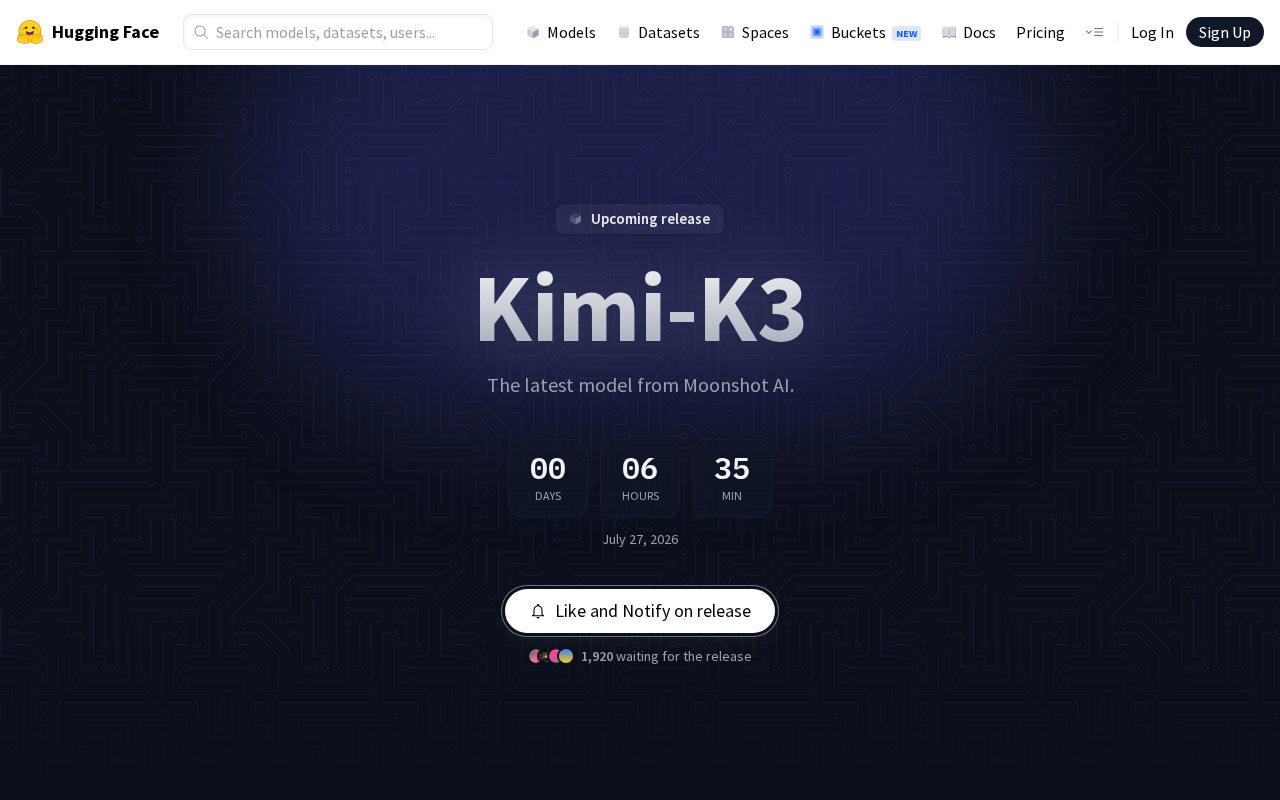
Kimi-K3 Lands on HuggingFace: A Full Breakdown of Moonshot AI's Open-Source Strategy
Moonshot AI's Kimi-K3 model is set to launch on HuggingFace. A deep dive into its architecture, licensing, community reactions, and strategic implications for the global open-source AI landscape.
Read more →

·3 min
Kimi K3 Released: How a 2.8 Trillion Parameter Open Model Reshapes AI Cost-Effectiveness
Moonshot AI unveils Kimi K3: a 2.8 trillion parameter, 1M context, natively multimodal open model. With KDA architecture and ultra-low cost, it rivals GPT-5.6 and Fable 5, redefining AI cost-effectiveness.
Read more →

·3 min
GLM 5.2 Hands-On: An Open-Source, Low-Cost Model That Rivals Opus
In-depth hands-on review of GLM 5.2: a 753B-parameter open-source model with a 1M-token context, rivaling Opus 4.8 at about one-tenth the price. Full setup guide for Claude Code and Cursor.
Read more →

·4 min
Claude Code from Scratch: A Complete Guide from Installation to Enterprise-Grade Development
A complete guide to Claude Code from beginner to enterprise practice: covering CLI installation, connecting domestic LLMs via CC Switch, basic commands, Git workflow integration, automated bug fixing, and engineering capabilities like MCP and SubAgents.
Read more →

·1 min
In-Depth Claude Code Review: Why It Outperforms Cursor, Trae, and Other Mainstream AI Coding Tools
Claude Code is Anthropic's command-line AI coding assistant that reads entire projects, auto-corrects errors, and delivers runnable code. Compare it with Cursor, Trae, and Copilot.
Read more →

·2 min
Three Chinese LLMs Launch in Parallel: Qwen, DeepSeek V4, and GLM Next-Gen Models Arriving Soon
Alibaba's next-gen Qwen, DeepSeek V4 GA, and Zhipu's new GLM are all nearing release. Explore the latest progress, hands-on results, and distillation controversy of China's top LLMs.
Read more →

·3 min
The T-Parameter Era of Open-Source LLMs: Four Chinese AI Companies Break the Trillion-Parameter Barrier
Moonshot AI, Alibaba, DeepSeek, and Meituan all crossed the trillion-parameter threshold. China's open-source LLMs made the B-to-T leap in just 18 months.
Read more →

·6 min
The AI Industrial Age Arrives: Compute Wars, Chip Reconstruction, and the GPT-5.6 Cheating Scandal Explained
Five key AI industry trends: Doubao surpasses 180 trillion daily calls, OpenAI's in-house AI chip, NVIDIA's $3-4 trillion compute forecast, China catching up, and the GPT-5.6 cheating scandal.
Read more →

·5 min
From Vibe Coding to AI Engineering: A Complete Guide to Enterprise-Grade Development
In the AI programming era, Vibe Coding alone can only build toys. This article deeply analyzes the complete engineering path from Vibe Coding to SDD spec-driven development, covering Claude Code and Codex tool selection, the SuperPower plugin, and domestic LLM comparisons.
Read more →

·4 min
Beyond Vibe Coding: A Complete Guide to Enterprise-Grade AI Engineering
Hit the Vibe Coding ceiling? This guide covers the three-stage AI coding progression path, Claude Code vs. Codex, SuperPower SDD, and how to go from vibe coding to enterprise-grade AI engineering.
Read more →

·3 min
Qwen3.8 Deep Dive: How Does a 2.4 Trillion Parameter MoE Model Claim Second Place?
Alibaba's Qwen3.8 challenges larger models with a 2.4T-parameter MoE architecture, claiming second only to Gemini. A deep dive into MoE mechanics, continuous updates, two-speed release strategy, and real local deployment requirements.
Read more →

·6 min
Hands-On with Qwen 3.8 Max: How an Open-Source Model Closes In on Top-Tier Closed Models
Qwen 3.8 Max has 2.4 trillion parameters and will be open-sourced. In KingBench testing it scored 81.25%, ranking second, beating Claude Opus 4.8 and trailing only Fable 5. A deep dive into its performance across 8 tests.
Read more →

·7 min
Qwen3 235B A22B in Practice: A 2.4-Trillion-Parameter Open Model Surpasses Claude Opus
Hands-on with Alibaba Tongyi Qianwen's strongest Qwen3: a 2.4-trillion-parameter open weight model scoring 81.25% on KingBench, ranking second and beating Claude Opus 4.8 with perfect scores in game dev, math, and agent tasks.
Read more →
·3 min
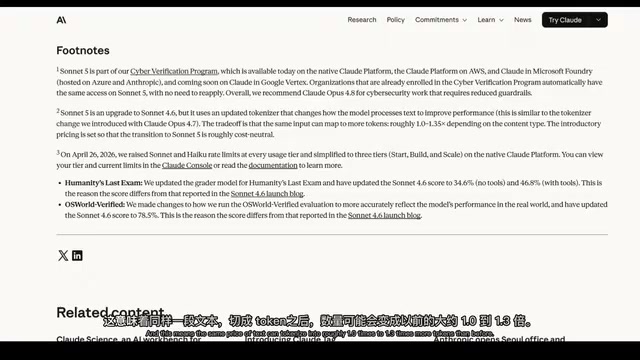
Claude Sonnet 5 Deep Dive: Impressive Benchmarks, Questionable Value — Just Use Opus 4.8?
Claude Sonnet 5 review: 63.2% SWE-bench, near Opus 4.8 performance, but new tokenizer hides real costs. Ranks 13th on CursorBench. Most tasks: stick with Opus 4.8.
Read more →

·6 min
Claude Sonnet 5 In-Depth Testing: 8 Real-World Tasks Reveal Its True Capability Boundaries
Bilibili creator KaterSony tests Claude Sonnet 5 across 8 real-world tasks—image recognition, 3D modeling, web generation—comparing it against GPT-5.5, Gemini 3.1 Pro, and revealing its true capability limits and cost traps.
Read more →

·3 min
Qwen Next-Gen, DeepSeek V4, New GLM Spotted Simultaneously: China's LLM Race Accelerates
Qwen next-gen (KLab), DeepSeek V4 GA, and Zhipu GLM's new version are all in testing simultaneously. A deep dive into the latest developments and tech trends.
Read more →

·2 min
Claude Sonnet 5 Leaked: Near-Opus Performance at a Fraction of the Price
Claude Sonnet 5 leak: rumored input price of just $2/million tokens with near-Opus 4.8 performance. We break down the evidence, pricing, and what it means for developers.
Read more →
·3 min
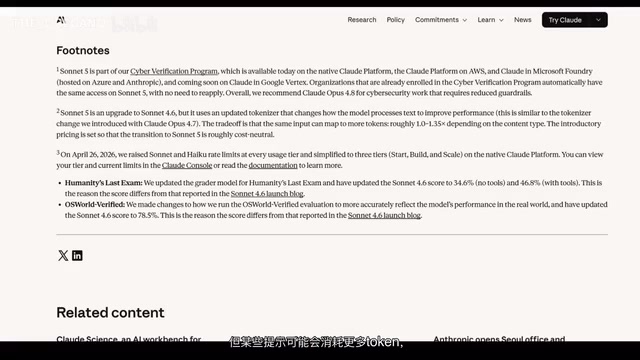
Claude Sonnet 5 Deep Dive: Impressive Benchmarks, Disappointing Reality — Stick with OPUS 4.8
Anthropic's Claude Sonnet 5 claims near-OPUS 4.8 performance at lower cost. Real-world tests reveal hidden tokenizer costs, weak creative output, and only 13th place on Cursor rankings.
Read more →

·3 min
Kimi K3 Hands-On: How a 2.8-Trillion-Parameter Open-Source Model Beat Fable5
A US engineer's live test of Kimi K3: 2.8T parameters, 1M token context, 87% audience vote over Fable5 in game generation. Full report covering benchmarks, speed, and code debugging.
Read more →