#Gemini Windows Mac client
59 related articles

·5 min
From Chat to Agent: Automating Your Entire Business Workflow with AI Agents
Veteran AI practitioner Remy breaks down the leap from chat models to AI agents: how agents work, the three pillars of context, tools, and skills, MCP connections, and hands-on architecture to make you a 100x employee.
Read more →

·6 min
GPT-5.6 Hands-On Deep Dive: Three-Tier Models + Ultra Multi-Agent, Codex Fully Evolved
OpenAI launches GPT-5.6 with three tiered models—Sol, Terra, and Luna—Ultra multi-agent parallel collaboration, Codex integrated into ChatGPT desktop, and an upgraded Computer Use.
Read more →

·3 min
Free Claude Opus 4.6 Access: Complete Guide to Connecting Antigravity via CLIProxyAPI
Use CLIProxyAPI to connect Antigravity's free models to Claude Code, Cline, and more. Access Claude Opus 4.6 Thinking and Gemini 3 Pro at zero cost. Full setup guide included.
Read more →

·4 min
WebMCP in Practice: A Complete Guide to Making Your Website AI Agent-Ready
A deep dive into the WebMCP proposal: how AI agents read websites, how to expose structured tools via imperative and declarative APIs, and how to audit agentic readiness with Lighthouse.
Read more →

·2 min
The Truth Behind Anthropic's Account Bans: Client Detection Logic and a Wave of AI Model Launches
Unpacking the technical truth behind Anthropic's account bans: hidden timezone and proxy detection logic sparks privacy debate. Plus Claude Sonnet 5, Linux support, and new releases from OpenAI, NVIDIA, and Google DeepMind.
Read more →

·3 min
Zero-Cost VibeCoding: Complete Guide to Connecting Local Ollama Models to Codex
Step-by-step guide to running local open-source models (Qwen3/Gemma) with Ollama, connecting to Codex via CC Switch for zero-token AI coding. Works on a 6GB VRAM laptop.
Read more →

·3 min
Gemini New API Keys Not Working? AQ__ Format Compatibility Troubleshooting Guide
Gemini new API keys (AQ__ prefix) returning 401/400 errors in Python? Learn the key format differences, SDK compatibility issues, and fixes including upgrading google-genai.
Read more →

·6 min
OpenAI Merges ChatGPT and Codex: The Super App for the AI Agent Era Is Here
OpenAI merges ChatGPT and Codex into a super app and releases three new GPT-5.6 models: Sol, Terra, and Luna. A deep dive into four hands-on workflows—Computer Use, Loops, and multi-threading—for the AI agent era.
Read more →

·6 min
Spec-Driven Development in Practice: The New AI Coding Paradigm from Andrew Ng × JetBrains
Andrew Ng partners with JetBrains to launch a Spec-Driven Development course, teaching how to direct AI coding agents via spec files to boost intent fidelity and build maintainable production apps.
Read more →

·7 min
GPT-5.6 and Grok 4.5 Launch Simultaneously, Meta Unveils Agent-Based Image Model
OpenAI GPT-5.6 expands its preview, xAI Grok 4.5 opens access at the same time, Meta releases the Agent-based Muse Image model and Muse Video model, while Apple and DeepSeek launch in-house AI inference chip programs. A quick look at the week's five biggest AI stories.
Read more →

·5 min
ECC: An Agent Enhancement Framework for AI Coding Assistants — Five Core Capabilities Explained
ECC is an agent optimization framework for AI coding assistants like Claude Code, Cursor, and Codex, enhancing them with skills, memory, security, and research-first development capabilities.
Read more →

·6 min
The Complete Beginner's Guide to Claude Code: From Installation to Advanced Usage
Claude Code is one of the most powerful AI coding agents, running in the terminal to write code, batch operations, build web projects, and more. This guide covers installation, connecting local models via CC Switch, permission modes, CLAUDE.md, Skills, MCP, Subagents, and more.
Read more →

·7 min
Demystifying Claude Code's Harness in 60 Lines of Python: The Core of AI Coding Tool Performance Differences
The same model scores 77% in Claude Code but jumps to 93% in Cursor—the only variable is the Harness. This article dissects how AI coding tools work in 60 lines of Python.
Read more →

·7 min
Sakana Fugu vs GLM 5.2 Hands-On Test: Who Can Truly Challenge Top-Tier AI Models?
A head-to-head hands-on test of Sakana Fugu vs GLM 5.2 based on real Hermes agent workflows. Covering tool calling, frontend generation, and code improvement to reveal each model's true performance, speed, and value.
Read more →

·7 min
Spec-Driven Development: Andrew Ng Teaches You to Master AI Coding Agents Efficiently
Andrew Ng partners with JetBrains on a new course systematically teaching Spec-Driven Development. By writing high-quality specs, developers can precisely control AI coding agents, eliminate context decay, and boost intent fidelity.
Read more →

·5 min
Claude Cowork Arrives on Mobile and Web, with Max Users Getting Early Access
Anthropic's AI collaboration platform Claude Cowork officially expands to mobile and web, breaking free from desktop-only limits. Max subscribers get early access, with other plans rolling out over the coming weeks.
Read more →
·5 min
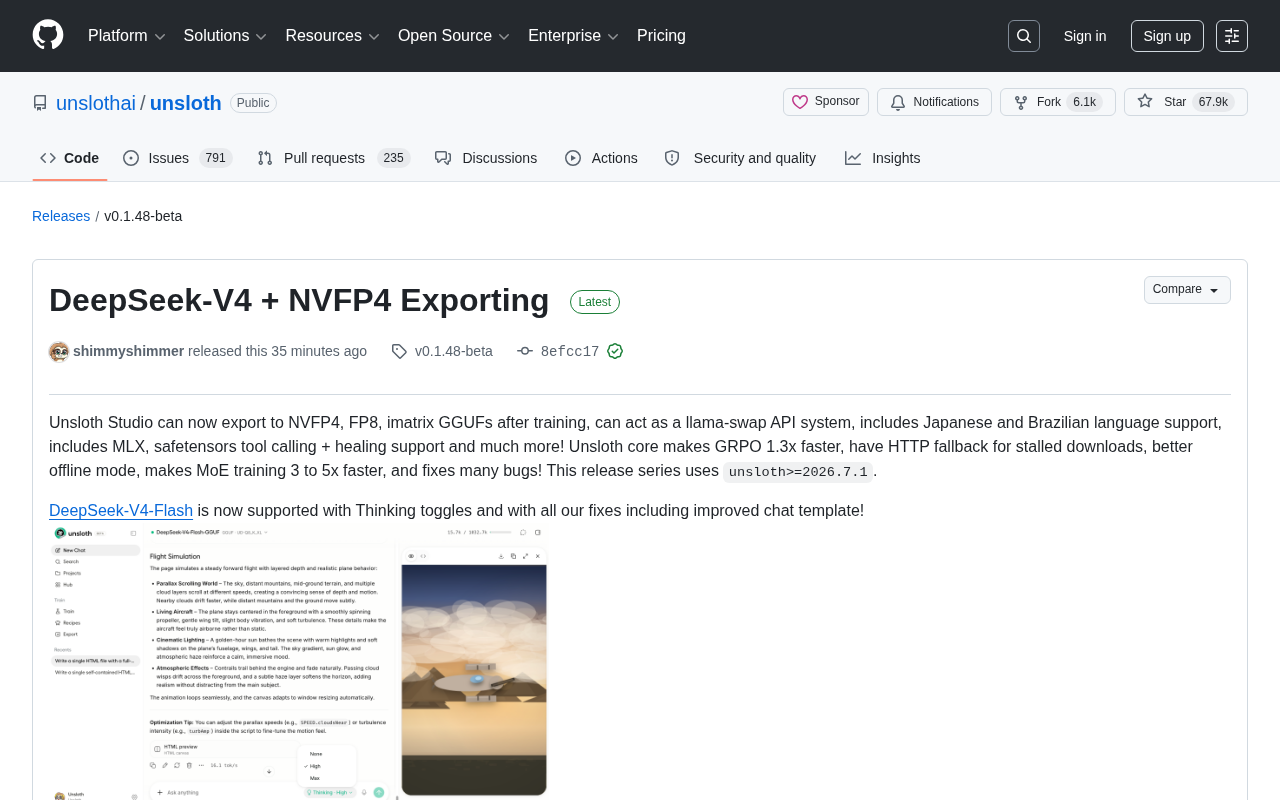
Major Unsloth Update: NVFP4 Quantization Export and DeepSeek-V4 Training Support
Unsloth v0.1.48-beta released, adding NVFP4/FP8 quantization export, OpenAI-compatible API hot-swapping, 3-5x faster MoE training, and 1.3x faster GRPO, covering the full LLM fine-tuning, quantization, and local deployment pipeline.
Read more →

·7 min
Learning Python from Scratch: A Complete Guide to the Three-Stage Learning Path
Want to learn Python from scratch but don't know where to begin? This article breaks down three stages—basic syntax, advanced mastery, and hands-on practice—with real projects in crawling, automation, and data analysis to help you build programming thinking.
Read more →

·5 min
Five Major Gemini Spark Upgrades: Building an Around-the-Clock Proactive Personal AI Agent
Google launches five major Gemini Spark upgrades including macOS native integration and Smart Triggers, transforming AI assistants from passive chat tools into proactive Personal AI Agents for around-the-clock autonomous task handling.
Read more →

·6 min
Reverse-Engineering ChatGPT's Source Selection: What Network Traffic Analysis Reveals About AI Citations
By capturing and analyzing ChatGPT's real network traffic during web retrieval, this article reveals the underlying logic of AI source selection—covering the layered mechanisms of retrieval recall and content filtering, domain preference patterns, and practical insights for content creators and SEO professionals.
Read more →