#LLM request capture
467 related articles

·3 min
Vessel: A Local LLM Observability Proxy for Request Capture and Cross-Model Replay Comparison
Vessel is a free, open-source local LLM observability proxy supporting Ollama, LM Studio, and more. Capture requests, track tokens, replay across models, with built-in MCP server and Web UI.
Read more →

·4 min
AI Agent Development in Practice: A Complete Breakdown from Framework Selection to Production Deployment
A systematic breakdown of the complete AI Agent development workflow covering framework selection, tool invocation, data processing, and deployment to help developers build production-ready agents.
Read more →

·2 min
Flunkey: An In-Depth Look at the Voice-First AI Tool for Windows and Its Use Cases
In-depth analysis of Flunkey, a voice-first AI productivity tool for Windows — covering core features, Wispr Flow comparison, target users, and the future of voice-driven AI interaction.
Read more →

·2 min
PixelRead: An In-Depth Look at a Local OCR + AI Reading Tool for Mac
PixelRead is a macOS local OCR app with screen text recognition, local translation, and Apple Intelligence AI processing—fully offline for privacy. A deep dive into its features and real-world use.
Read more →

·3 min
Vercel Open-Sources fx: A 6MB Zig-Powered Coding Agent Where Minimalist Design Makes Models Stronger
Vercel open-sources fx, a 6MB Zig-powered coding agent with near-instant startup. Supports local/cloud models, MCP protocol, and embeddable design.
Read more →

·3 min
Vibe Coding in Practice: Build Software Without Writing a Single Line of Code
No coding experience? No problem. This guide walks you through the full Vibe Coding pipeline: from making requests to AI, breaking down tasks, debugging, to version management — build your own software tool using just plain language.
Read more →

·4 min
OnePage: An Open-Source Minimalist E-Reader and AI Terminal
OnePage is an open-source minimalist e-reader just 5mm thick, powered by ESP32-C6 with a 4.26" e-ink display and CNC aluminum frame. It doubles as a voice AI Agent terminal supporting DeepSeek and more.
Read more →

·5 min
This Week in AI: Anthropic's Revenue Skyrockets as Tech Giants Intensify Their Battle
Weekly AI roundup: Anthropic ARR hits $6.5B, Grok Build opens AI coding, Stripe acquires OpenRouter, Cursor challenges GitHub, NVIDIA and OpenAI build a 4.25GW AI factory.
Read more →

·3 min
GLM-5.3 Flash's Overly Verbose Thinking Process? Token Costs of Reasoning Models Spark Heated Debate
GLM-5.3 Flash sparks Reddit debate: why are reasoning models so verbose? This article analyzes CoT token costs, latency issues, and industry solutions like thinking budgets.
Read more →

·3 min
Agent Observability: Why Traditional Monitoring Falls Short and Practical Solutions
Explore why traditional monitoring (latency, drift, accuracy) fails for AI agents, and learn practical solutions using LangFuse, LangSmith, and OpenTelemetry.
Read more →

·3 min
A Guide to Cleaning Zombie Vectors in RAG Systems: Identifying and Eliminating Stale and Orphaned Vectors
Explore three types of zombie vectors in RAG systems—stale, orphaned, and deleted-but-retrievable—and learn systematic detection and cleanup strategies for vector database hygiene.
Read more →

·3 min
Hermes Agent Meets Grafana: A Practical Guide to AI Agent Observability
Explore why AI Agents need observability and how Hermes Agent integrates with Grafana for metrics, tracing, and log analysis to build stable, production-ready agent systems.
Read more →

·3 min
Cloak Fingerprint Browser + MCP: Letting AI Automate the Entire Reverse Engineering and Packet Capture Workflow
How Cloak's source-code-level fingerprint browser and 69 MCP tools let AI automate the full reverse engineering workflow—from bypassing CAPTCHAs to packet capture.
Read more →

·3 min
Human Behavior: How AI Agents Close the Loop on Product Analytics Issues
Human Behavior is an AI-powered product analytics tool that uses a four-step pipeline — collect, understand, act, loop — to let AI agents automatically identify UX issues and submit fixes.
Read more →

·3 min
Token Efficiency Over Token Maxing: AI Cost Optimization Becomes the New Battleground
From Uber questioning AI ROI to a $1.3M token bill sparking reflection, the AI industry is shifting from Token Maxing to Token Efficiency. A deep dive into this trend's impact on engineering, product, and culture.
Read more →
·3 min
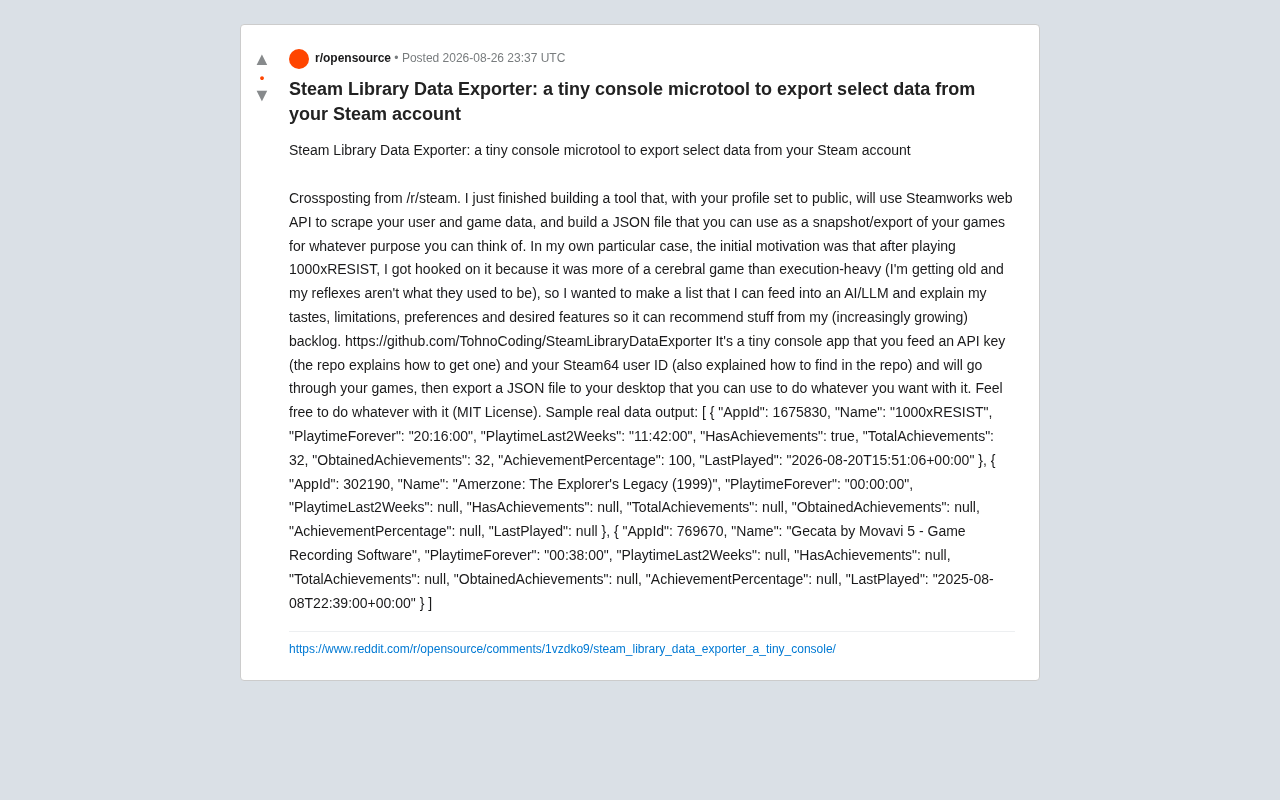
Steam Library Data Export Tool: Let AI Help You Pick Games from Your Backlog
Steam Library Data Exporter is an open-source tool that exports your Steam library to JSON, enabling personalized game recommendations via AI and LLMs.
Read more →
·3 min
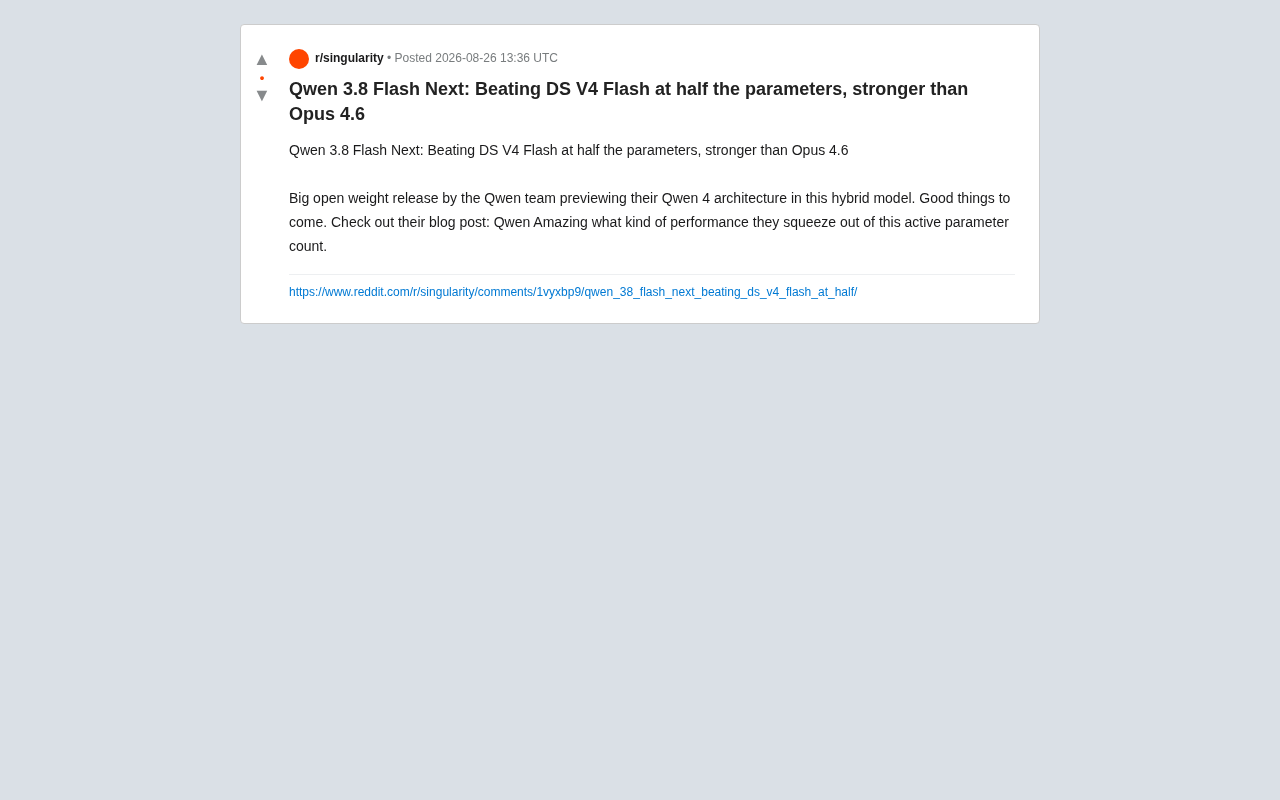
Qwen 3.8 Flash Next Deep Dive: A Hybrid Architecture That Surpasses DeepSeek V4 with Half the Active Parameters
Deep analysis of Qwen 3.8 Flash Next: how its hybrid architecture surpasses DeepSeek V4 Flash with half the active parameters, its deployment value, and what it signals for Qwen 4.
Read more →

·3 min
Cursor Launches Origin Code Hosting Platform: AI Editor Evolves Into a Full-Cycle Development Platform
Cursor launches its self-developed code hosting platform Origin, evolving from an AI editor to a full-cycle development platform. Analysis of its competition with GitHub, data security, and developer ecosystem impact.
Read more →

·4 min
Real-World Challenges and Strategies for Production-Grade RAG Systems
Deep dive into core challenges of production-grade RAG systems, covering retrieval quality, hybrid search, offline evaluation, production monitoring metrics, latency-cost trade-offs, and security controls.
Read more →

·3 min
MCP-Builder.ai: A Managed Platform for Building AI Data Connectors in Minutes Using Natural Language
MCP-Builder.ai lets developers build, host, and secure MCP Servers using natural language, connecting databases, APIs, and apps to Claude, ChatGPT, and Cursor in minutes.
Read more →