#LangChain beginner guide
133 related articles

·3 min
SJTU Professors Open-Source Agent Tutorial: A Four-Stage Path from Zero to AI Engineer
SJTU professors open-source a 4-stage Agent tutorial on GitHub, covering LLM basics, ReAct, multi-agent systems, and real-world projects — a practical path to AI engineering.
Read more →

·3 min
Enterprise AI Agent Learning Roadmap: A Complete Guide from Beginner to Production
A structured AI Agent learning roadmap covering 4 stages: foundations, core frameworks, scenario practice, and advanced product thinking. Master LangChain, tool calling, memory, and more.
Read more →

·2 min
AI Agent Beginner's Guide: A Structured Learning Path and Hands-On Project Roadmap
New to AI Agents? This guide breaks down the full learning path — covering Agent principles, Prompt Engineering, RAG, multi-Agent systems, and hands-on projects to get you building fast.
Read more →

·3 min
Complete AI Agent Development Learning Path: From Core Principles to Enterprise Deployment
A structured AI Agent learning path covering core principles, prompt engineering, tool use, multi-agent systems, and frameworks like LangChain, CrewAI, and Dify for enterprise deployment.
Read more →

·2 min
The Complete AI Agent Development Roadmap: A Four-Stage Guide from Zero to Production
A complete four-stage AI Agent development roadmap: from LLM fundamentals and core modules, to ReAct/CoT paradigms, multi-agent collaboration, and real-world projects.
Read more →

·3 min
The Complete Guide to Agent Skills: Principles, Structure, and Real-World Examples
A deep dive into Agent Skills: SKILL.md structure, four core elements (workflow/docs/tools/assets), real-world case studies, and how Skills differ from prompts.
Read more →

·2 min
Complete Spring AI Tutorial: ChatModel, RAG, and MCP Practical Guide
A complete Spring AI guide for Java developers covering ChatModel, EmbeddingModel, ChatMemory, Tool Calling, MCP protocol, and RAG with Milvus. Build LLM apps in Spring Boot.
Read more →

·2 min
Learning AI Large Language Models from Scratch: A Complete Roadmap That Avoids the Three Biggest Mistakes
90% of AI beginners struggle with large language models due to misdirection, poor Prompt logic, and lack of real-world deployment skills. This guide covers the complete learning path from zero to practice.
Read more →

·3 min
AI Agent Learning Roadmap: From Zero to Building Your Own Intelligent Agents
A structured AI Agent learning roadmap covering fundamentals (Agent principles, Prompt engineering), advanced topics (RAG, multi-agent collaboration), and three hands-on projects — ideal for beginners.
Read more →

·3 min
Getting Started with Agent Skills: Structure, Principles, and Practical Usage
A deep dive into Agent Skills: learn the file structure (SKILL.md, references, scripts, assets), core principles, and how they differ from prompts. Build your own AI skill bundle from scratch.
Read more →

·3 min
Local Gemma 3 12B as an AI Agent: A Practical Guide to Tool Calling and Framework Selection
Running Gemma 3 12B locally via Ollama and want to build an AI Agent? This guide covers tool calling, n8n/LangChain/CrewAI comparisons, context limits, and more.
Read more →

·2 min
AI Agent Learning Path: Mastering Intelligent Agent Development from 0 to 1
Many people learn tons of fragmented content yet remain confused. This article maps out the complete AI Agent knowledge landscape—from LLM and prompt basics, tool calling, and RAG to LangChain and multi-agent collaboration—with a clear learning order.
Read more →

·3 min
Getting Started with AI Agent Development: A Three-Step Practical Path with Python + LangChain
Learning AI Agent development is no longer daunting! This article outlines the simplest practical path: master just enough Python, grasp core LLM concepts, then build your first Agent with LangChain.
Read more →
·6 min
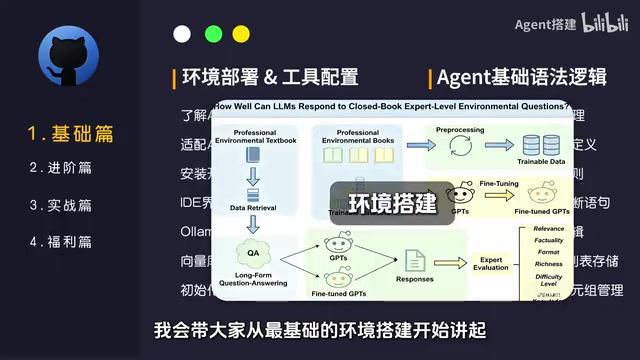
AI Agent Development Learning Path: Four Stages from Zero to Hands-On Projects
A systematic breakdown of the AI agent development learning path, covering four stages: fundamentals, RAG knowledge bases, tool use, multi-agent collaboration, and hands-on projects.
Read more →

·4 min
The Complete AI Agent Development Learning Path: From Zero to Enterprise-Grade Practice
A systematic AI Agent development learning path covering fundamentals, prompt engineering, tool calling, multi-agent collaboration, and hands-on practice with LangChain, CrewAI, and Dify.
Read more →

·7 min
Breaking Down the Core Skills of an AI Application Engineer: From Beginner to Industrial-Grade Deployment
Knowing how to call an API doesn't make you an AI engineer. This article breaks down the complete skill structure of an AI application engineer, covering Python fundamentals, LLM fine-tuning, Agent development, and enterprise projects.
Read more →
·6 min
The Eight-Step Method for Agent Development: A Practical Path from Pitfalls to Production
Many enterprises fail at AI Agents due to choosing the wrong tools and lacking methodology. This article outlines an eight-step Agent development method—from cognitive foundations, scenario selection, hand-writing ReAct, and structured output to Tool Use, RAG, evaluation sets, and production fallback.
Read more →

·5 min
Building DeepSeek Agents and Knowledge Bases from Scratch: A Practical Guide to Commercial Deployment
A systematic guide to the full DeepSeek Agent development process: covering prompt engineering, the ReAct framework, workflow orchestration, local deployment, and business requirement breakdown for commercial-ready AI Agents.
Read more →

·4 min
ChatGLM Large Model Development Tutorial: From Zero to Enterprise Deployment
Systematically learn ChatGLM large model development, covering Transformer principles, RAG, private deployment, fine-tuning, and Agent development, with a roadmap and hands-on cases.
Read more →

·8 min
GPT-5.6 Hands-On: Farm Automation, Mathematical Breakthroughs, and End-to-End AI Execution
GPT-5.6 (Sol, Terra, Luna) hands-on testing: a Hokkaido farmer controls a greenhouse with AI, a NYC small business builds custom software, and a Polish mathematician breaks a 3-year problem. A deep dive into end-to-end autonomous execution.
Read more →