#Python window capture
163 related articles

·7 min
Building a Published App with Zero Code in Four Days: A Complete HarmonyOS Development Journey
A tech blogger with zero programming knowledge built a retro DV app in four days using AI tools like Cursor and Codex, and got it published on Huawei App Gallery. A full vibe coding walkthrough.
Read more →
·3 min
Tencent Hunyuan HY3 In-Depth Review: How a Small Open-Source Model Punches Above Its Weight
In-depth analysis of Tencent's open-source reasoning model Hunyuan HY3: MoE architecture, 295B total params, Apache 2.0 license, coding & front-end rivaling DeepSeek V4 Pro at 1/35 the cost.
Read more →

·7 min
Breaking Down the Core Skills of an AI Application Engineer: From Beginner to Industrial-Grade Deployment
Knowing how to call an API doesn't make you an AI engineer. This article breaks down the complete skill structure of an AI application engineer, covering Python fundamentals, LLM fine-tuning, Agent development, and enterprise projects.
Read more →

·5 min
The Five Unsolved Challenges of Production MLOps: A Deep Dive into GPU Scheduling, Fault-Tolerant Training, and Model Observability
A deep dive into the five genuinely tough challenges of production MLOps: fault-tolerant training on Spot instances, cross-team GPU scheduling, data reproducibility, model observability, and inference cost optimization.
Read more →

·3 min
AI Agent Builder: A Complete Hands-On Guide from Zero to Enterprise-Grade Delivery
AI Agents are becoming the core form for deploying large models. This article explores the AI Agent Builder profession, revealing the SME deployment gap and a complete path from fundamentals to delivery.
Read more →

·3 min
GPT-5.6 Sol in Action: A 3D Interactive London Website Generated in 5 Minutes
A Reddit user tested GPT-5.6 Sol with a single prompt. In the Row-Bot framework, the model built a 3D interactive London website in 5 minutes—complete with browser verification and vision analysis. A deep dive into AI coding Agents.
Read more →

·5 min
Advanced Machine Learning Reading List: How to Choose the Right Book Among These 4 Classics?
Torn between Géron, Chollet, and Raschka? This article breaks down 4 classic ML books for self-learners aiming at finetuning and small language models (SLM), helping you find the best advanced path.
Read more →

·4 min
Behind India's 5% AI Hiring Dip: Core Skill Demand Structure Remains Rock Solid
India's AI/data science postings hit 11,557 this week, down 5% from last week, but the skill demand structure barely changed. Python, ML, and SQL remain top skills while GenAI/LLM demand keeps rising.
Read more →

·3 min
Inside the ML Engineer Coding Assessment at Top US Tech Companies: What's Tested and How to Prepare
A firsthand account shared on Reddit reveals what a machine learning engineer online assessment (OA) at a top US tech company is really like. This article breaks down OA modules, role differences, and prep strategies for FAANG job seekers.
Read more →
·4 min
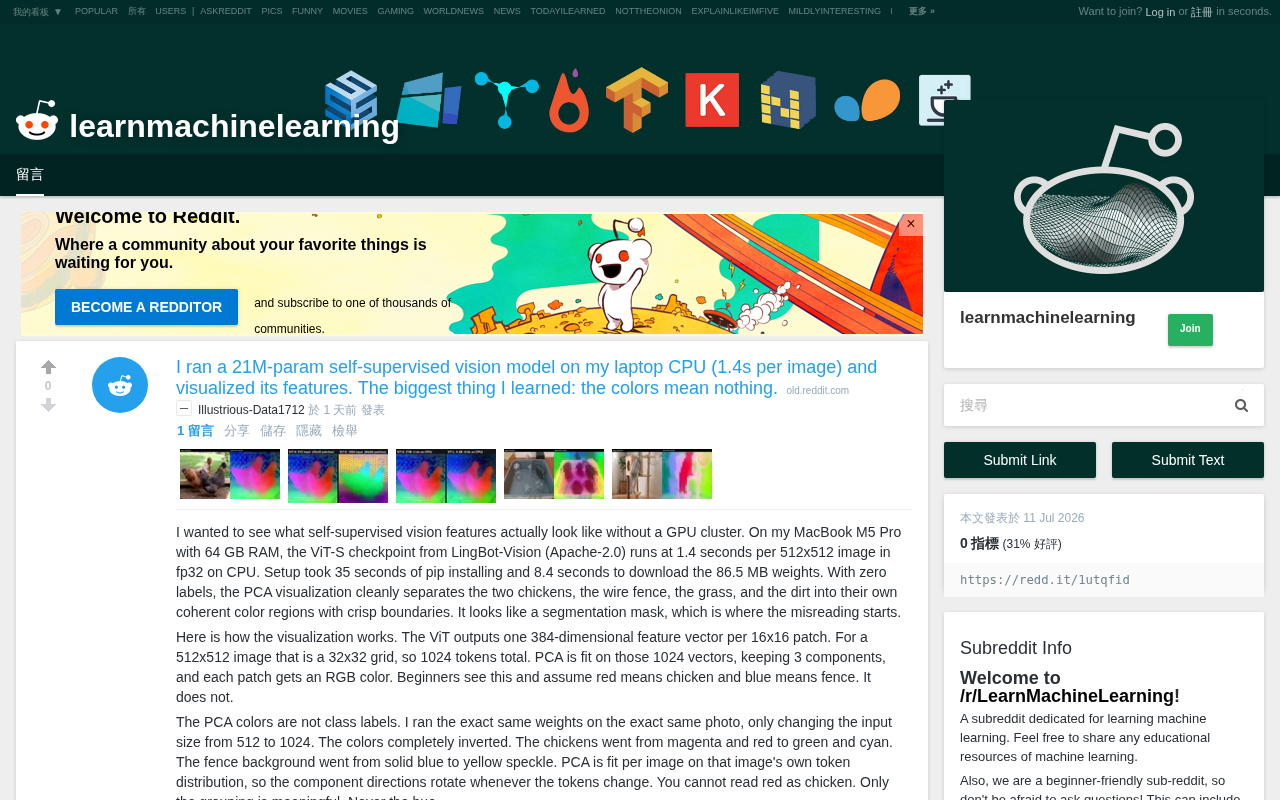
A Guide to Avoiding Pitfalls in PCA Visualization of Self-Supervised Vision Models: Why the Colors Are Meaningless
Running self-supervised vision models (SSL) on a MacBook CPU isn't hard. This article reveals the core misconception of PCA visualization through ViT-S experiments: colors can't convey semantics across images, and changing resolution reverses hues entirely.
Read more →

·4 min
Four Major LangChain Updates: OpenWiki, Voice Agents, and Sub-Agent Orchestration Explained
LangChain releases four major updates: OpenWiki for auto-generating codebase docs, voice agent tutorials, Harbor evaluation integration, and deepagents programmable sub-agents.
Read more →

·5 min
Getting Started with LangChain: LLM Invocation, Agent Practice, and Environment Setup Guide
Starting from the three limitations of LLMs, this guide systematically explains LangChain's core positioning, environment setup, API key prep, model init, and the message system. Learn init_chat_model and AIMessage/HumanMessage/SystemMessage.
Read more →

·5 min
ECC: An Agent Enhancement Framework for AI Coding Assistants — Five Core Capabilities Explained
ECC is an agent optimization framework for AI coding assistants like Claude Code, Cursor, and Codex, enhancing them with skills, memory, security, and research-first development capabilities.
Read more →

·4 min
4 Skills to Completely Transform Claude Code: Say Goodbye to Token Waste and Cut Daily Coding to 2 Hours
Does Claude Code always give irrelevant answers? This article breaks down 4 core Skill plugins: Project Context Engine, PRD Requirements Translator, Code Review tool, and Daily Report Generator—showing you how to transform Claude Code from a money-burner into a true AI coding assistant.
Read more →

·2 min
GPT-5.6 Released: How AI Agents Are Moving from the Screen into the Physical World
OpenAI releases the GPT-5.6 model family, focusing on real-world applications: from automating greenhouses and empowering small entrepreneurs, to Codex 5.6 helping a mathematician disprove a three-year problem. A deep dive into GPT-5.6's multi-agent architecture and end-to-end execution.
Read more →

·4 min
Tencent Open-Sources Agent Memory: A Fully Local AI Long-Term Memory Solution with Zero External Dependencies
Tencent Cloud open-sources TencentDB Agent Memory — a fully local AI Agent memory system with a 4-tier progressive pipeline, zero external API dependencies, and 8,100+ GitHub Stars. Ideal for finance, healthcare, and privacy-sensitive use cases.
Read more →

·6 min
GPT-5.6 Hands-On Deep Dive: ChatGPT and Codex Merge, Full Analysis of the Sol Model
GPT-5.6 is officially released, merging ChatGPT and Codex into one app and launching the three-tier Sol, Terra, and Luna models. A detailed breakdown of 16 hands-on tests plus Worker mode and Codex dev upgrades.
Read more →

·6 min
GPT-5.6 Fully Available: A Deep Dive into the Sol/Terra/Luna Three-Tier Models and Four-Agent Parallelism
GPT-5.6 is now officially available to all users, launching the three-tier Sol, Terra, and Luna models with four-agent parallelism. An in-depth look at the official benchmarks, API pricing, safety, and Ultra mode.
Read more →

·5 min
Why Did Ollama Rise So Fast? Decoding the Success of a Local LLM Tool
How did Ollama grow from a niche open-source project into developers' default choice for running local LLMs? This article breaks down its rise across product design, technical strategy, and ecosystem building.
Read more →

·4 min
IMGNet: A New Face Verification Approach Challenging Cosine Similarity with Sign Pattern Matching
IMGNet is a face verification model by an independent Indonesian researcher that replaces cosine similarity with sliding window sign pattern matching. At just 10.58MB, it outperforms cosine on LFW and other benchmarks, introducing metric-loss co-design.
Read more →