#Qwen model Java
130 related articles

·2 min
Building a RAG Knowledge Base with Dify: A Zero-Code Guide from Basics to Enterprise Practice
Learn how to build a RAG knowledge base with zero code using Dify's visual platform. Compare Dify vs Coze for private deployment, and master the Dify+Qwen+RAG stack.
Read more →

·4 min
AMD Ryzen AI Halo Real-World Test: Can a Non-Programmer Use Local AI to Write Code?
A non-programmer tests AMD Ryzen AI Halo by deploying local AI models to tackle a real dev task. After testing Ollama and Qwen3, the verdict: AI amplifies developers, it doesn't replace them.
Read more →

·3 min
Java Developers Transitioning to AI: A Practical Guide to Building RAG Knowledge Bases
How can Java developers break into AI? This guide covers the AI application engineer career path, RAG knowledge base fundamentals, vector database retrieval, and enterprise-grade RAG challenges.
Read more →

·2 min
GPT-5.6 Truth Check: Celestial Model Names and the Risks of Third-Party 'Direct Access' Services
A viral video claims GPT-5.6 uses Sol/Terra/Luna celestial model names. We break down the suspicious benchmarks, fake model names, and serious risks of third-party 'direct access' services.
Read more →

·3 min
Cherry Studio + MCP: A Practical Guide to Building AI Agents with Local Deployment
Learn how to build an automated AI agent using Cherry Studio, MCP protocol, and locally deployed models — covering DeepSeek integration, web scraping, and private knowledge base setup.
Read more →

·3 min
Cherry Studio + MCP + Ollama: The Complete Guide to Building a Local AI Agent and Private Knowledge Base
A hands-on guide to building a local AI agent and private knowledge base using Cherry Studio, MCP, and Ollama — with web scraping, report generation, and terminal control.
Read more →

·4 min
Running Qwen3.6 27B Locally on a Single RTX 3090: A Complete Guide to Cloud-Rivaling Performance
One used RTX 3090, one 16.8GB GGUF file, and Qwen3.6 27B runs locally offline. SWE-bench score of 77 rivals Claude Sonnet. MTP boosts speed to 59 tok/s. Full local AI coding assistant deployment guide.
Read more →

·3 min
LangChain4j Getting Started Guide: A Java Engineer's Fast Track to AI Application Development
LangChain4j is the AI application development framework built for Java engineers. Integrate DeepSeek, Qwen, and more into Spring Boot — no Python required.
Read more →
Voice-Driven Geometric Interaction: LL…
·2 min
Voice-Driven Geometric Interaction: LLM Semantic Parsing and Function Calling Architecture in Practice
How can LLMs translate natural language into geometric operations? This article breaks down a voice-driven geometry system: LLM for semantic parsing, Function Calling to bridge the geometry SDK.
Read more →
·3 min
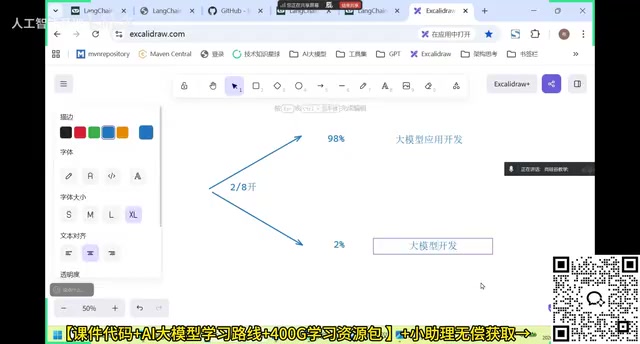
LangChain Practical Guide: From RAG Applications to Intelligent Agent Development
A comprehensive guide to LangChain: core concepts, RAG applications, Agent development, version selection (0.3/1.0), and career opportunities for Java/Python developers entering LLM development.
Read more →

·3 min
Spring AI 2.0 Deep Dive: A Java Developer's Guide to LLM Application Development
A deep dive into Spring AI 2.0: provider-agnostic APIs, RAG with vector databases, and how Java developers can build LLM apps using the Spring ecosystem.
Read more →

·4 min
Getting Started with LangChain: LLM Limitations, Agent Principles, and Environment Setup in Practice
An in-depth look at LangChain's core value: the three limitations of LLMs, unified model interfaces, modular architecture, configuring the DeepSeek API, and understanding the SystemMessage/HumanMessage/AIMessage/ToolMessage system to build a foundation for Agent development.
Read more →

·4 min
AI Agents Powering the Full Research Pipeline: A Practical Guide to Automation from Topic Selection to Publication
Learn how to use AI Agents to link the entire research pipeline—from literature management, data analysis, and paper writing to scientific illustration and dissemination—building a reusable research automation workflow with NotebookLM, N8N, and Ollama.
Read more →

·3 min
The Truth About Third-Party ChatGPT Subscription Services: Three Major Risks and a Safe Subscription Guide
Are third-party ChatGPT top-up services safe? We expose how ¥158 recharge scams work, the real risks of account theft and bans, and how to subscribe safely.
Read more →

·4 min
Tencent Open-Sources Agent Memory: A Fully Local AI Long-Term Memory Solution with Zero External Dependencies
Tencent Cloud open-sources TencentDB Agent Memory — a fully local AI Agent memory system with a 4-tier progressive pipeline, zero external API dependencies, and 8,100+ GitHub Stars. Ideal for finance, healthcare, and privacy-sensitive use cases.
Read more →

·5 min
Why Did Ollama Rise So Fast? Decoding the Success of a Local LLM Tool
How did Ollama grow from a niche open-source project into developers' default choice for running local LLMs? This article breaks down its rise across product design, technical strategy, and ecosystem building.
Read more →

·7 min
Flagship Model vs. Local 27B: Which Follows Code Instructions More Faithfully?
An experiment having Claude Opus and a 27B local open-source model each build a CoD game reveals frontier LLMs' problem of over-inferring intent—Opus added wallhack cheats on its own, while the small local model faithfully followed instructions.
Read more →

·2 min
Spring AI Alibaba: The Core Framework for Integrating LLMs into Java Applications
Spring AI Alibaba is an enterprise-grade Java AI framework that bridges microservices and LLMs — like JDBC for databases — enabling seamless AI integration with minimal migration cost.
Read more →

·7 min
GLM-5.2 Released: Open-Source Coding Capability Approaches Closed-Source Flagships for the First Time
GLM-5.2 tops open-weight models in coding with a 74.4 Frontiers-WE score, beating GPT-5.5. Its MIT license enables local deployment, and the gap with closed-source flagships is closing fast.
Read more →
·7 min
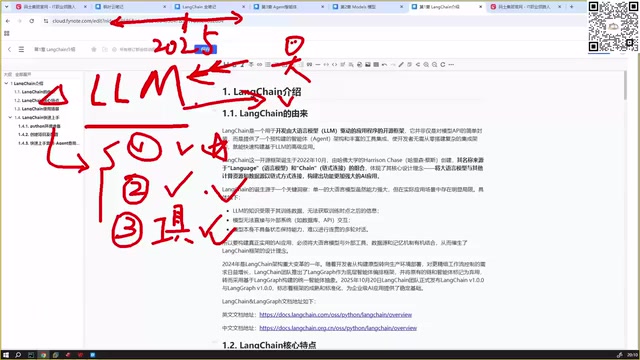
LangChain Hands-On Guide: From LLM Calls to Agent Development
Master LangChain from scratch: the three limitations of LLMs, init_chat_model unified interface config, the Message type system, and the path from LLM calls to Agent development.
Read more →