#Trae model integration
144 related articles

·2 min
Getting Started with Claude Code: AI Programming Has Entered Its Fifth Stage
Explore the five stages of AI programming evolution — from handwritten code to Claude Code and Codex enabling autonomous debugging and commits. Understand AI's limits from 0-to-1 vs 1-to-100, and what skills developers need next.
Read more →

·3 min
Vibe Coding in Practice: A Comprehensive Review and Selection Guide for 6 AI Coding Tools
In-depth comparison of 6 Vibe Coding tools — Claude Code, Trae, Zhipu, Cursor, and more — covering setup cost, Chinese support, pricing, and code quality.
Read more →

·3 min
AI Tool Selection Guide for Test Engineers: A Hybrid Approach to Avoid Three Common Pitfalls
How should test engineers choose AI tools? This guide breaks down the pitfalls of pure AI solutions and recommends a hybrid strategy using tools like DeepSeek, TRAE, Claude Code, and Skill encapsulation.
Read more →

·2 min
Claude Code Installation Guide for China: Complete Setup from Scratch
Complete guide to installing Claude Code in China: platform steps for Windows/macOS, VPN requirements, Git dependency, error fixes, and how it differs from Cursor and VS Code.
Read more →

·6 min
A Beginner's Guide to Claude Code: Why Is It More Powerful Than Cursor and Trae?
Claude Code is Anthropic's local AI programming assistant that reads your entire codebase, auto-debugs, and delivers far higher accuracy than Cursor and Trae. Here's why it's the strongest AI coding tool today.
Read more →

·3 min
Getting Started with Claude Code: Full Project Context Understanding and Why It Beats Cursor and Trae
Claude Code is Anthropic's local AI coding assistant that reads your entire project context, auto-debugs, and outperforms Cursor and Trae on accuracy. Learn why.
Read more →

·3 min
Getting Started with Cursor: A Complete Guide to the Core Features of AI-Native Programming Tools
Cursor is an AI-native programming tool deeply rebuilt on VS Code, integrating top LLMs like Claude and DeepSeek. It supports natural-language code generation, smart error fixing, and context awareness.
Read more →

·6 min
The Complete Beginner's Guide to Claude Code: From Installation to Advanced Usage
Claude Code is one of the most powerful AI coding agents, running in the terminal to write code, batch operations, build web projects, and more. This guide covers installation, connecting local models via CC Switch, permission modes, CLAUDE.md, Skills, MCP, Subagents, and more.
Read more →

·7 min
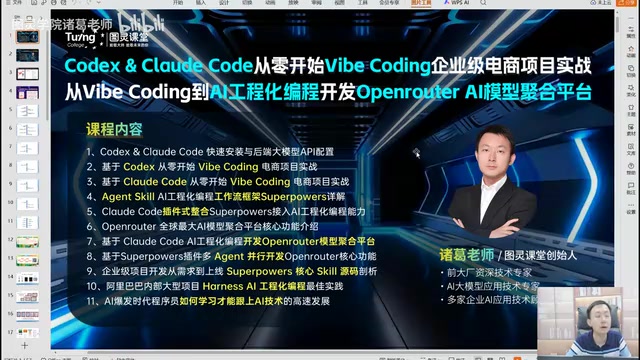
From Vibe Coding to Engineered AI Programming: A Practical Guide to Enterprise Development
AI coding tools are changing development, but Vibe Coding hides risks in code quality and maintenance. This article explores Engineered AI Programming, compares Codex and Claude Code, and reveals real enterprise development paths.
Read more →
·6 min
Understanding the Limits of Vibe Coding: A Practical Guide to AI Engineering-Grade Programming
An in-depth look at the difference between Vibe Coding and AI engineering-grade programming. Can AI replace programmers? From Claude Code and Codex to Cursor, revealing the real limits, enterprise pain points, and engineering solutions of AI coding tools.
Read more →

·6 min
LangChain 1.0 Comprehensive Guide: Three Core Frameworks and Hands-On AI Application Development
Deep dive into LangChain 1.0's architecture: LangChain framework, LangGraph multi-Agent orchestration, and LangSmith observability platform, with hands-on RAG and intelligent customer service projects.
Read more →

·2 min
AI Coding for Absolute Beginners: A Guide to Cursor and Its Best Budget Alternatives
Learn AI coding from scratch! This guide covers Cursor's core features — natural language coding, context-aware Q&A, smart autocomplete — plus comparisons with free alternatives Trae and Windsurf.
Read more →

·3 min
Two Major Codex Updates: Record & Replay + Open Model Access, Targeting the Enterprise Market
OpenAI Codex launches Record & Replay and third-party model integration, supporting Claude, Gemini and private models, transforming from a coding tool into an open AI workflow platform for enterprises.
Read more →

·3 min
Getting Started with Claude Code: AI Programming Tools Comparison & Core Principles Explained
In-depth comparison of Claude Code, Cursor, and Codex AI programming tools, with practical guidance on AI Coding principles and Vibe Coding methodology to boost development efficiency.
Read more →

·4 min
Building a Coding Agent from Scratch: Creating a Codex-like AI Programming Tool
Deep dive into AI coding agent architecture: from interview-level cognition to building a Codex-like CLI agent tool, covering agents.md, Skills systems, context management, and more.
Read more →

·4 min
Three Modes of AI Development: A Complete Guide from Chat to Agent to IDE
A systematic guide to three AI development modes: chat-based, Agent, and AI IDE. Covers model selection, cost comparison, and use cases for beginners.
Read more →

·4 min
Learn to Code with AI from Scratch: A Complete Learning Path from Beginner to Deployment
A complete learning path for coding with AI from scratch — from concepts and environment setup to using Cursor, Claude, and other AI tools to build and deploy your first project.
Read more →

·3 min
Trae AI Coding Tool: Complete Guide to Download, Installation, and Getting Started
Complete guide to ByteDance's Trae AI editor: core features, download & installation, Python setup, and AI chat coding. Free, Chinese-native, no VPN needed.
Read more →

·3 min
TraeHarness Open-Sourced: 18 AI Agents Form a Virtual Development Team
TraeHarness is an open-source multi-agent framework with 18 specialized AI Agents simulating a real software team, covering requirements, architecture, development, testing, and deployment.
Read more →

·4 min
AI Programming in Practice: Building a Local Errand-Running Mini Program in 37 Minutes — Full Workflow
Learn how to build a full local errand-running mini program in 37 minutes using AI tools like Stitch, Trae, UniApp, and UniCloud — covering UI design, full-stack development, and cross-platform publishing.
Read more →