#Ubuntu
92 related articles

·4 min
Dify Local Deployment Guide: One-Click Private AI Platform with Docker
Step-by-step guide to deploying Dify AI platform locally with Docker. Covers Linux, Windows, macOS setup, docker compose launch, and first-time initialization in under 30 minutes.
Read more →

·7 min
Dify Local Deployment Guide: Full Walkthrough with BT Panel + Docker
A step-by-step guide to locally deploying the Dify open-source AI platform using BT Panel on a VMware virtual machine, covering Ubuntu setup, Docker config, and image pull troubleshooting—beginner-friendly.
Read more →

·7 min
Dify Local Deployment in Practice: A Complete Guide with BT Panel + Docker
A step-by-step guide to locally deploying the open-source Dify AI platform using the BT Panel on a VMware virtual machine—covering Ubuntu setup, Docker config, and image pull troubleshooting.
Read more →

·2 min
ROS2 for Beginners: The Essential Framework for Robot Development
A complete introduction to ROS2 for beginners: what ROS is, how ROS1 and ROS2 differ, and how to choose the right version to kickstart your robot development journey.
Read more →

·2 min
Getting Started with ROS2: What Is a Robot Operating System, and How Does It Differ from ROS1?
A beginner's guide to ROS2: what ROS really is (an SDK, not a traditional OS), how ROS1 and ROS2 differ, and how to choose the right version to start robot development.
Read more →

·2 min
ROS2 Beginner's Guide: A Deep Dive into the Core Middleware for Robot Development
Learn ROS2 from scratch: understand how ROS differs from traditional OS, explore ROS1 vs ROS2 differences, and master version selection principles for robot development.
Read more →

·2 min
vLLM Inference Framework Deep Dive: A Practical Guide to High-Concurrency DeepSeek Deployment
A deep dive into vLLM's five core features — KV cache management, continuous batching, and distributed inference — plus a full setup guide for deploying DeepSeek on a cloud server.
Read more →
·3 min
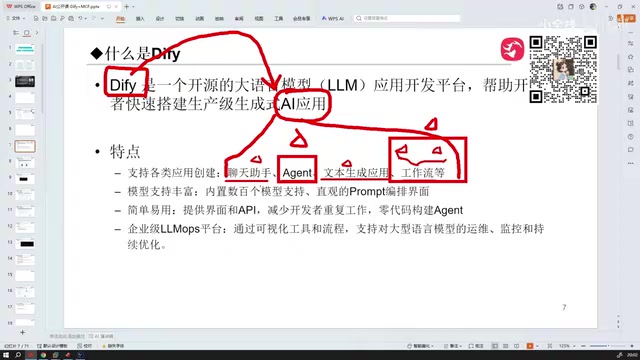
Getting Started with Dify: A Complete Guide to Building Enterprise-Grade AI Apps with Low-Code
A complete guide to Dify, the low-code AI app platform: five app types, multi-model setup, Docker deployment, and enterprise data security. Build LLM-powered workflows and Agents at minimal cost.
Read more →

·3 min
UPnP Security Warning: A Real Case of NAS Auto-Exposing SSH Ports to the Public Internet
A real homelab case: a UGREEN NAS used UPnP to automatically expose SSH port 22 to the internet, triggering brute-force attacks. Full breakdown of the incident, UPnP risks, and NAS security tips.
Read more →

·2 min
Geek Challenge: Running Claude Code Natively on Windows XP
A developer is porting Claude Code to run natively on Windows XP — no SSH/RDP. Login, chat, and web search already work. Bash tool calls remain the key blocker.
Read more →

·3 min
Open-Source Writing App Hammer Seeks Translation Volunteers — No Coding Skills Required
Hammer is an MIT-licensed, local-first open-source story writing tool available cross-platform. Facing a localization manpower shortage, it seeks translation volunteers via Crowdin — no coding needed. Chinese localization remains a blank slate.
Read more →

·2 min
GhostLock: A Deep Dive into the 15-Year-Old Linux Stack UAF Vulnerability
GhostLock is a stack use-after-free (stack-UAF) vulnerability affecting all major Linux distributions, lurking for 15 years. A deep dive into its mechanics, severity, scope, and practical mitigation.
Read more →

·2 min
One Month on Windows 11 as a Linux User: Rebuilding My Workflow and Where Two Worlds Collide
A veteran Linux user takes a paid challenge to use Windows 11 exclusively for a month. A deep look at workflow migration pain, telemetry, UI ads, and Windows' gaming and software strengths.
Read more →

·6 min
Why Is Qwen3 27B So Slow on a 4090? A Hands-On Guide to Local Inference Performance Optimization
RTX 4090 taking over 400 seconds to run Qwen3 27B inference? This article analyzes the core causes—VRAM overflow and CPU offloading drag—and offers targeted fixes.
Read more →

·7 min
Google's $250K Bounty: Linux VM Escape Vulnerability Sets a Historic Record
Google paid a security researcher $250K for a Linux kernel VM escape vulnerability, setting a VRP record. An in-depth analysis of VM escape principles, kCTF incentives, and cloud security impact.
Read more →

·4 min
Complete Guide to Dify Local Deployment: Build a Private AI Workflow Platform from Scratch
Step-by-step guide to deploying Dify locally: Docker setup, Docker Compose installation, source code configuration, .env file setup, and container startup for Windows, macOS, and Linux.
Read more →

·2 min
Critical Security Flaw in Linux 6.9: LUKS Suspend No Longer Clears Encryption Keys
Since Linux kernel 6.9, LUKS suspend no longer clears disk encryption keys from memory, leaving cold boot attack protections silently broken. Here's what you need to know.
Read more →

·6 min
Dify Local Deployment in Practice: A Complete Guide to Building an AI Application Platform with Docker
A complete guide to Dify local deployment: from Docker environment setup, source code pulling, and container startup to first access. Build a private AI app development platform across Linux, Windows, and Mac for fast enterprise AI deployment.
Read more →

·7 min
Getting Started with Dify: A Complete Guide from Local Deployment to Building Enterprise-Grade AI Applications
A detailed guide to Dify, the open-source LLM app development platform, covering its core features and full local deployment via VMware + Ubuntu + aaPanel + Docker. Supports 100+ models like DeepSeek and ChatGPT to build enterprise AI apps fast.
Read more →

·3 min
Running Local LLMs on AMD GPUs: Ditching Ollama for LM Studio Delivers 7x Speed Boost
AMD GPU black screens running local LLMs? This post-mortem covers Ollama's 3 fatal flaws and how switching to LM Studio boosted token speed from 5 to 36, with ROCm setup, Speculative Decoding, and GFX version tips.
Read more →